Common Good (Principles)
An exploration of how societies balance individual desires with the needs of the community to create a stable and prosperous economy for everyone.
1 What is the Common Good?
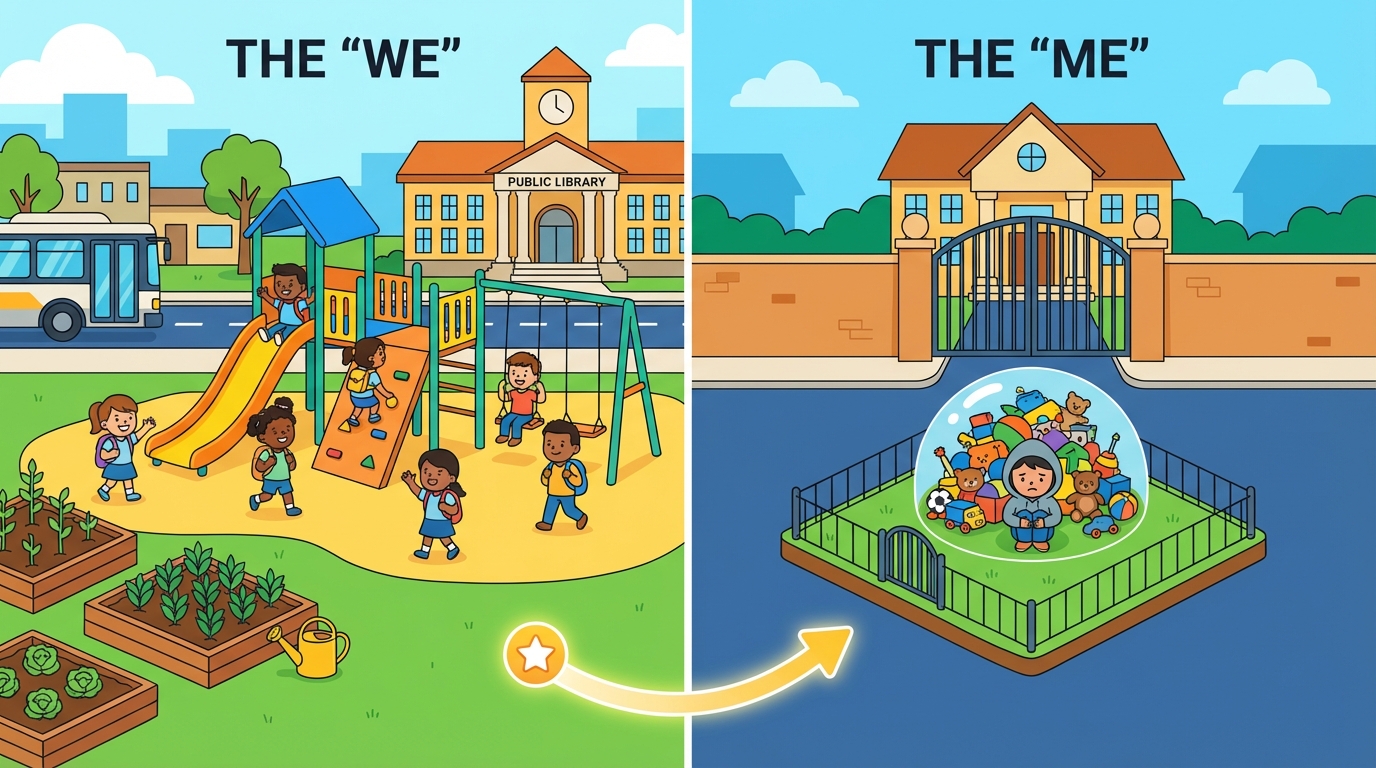
🌟 Big Idea: The 'We' vs. The 'Me'
The Common Good refers to facilities, institutions, and resources that benefit all members of a community, not just one person. It is the idea that we should make choices that help everyone live a better life.
Things that belong to one person or a specific group.
- 🎮 Your personal video game
- 🚲 Your own bicycle
- 🏠 A private house
Things that everyone can use and enjoy together.
- 🌳 Public Parks & Playgrounds
- 🛣️ Safe Roads & Sidewalks
- 🚒 Fire Stations & Police
💡 Why does it matter?
Imagine if everyone threw trash on the ground because it was easier for them. Soon, the streets would be dirty for everyone! Working for the common good means following rules and helping out so that our community stays safe, clean, and happy for everyone. It requires cooperation and responsibility.
Key Facts
2 Individual Interest vs. Collective Well-being
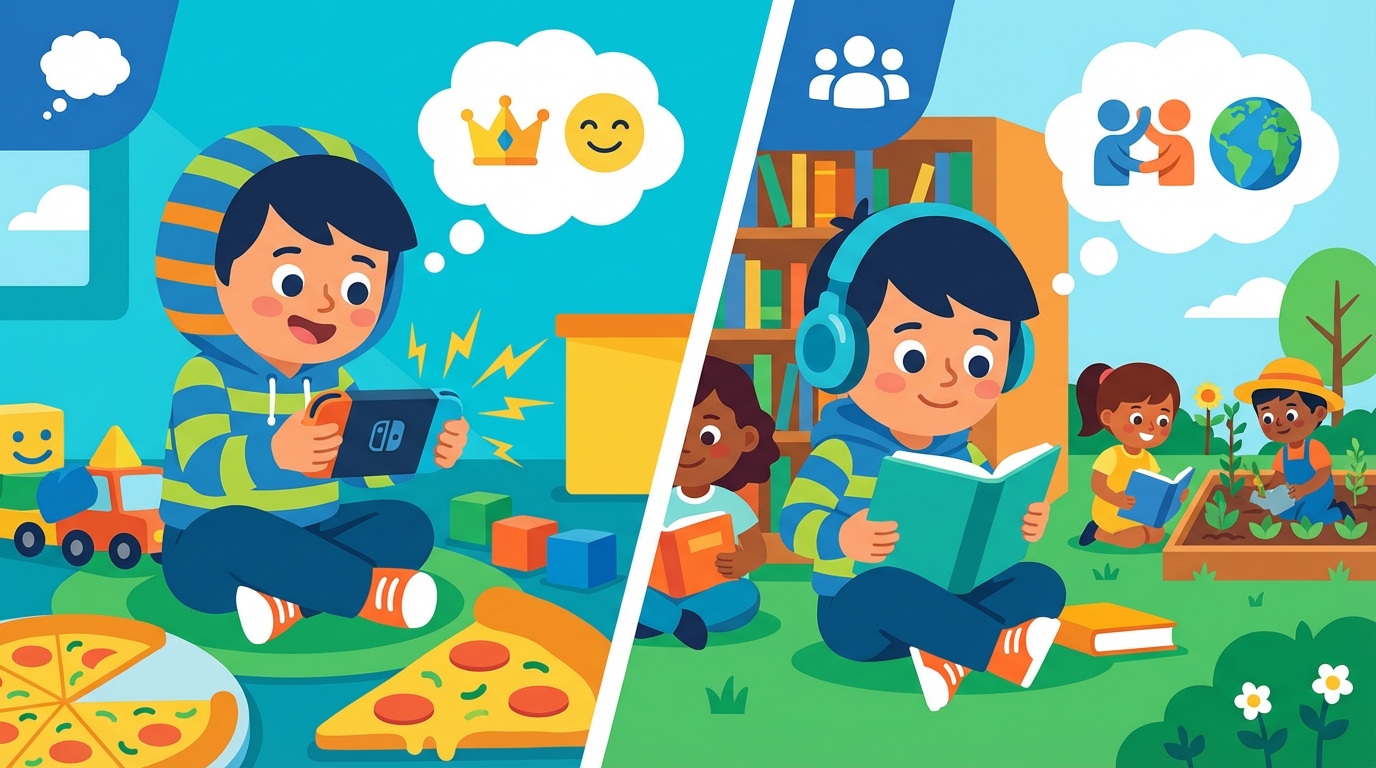
Have you ever wanted to do something fun, but realized it might bother others? That is the battle between Individual Interest (what you want) and Collective Well-being (what is good for everyone). ⚖️
This focuses on personal goals, desires, and benefits. It asks: 'What do I get out of this?'
- ✅ Buying a toy you want
- ✅ Eating your favorite snack
- ✅ Listening to loud music
This focuses on the health, happiness, and safety of the whole community. It asks: 'How does this affect us?'
- ✅ Keeping parks clean
- ✅ Following traffic rules
- ✅ Being quiet at night
The Balancing Act: Real Life Examples
| Scenario | Individual Choice (Me) | Collective Result (Us) |
|---|---|---|
| 🗑️ Trash | 'I'll drop this wrapper here; I don't want to carry it.' | If everyone does this, the park becomes a garbage dump! 🚫 |
| 😷 Sickness | 'I feel sick but I want to go to the party.' | You might infect your friends and their families. 🤒 |
| 🚌 Bus Line | 'I'll cut in line to get a seat first.' | It creates chaos and unfairness for everyone waiting. 😠 |
Key Facts
3 Public Goods vs. Private Goods
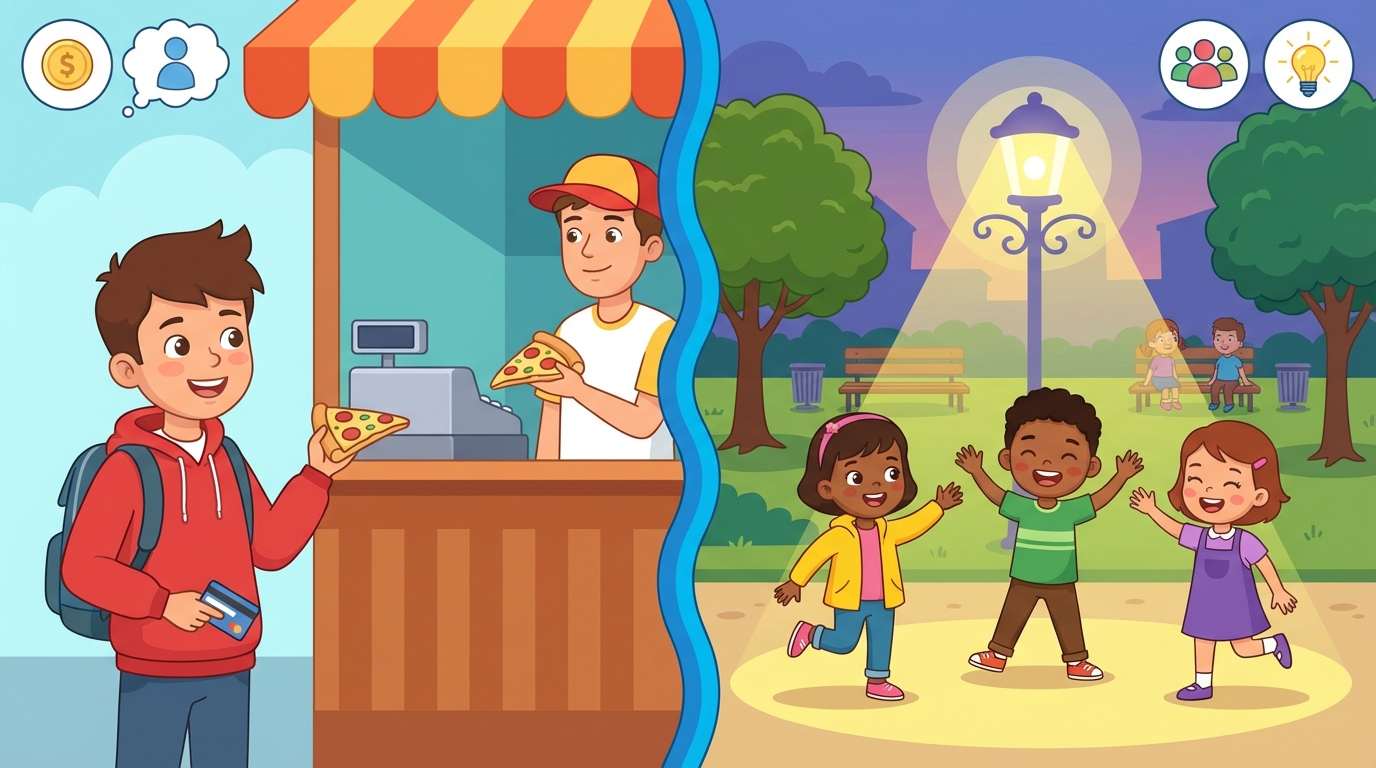
Have you ever wondered why you have to pay for a slice of pizza 🍕, but you don't have to swipe a credit card to use a street light 💡? That is the difference between private and public goods!
Private goods are items that belong to a specific person or business. They have two main rules:
- Excludable: You must pay to get them. If you don't pay, you don't get it.
- Rival: If you use it, no one else can. If you eat an apple, your friend can't eat that same apple!
Examples: Your sneakers, a video game, a sandwich.
Public goods are provided for everyone to enjoy. They help the Common Good because they make life better for all citizens.
- Non-Excludable: It is hard to stop people from using them (even if they didn't pay).
- Non-Rival: One person using it doesn't stop others. My watching a fireworks show doesn't stop you from watching it too!
Examples: Fresh air, street signs, national defense.
Comparison Table 📊
| Feature | Private Good 📱 | Public Good 🛣️ |
|---|---|---|
| Who pays? | The individual buyer | The government (using taxes) |
| Who owns it? | The person who bought it | The public (everyone) |
| Can it run out? | Yes (limited supply) | No (usually available to all) |
Key Facts
4 The Role of Taxes: Funding Our Shared Needs
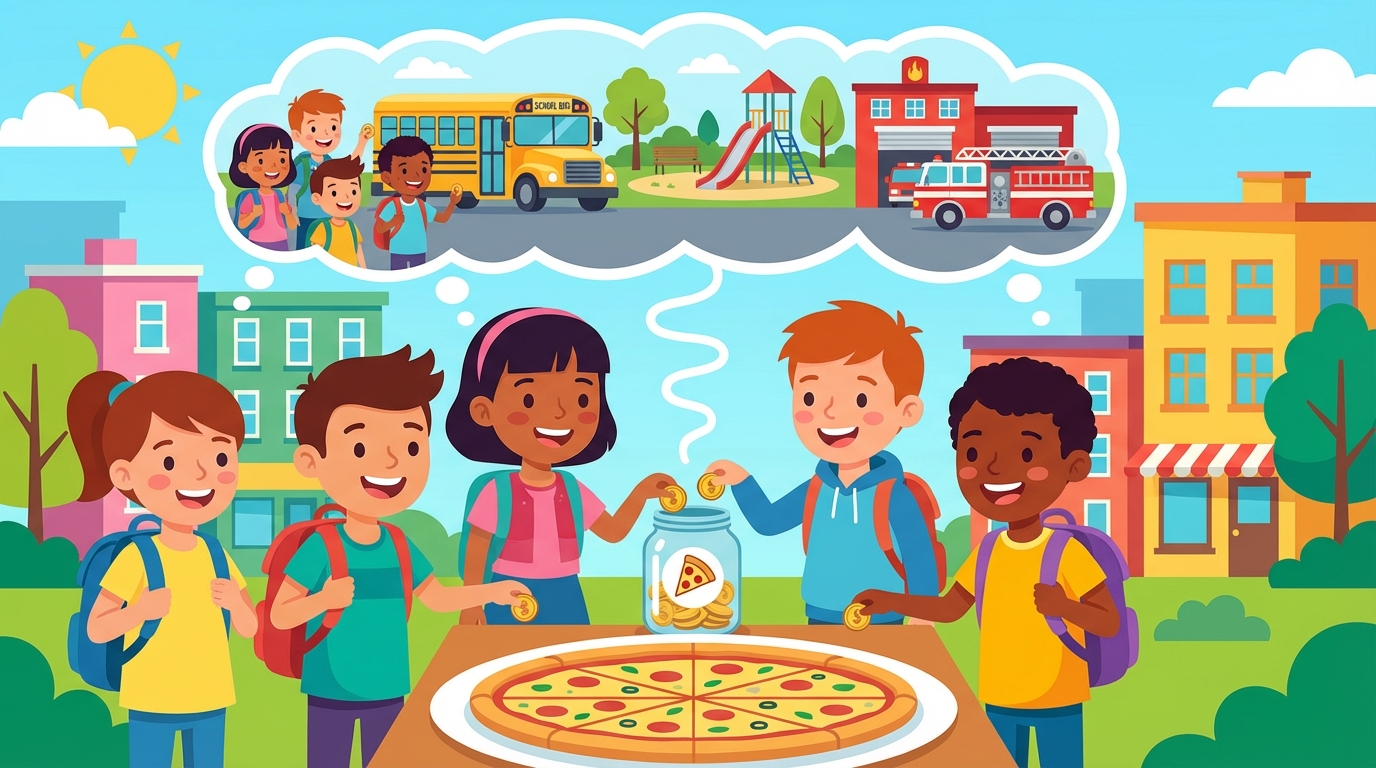
Imagine if you and your friends wanted to buy a huge pizza that costs $20, but you only have $5. If everyone chips in a little bit of money, you can buy the pizza and share it! Taxes work the same way for our country.
Taxes are required payments made by people and businesses to the government. This money is collected into a giant "public pot" to pay for things that benefit everyone—the Common Good.
Where Does the Money Go? 🏗️
We use tax money to pay for Public Goods and Services. These are things that are too expensive for one person to buy alone, but everyone needs.
🏫 Education
Public schools, libraries, and teachers' salaries.
🚒 Safety
Police officers, firefighters, and ambulances.
🛣️ Infrastructure
Roads, bridges, sidewalks, and parks.
🗑️ Sanitation
Trash collection and keeping our water clean.
You Pay vs. Taxes Pay
| 🛒 Private Goods (You Buy) | 🏛️ Public Goods (Taxes Buy) |
|---|---|
| Your video game console 🎮 | The public park playground 🛝 |
| A candy bar at the store 🍫 | The sidewalk leading to the store 🚶 |
| Your family car 🚗 | The traffic lights and stop signs 🛑 |
Key Facts
5 The Tragedy of the Commons: When Sharing Goes Wrong
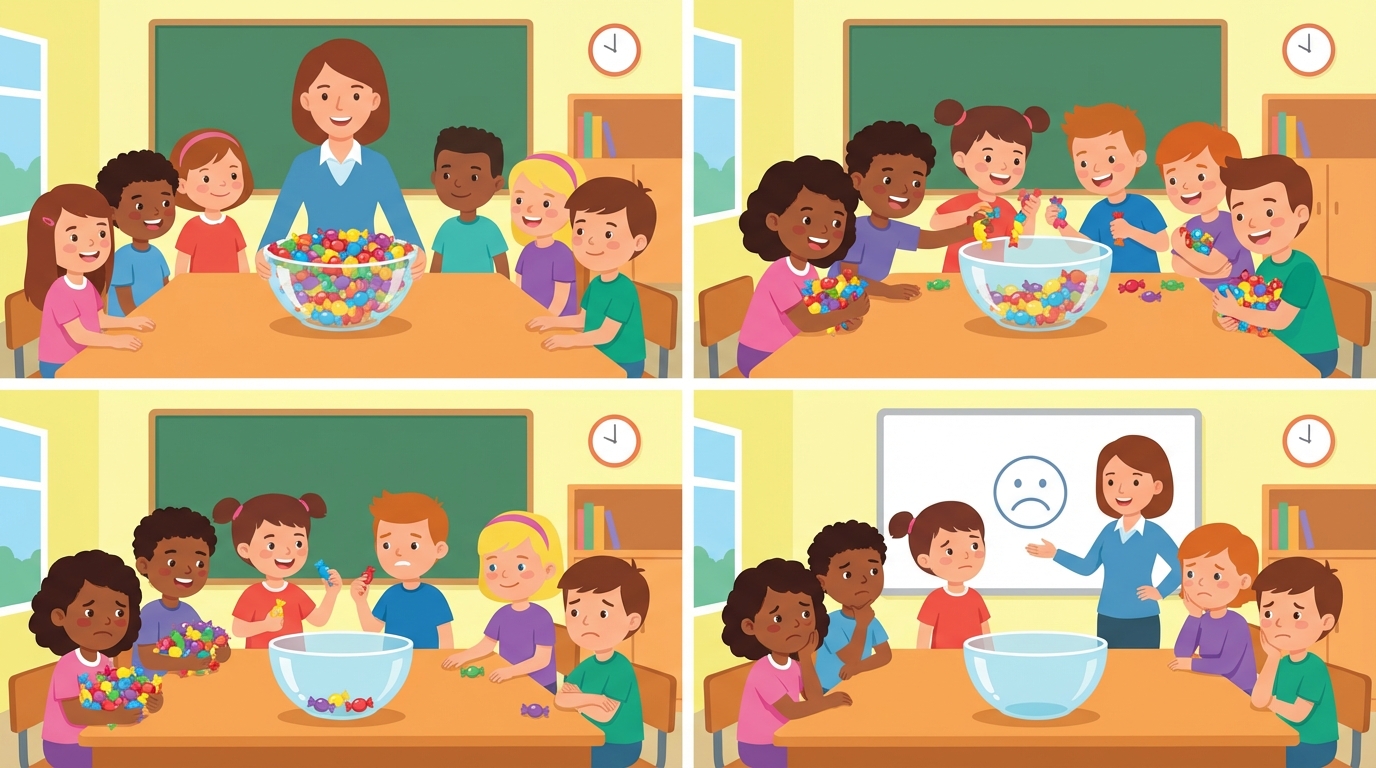
🤔 Imagine This...
Your teacher puts a giant bowl of candy in the middle of the room and says: 'This is for everyone to share for the whole week. Take what you need.'
What usually happens? Within 10 minutes, the bowl is empty! Why? Because everyone thought, 'If I don't take it now, someone else will!'
This candy situation is exactly what economists call The Tragedy of the Commons. Imagine a small village with one lake.
- 🌊 The Resource: The lake is a 'common good' (shared by everyone).
- 🎣 The Action: If every fisherman catches as many fish as possible to sell for money...
- 💀 The Tragedy: The fish disappear before they can have babies. The lake dies, and everyone goes hungry.
🌱 Sustainable vs. Greedy 🛑
| Mindset | Action | Result for Everyone |
|---|---|---|
| Selfish (Short-term) | 'I will take all the water/fish/candy now.' | Resource is destroyed. Everyone loses. 📉 |
| Responsible (Long-term) | 'I will only take my fair share so it grows back.' | Resource lasts forever. Everyone wins. 📈 |
Key Facts
6 Externalities: How Your Choices Affect Neighbors
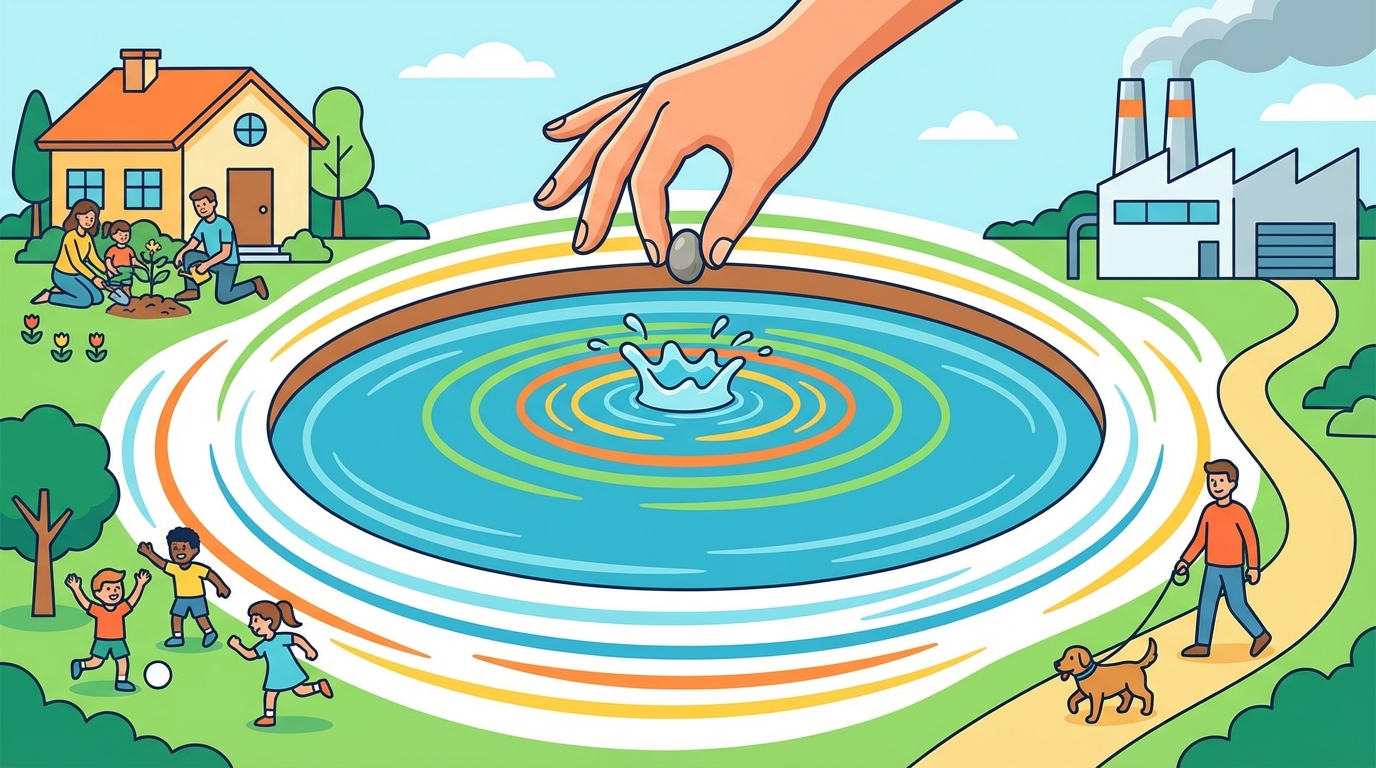
🌊 The Ripple Effect
Imagine throwing a stone into a pond. The splash creates ripples that spread out and touch things far away. In Economics, these 'ripples' are called Externalities. It happens when your choices affect someone else who wasn't involved in the decision!
😠 Negative Externalities
These are side effects that harm or bother others. It costs them money or happiness.
- 🏭 Pollution: A factory makes toys (good!) but pumps smoke into the air, making neighbors cough.
- 🥁 Noise: You play drums at midnight. You have fun, but your neighbor loses sleep.
- 🗑️ Litter: Someone drops a wrapper in the park. Now everyone has to look at a messy park.
😊 Positive Externalities
These are side effects that benefit others without them paying for it. It's a bonus for the community!
- 🐝 Beekeepers: A farmer keeps bees for honey. The bees fly next door and pollinate the neighbor's apple trees for free!
- 💉 Vaccines: When you get a flu shot, you protect yourself and stop the virus from spreading to classmates.
- 🏡 Nice Gardens: Your neighbor plants beautiful flowers. You get to enjoy the view every day!
⚖️ Balancing for the Common Good
To support the Common Good, communities and governments try to fix these issues:
By managing externalities, we ensure that one person's choice doesn't unfairly hurt the neighborhood.
Key Facts
7 Infrastructure: The Backbone of the Economy
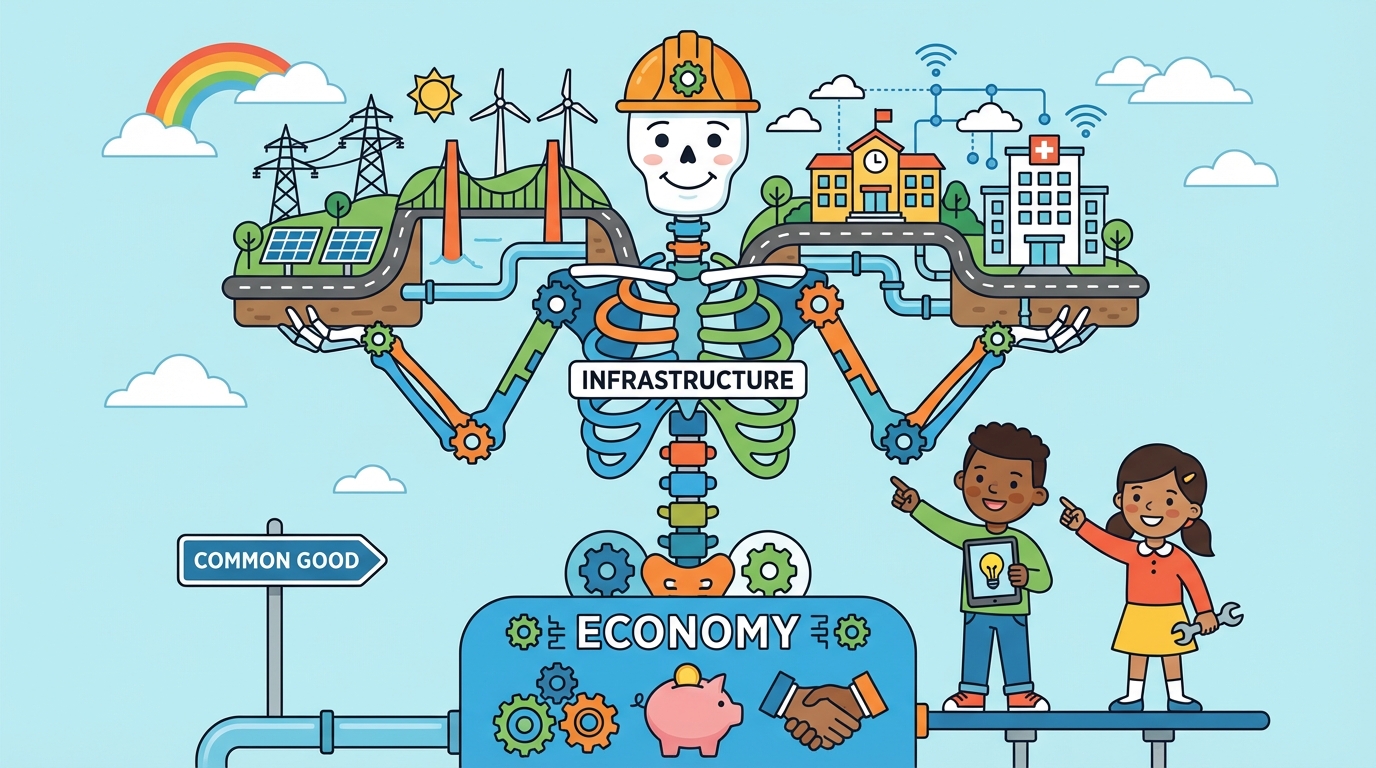
Just like your body needs a skeleton to stand up, an economy needs infrastructure to work! 🏗️
The Three Pillars of Infrastructure
Roads, bridges, airports, and train tracks. These allow trucks to move products to stores and you to get to school.
Power lines, water pipes, and dams. Imagine trying to run a lemonade stand without water or ice!
Cell towers, satellites, and fiber-optic cables (Internet). This helps businesses talk to customers instantly.
🤝 Why is this a Common Good?
Building a highway or a power plant is too expensive for one person to do alone. Usually, the government builds these using tax money so that everyone can use them. When infrastructure is strong, the economy grows because it is easier to do business!
Key Facts
8 Safety Nets: Helping the Most Vulnerable
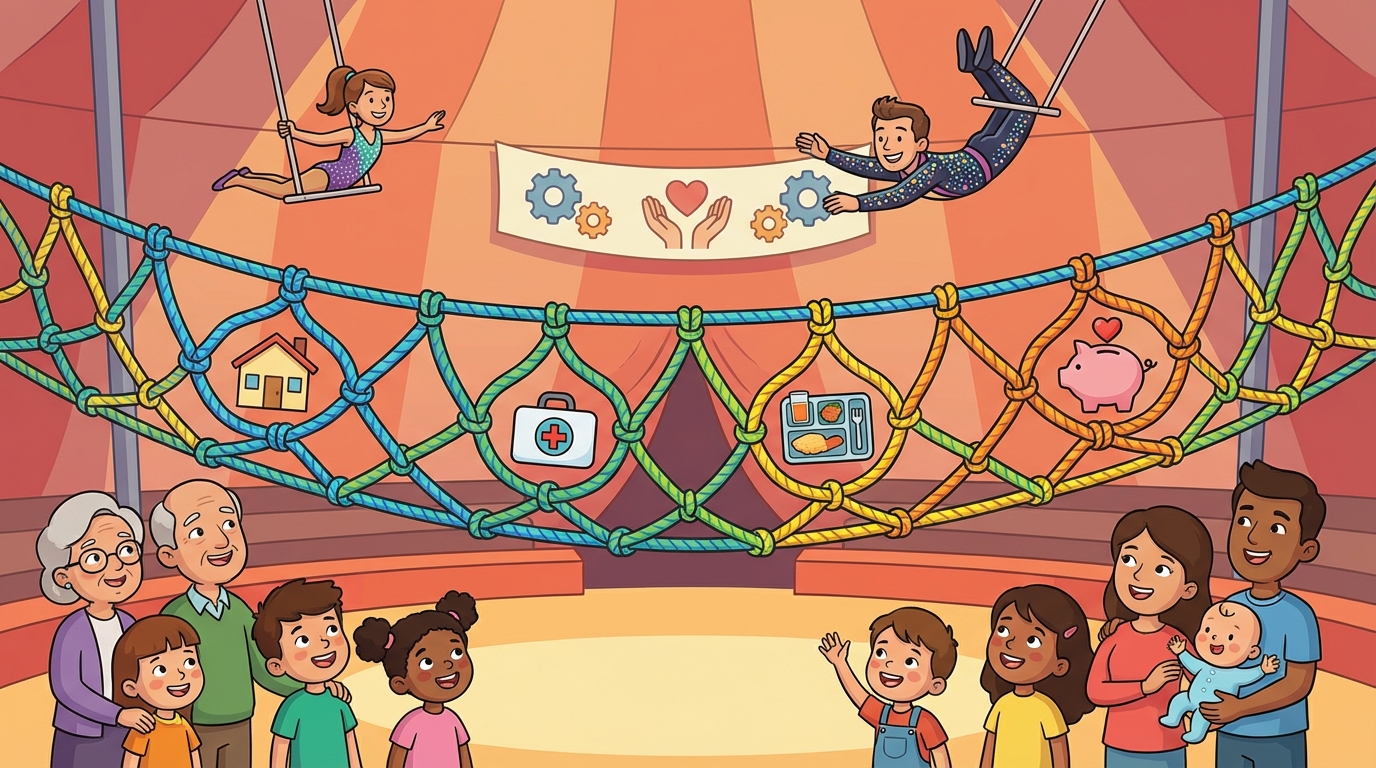
🎪 The Trapeze Metaphor
Imagine a circus trapeze artist. If they slip, they don't hit the ground—a safety net catches them. In economics, a Social Safety Net works the same way! It is a collection of services provided by the state to prevent people from falling into extreme poverty.
Life is unpredictable. Even hardworking people can face difficult times due to:
- 📉 Losing a job unexpectedly
- 🏥 Getting very sick or injured
- 👴 Getting too old to work
Safety nets are a perfect example of the Common Good principle. By helping the most vulnerable, we make the whole community more stable, safe, and fair for everyone.
Common Examples of Safety Nets
| Program Type | What it Does | Example |
|---|---|---|
| Food Assistance 🍎 | Helps families buy groceries so no one goes hungry. | SNAP (Food Stamps), School Lunches |
| Unemployment Insurance 💼 | Provides temporary money if you lose your job. | State unemployment checks |
| Healthcare 🩺 | Pays for doctors and medicine for those with low income or the elderly. | Medicaid & Medicare |
Key Facts
9 Sustainability and Future Generations
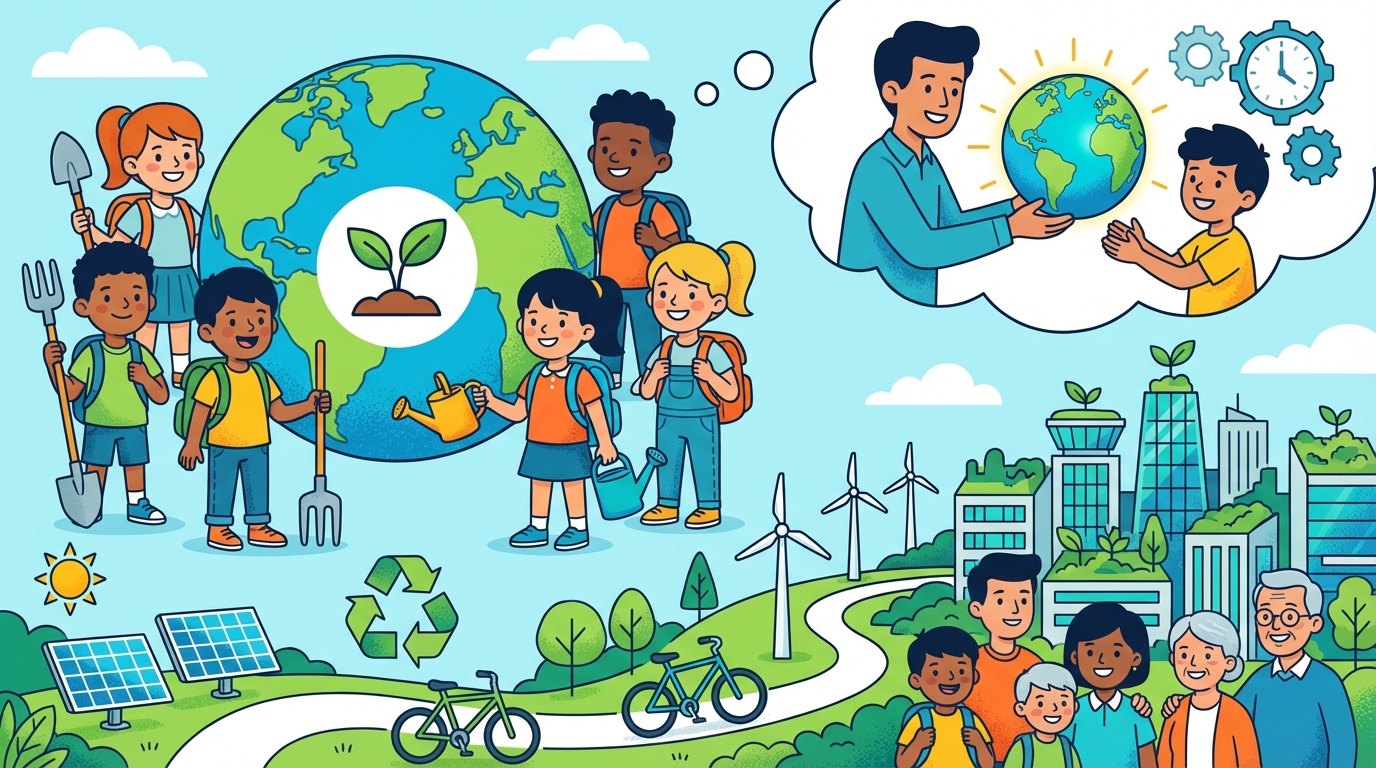
Have you ever borrowed something from a friend and promised to return it in good condition? Sustainability is exactly like that, but with the Earth! 🌍
🌱 What is Sustainability?
In economics, sustainability means using resources to meet our needs today without running out of them for the people of tomorrow (future generations). It is about finding a balance between the economy, the environment, and society.
Focusing only on what we want right now.
- Cutting down a whole forest for wood today. 🪓
- Catching all the fish in a lake to sell quickly. 🎣
- Using cheap energy that pollutes the air. 🏭
Thinking about how our actions affect the future.
- Planting two trees for every one cut down. 🌲🌲
- Fishing limits so fish populations can regrow. 🐟
- Investing in solar and wind energy. ☀️💨
Imagine the world is like a shared bank account. If we spend all the money (resources) now, our children and grandchildren will have an empty account. Sustainability ensures the account stays full! 🏦
Key Facts
10 Civic Responsibility: The Role of the Citizen
🤝 What is the Common Good?
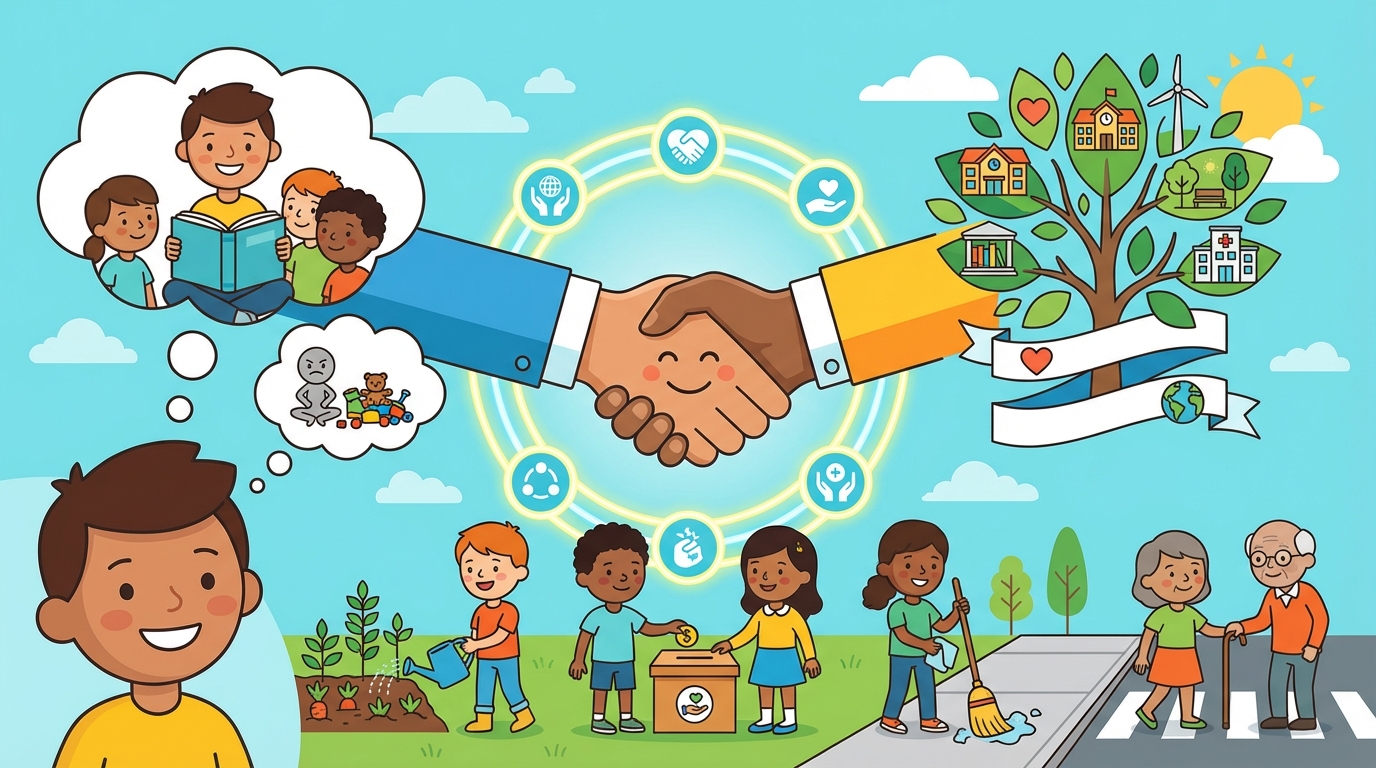
In economics and civics, the Common Good refers to what is best for the whole community, not just a single person. It is about how we use our shared resources—like money, land, and time—to help everyone thrive!
These are things provided by the government (paid for by taxes) that everyone can use. In a healthy economy, citizens support these goods.
- 🏞️ Public Parks
- 📚 Public Libraries
- 🛣️ Roads & Sidewalks
- 🚒 Fire Departments
These are things individuals own or want for themselves. While important, a good citizen balances these with the community needs.
- 🏠 Your private home
- 🚲 Your personal bicycle
- 🎮 Video games
- 🍔 Your lunch
⚖️ Balancing Act: The Playground Example
Imagine a town has extra money in its budget. This is an economic choice:
| Choice | Outcome |
|---|---|
| Option A: Give every person $5. | Everyone gets a small treat, but it's gone quickly. (Short-term Private Gain) |
| Option B: Build a new playground. | Everyone has a place to play for years. It increases happiness and health. (Long-term Common Good) |
Civic Responsibility means understanding that sometimes we pay taxes or give up time so that the whole community has better schools, cleaner streets, and safer neighborhoods.
Key Facts
11 Key Vocabulary
Master these important terms for your exam:
| Term | Definition |
|---|---|
|
Common Good
Bien Común |
What is beneficial for all or most members of a given community.
Lo que es beneficioso para todos o la mayoría de los miembros de una comunidad. |
|
Public Goods
Bienes Públicos |
Goods or services provided by the government that are available for everyone to use, like parks and streetlights.
Bienes o servicios proporcionados por el gobierno que están disponibles para el uso de todos, como parques y alumbrado público. |
|
Taxes
Impuestos |
Mandatory payments made by individuals and businesses to the government to fund public goods and services.
Pagos obligatorios que hacen las personas y las empresas al gobierno para financiar bienes y servicios públicos. |
|
Infrastructure
Infraestructura |
The basic physical systems of a community, including roads, bridges, water, and electricity.
Los sistemas físicos básicos de una comunidad, incluyendo carreteras, puentes, agua y electricidad. |
|
Public Sector
Sector Público |
The part of the economy that is controlled by the government.
La parte de la economía que está controlada por el gobierno. |
|
Private Sector
Sector Privado |
The part of the economy run by individuals and businesses for profit, not by the government.
La parte de la economía dirigida por individuos y empresas con fines de lucro, no por el gobierno. |
|
Scarcity
Escasez |
The condition of not having enough resources to satisfy all wants and needs.
La condición de no tener suficientes recursos para satisfacer todos los deseos y necesidades. |
|
Resource Allocation
Asignación de Recursos |
The process of deciding how to distribute limited resources among different uses.
El proceso de decidir cómo distribuir los recursos limitados entre diferentes usos. |
|
Civic Responsibility
Responsabilidad Cívica |
Actions by citizens that contribute to the common good, such as voting, obeying laws, and recycling.
Acciones de los ciudadanos que contribuyen al bien común, como votar, obedecer las leyes y reciclar. |
|
Social Services
Servicios Sociales |
Government programs designed to help people, such as public education, healthcare, and fire protection.
Programas gubernamentales diseñados para ayudar a las personas, como la educación pública, la atención médica y la protección contra incendios. |
|
Budget
Presupuesto |
A plan that outlines expected income and spending for a specific period.
Un plan que detalla los ingresos y gastos esperados para un período específico. |
|
Revenue
Ingresos Públicos |
The money received by the government, primarily from taxes, to pay for public expenses.
El dinero que recibe el gobierno, principalmente de los impuestos, para pagar los gastos públicos. |
|
Regulation
Regulación |
Rules or laws made by the government to control business activities and protect the public.
Reglas o leyes creadas por el gobierno para controlar las actividades comerciales y proteger al público. |
|
Equity
Equidad |
The quality of being fair and impartial in how resources and opportunities are shared.
La cualidad de ser justo e imparcial en cómo se comparten los recursos y las oportunidades. |
|
Sustainability
Sostenibilidad |
Using resources in a way that meets current needs without harming the ability of future generations to meet their needs.
Usar los recursos de manera que satisfagan las necesidades actuales sin dañar la capacidad de las generaciones futuras para satisfacer las suyas. |
Time to Practice!
There are 7 questions waiting for you. Questions are shuffled each attempt.
Take the Quiz