Economic Systems (Capitalism, Socialism)
Learn how different societies organize their resources, produce goods, and decide who gets them through market and command economies.
1 What is an Economic System?
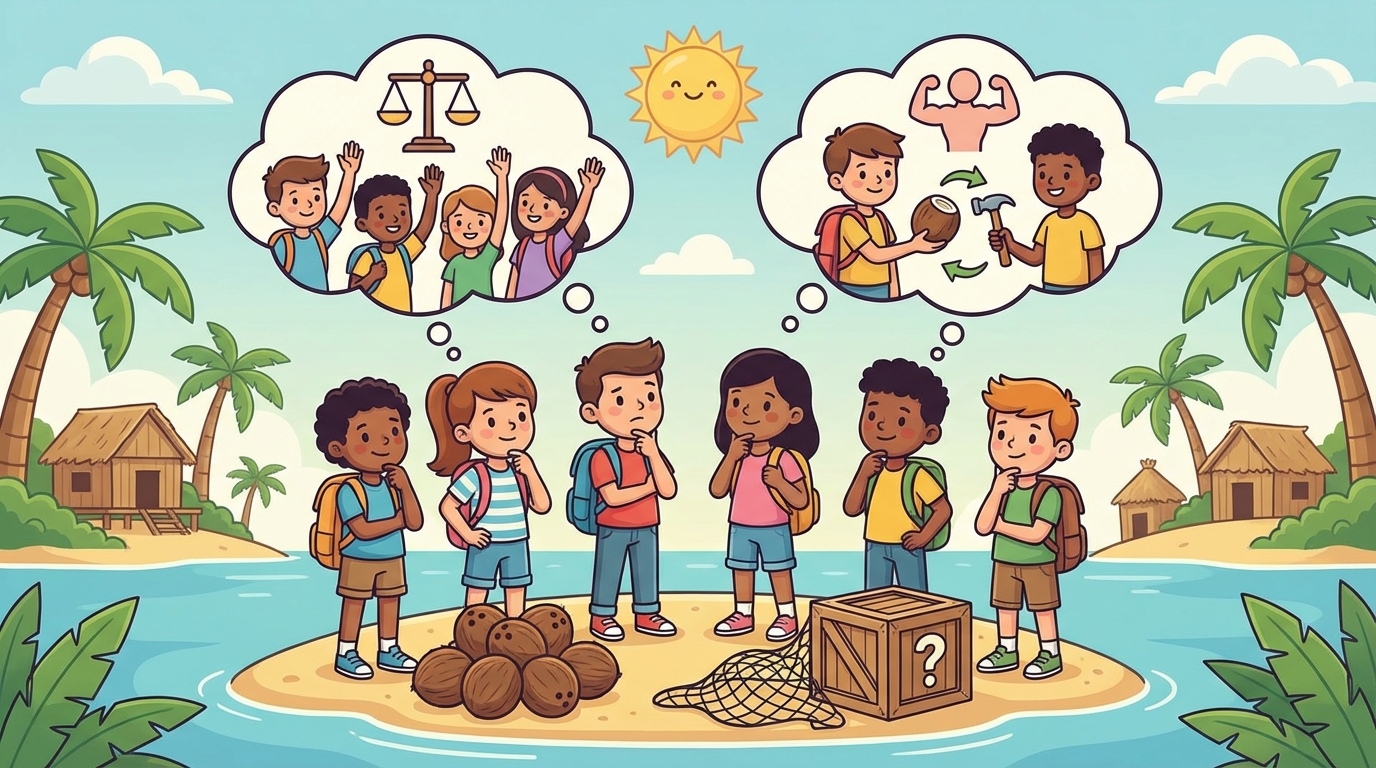
🤔 Imagine This...
You are stranded on a deserted island with your classmates. You have limited food, water, and tools. How do you decide who gets what? Do you vote? Does the strongest person decide? Or does everyone trade?
The rules you create to survive are your Economic System!
The 3 Big Questions ❓
Because we can't have everything we want (this is called scarcity), every country must answer three magic questions:
WHAT?
What goods and services should we make?
HOW?
How should we make them? (Machines or by hand?)
FOR WHOM?
Who gets to buy or use the goods?
Two Ways to Play the Game 🛤️
| Feature | Market (Capitalism) 🏪 | Command (Socialism) 🤝 |
|---|---|---|
| Who decides? | You and the buyers (Individuals) | The Government (Planners) |
| Goal | To make a profit 💰 | To help the whole society 🌍 |
| Example | A lemonade stand where you set the price. | A public library open to everyone. |
Key Facts
2 The Three Basic Questions Every Economy Must Answer
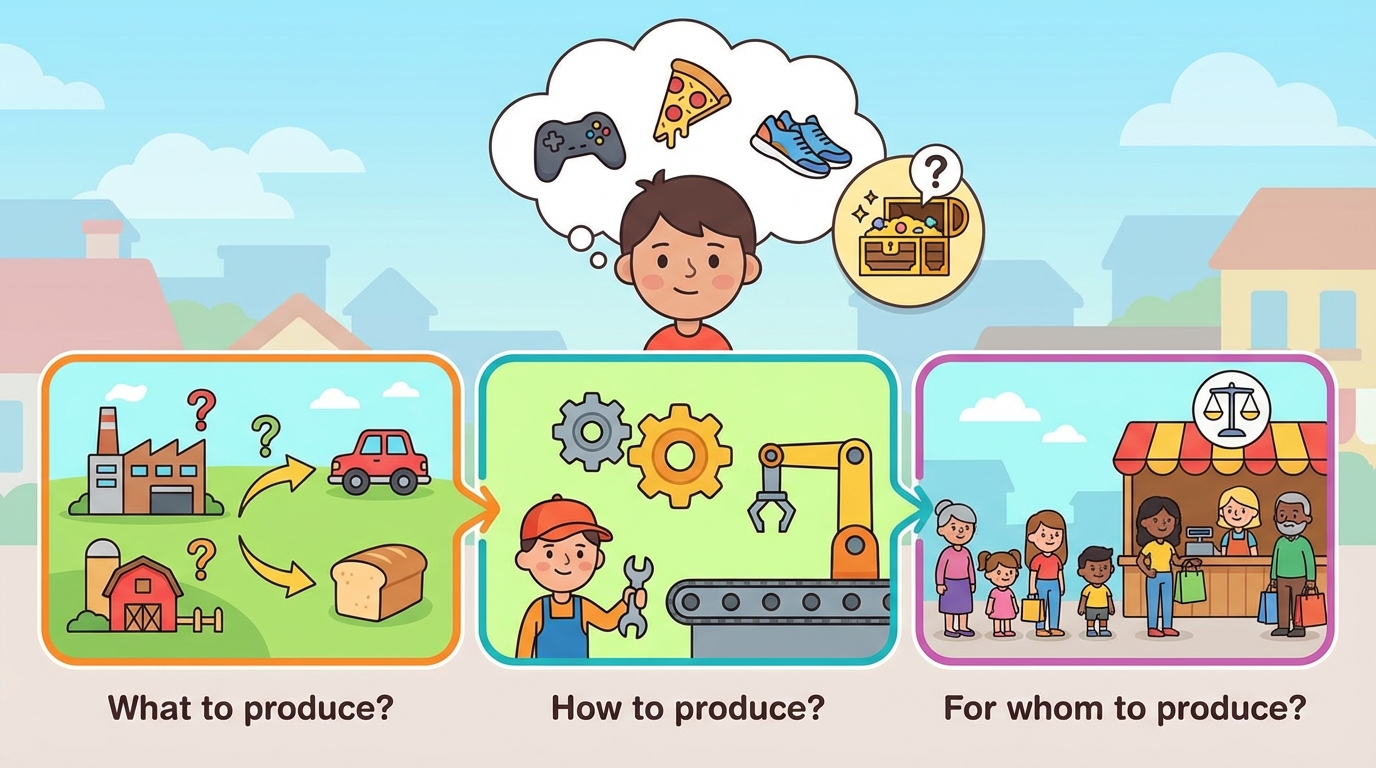
🤔 The Big Problem: Scarcity
Imagine you have unlimited wants (video games, pizza, sneakers) but limited money. This is called Scarcity. Because we can't have everything, every country must answer three big questions to decide how to use their resources.
Should the country use its metal to make tractors for farming or ovens for baking pizza?
Society must decide which goods and services are most important right now.
Should we use high-tech robots or hire people to do the work? Should we use solar power or coal?
This decides the methods and technology used to make things.
Who gets the new car? The person who can pay the most, or is it given out by a lottery?
This decides who gets to enjoy the goods and services produced.
| Question | The Decision |
|---|---|
| What? | We choose to build a school instead of a shopping mall. |
| How? | We use electric cranes and 20 construction workers. |
| For Whom? | For the students in the local neighborhood! |
Key Facts
3 Capitalism: The Market Economy
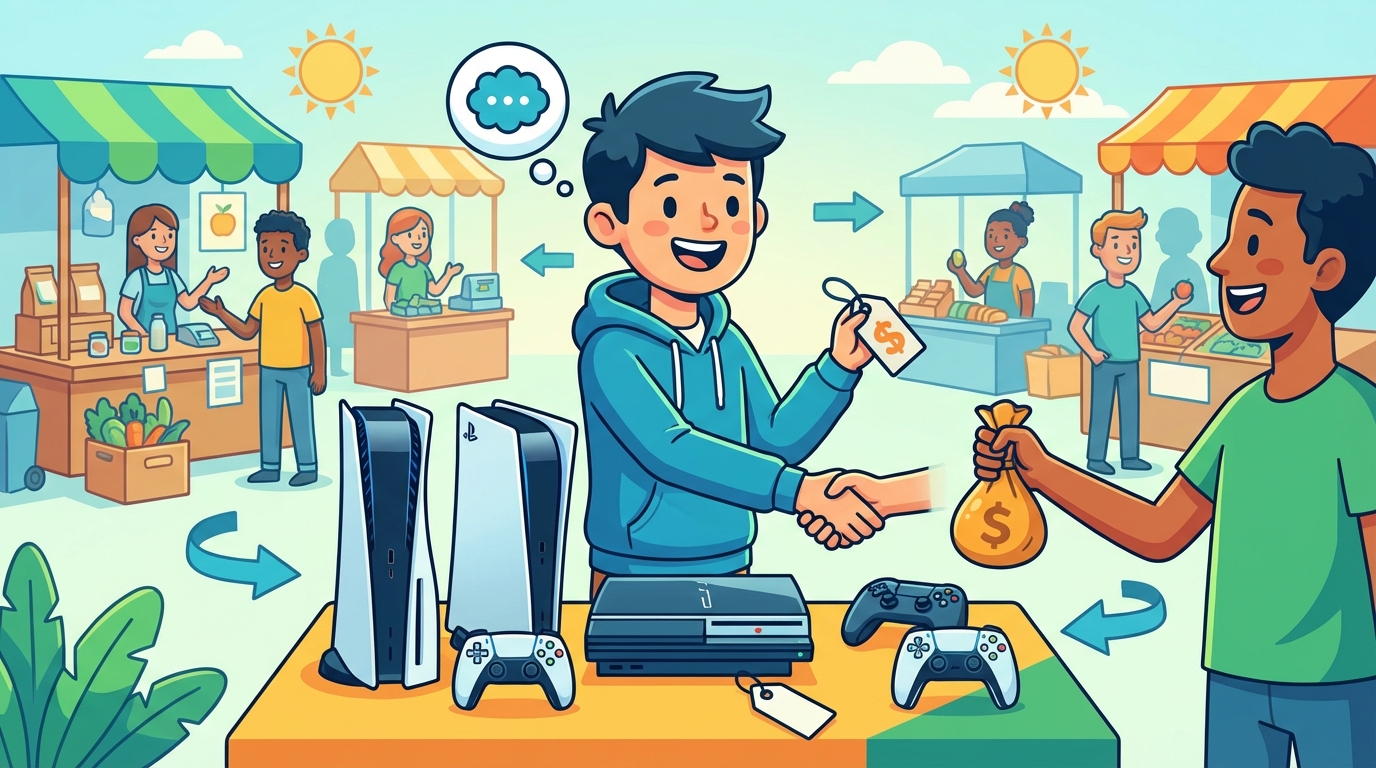
Imagine you invent a brand new video game console. 🎮 In a Capitalist system (also called a Market Economy), you get to decide how much it costs, where to sell it, and you get to keep the profit!
Capitalism is based on freedom. The government doesn't tell you what to make or buy. Instead, the "Market" decides based on what people want.
- 🏠 Private Property: Individuals and businesses own land and factories, not the government.
- 🛒 Consumer Choice: You can buy whatever you want (if you can afford it).
- 🏆 Competition: Businesses compete to have the best products and lowest prices.
🍋 Real Life Example: The Lemonade Stand
Think about a summer lemonade stand:
- Ownership: You own the lemons, the sugar, and the stand.
- Price: If you charge $10 per cup, no one buys it. If you charge $1, everyone buys it! This is Supply and Demand.
- Competition: If your neighbor opens a stand selling pink lemonade, you might have to lower your prices or make your lemonade tastier to win customers.
🤔 Who decides what gets made?
In capitalism, consumers (that's you!) decide. If everyone stops buying fidget spinners, companies stop making them. Your money is like a "vote" for what you want.
Key Facts
4 How Capitalism Works: Competition and Profit
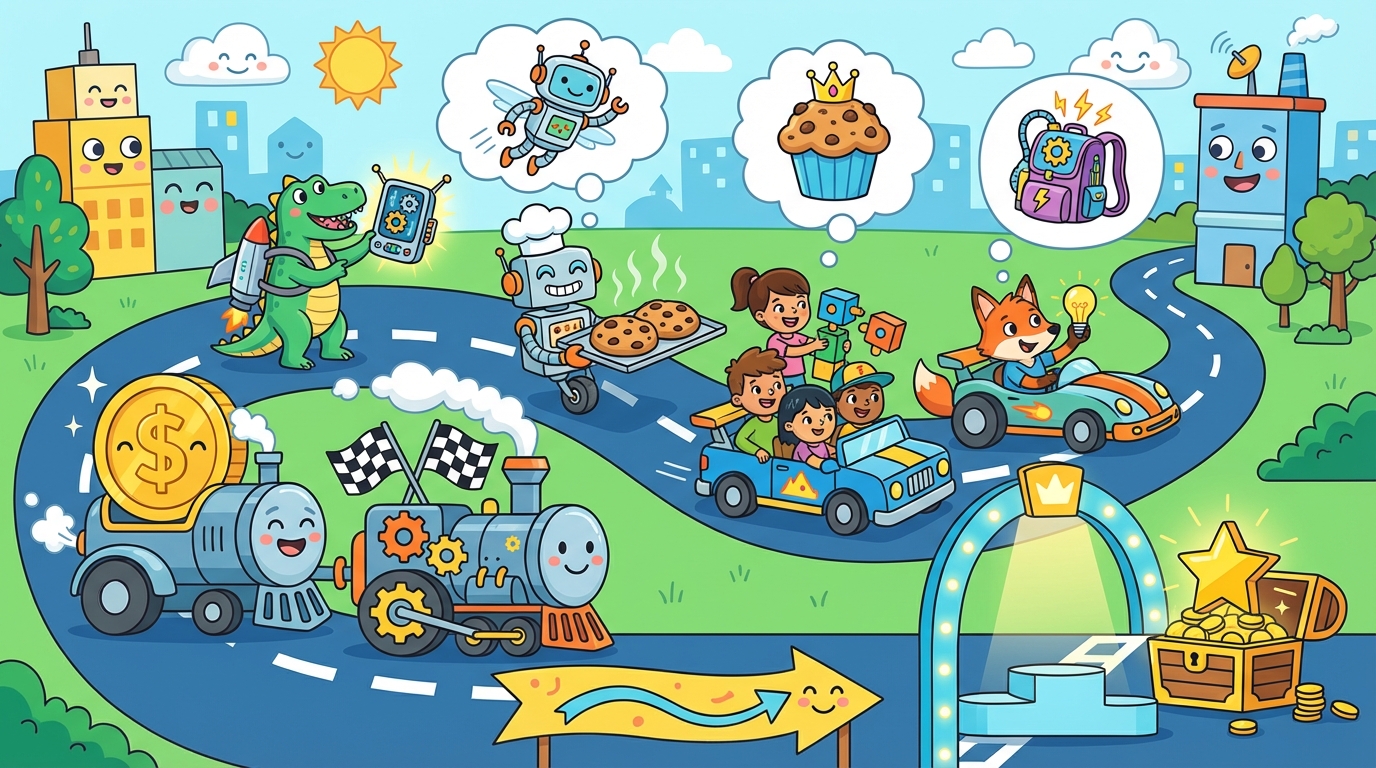
Imagine a giant race where everyone is trying to invent the coolest gadget or bake the tastiest cookie. 🍪 This race is driven by two main engines: Profit and Competition.
💰 The Goal: Profit
Profit is the money a business gets to keep after paying all its bills (like rent, workers, and materials).
It works like a reward system:
- 💵 Selling Price: You sell a burger for $10.00
- 📉 Costs: Ingredients and staff cost $7.00
- ✨ Profit: You keep $3.00!
This money motivates people to work hard and take risks to start new businesses.
🏁 The Rule: Competition
Competition happens when different businesses try to get you to buy their stuff instead of their rival's stuff.
Why is this good for you (the consumer)?
| Without Competition | With Competition |
|---|---|
| Prices stay high 📈 | Prices go down 📉 |
| Quality can be low 😐 | Quality improves 🤩 |
| Few choices 🚫 | Lots of choices ✅ |
🎮 Real Life Example: The Console Wars
Think about Xbox, PlayStation, and Nintendo. They are in constant competition. Because they all want your profit, they work super hard to make better graphics, faster games, and cooler controllers. If there was only one company, they wouldn't need to try so hard!
Key Facts
5 Socialism: The Command Economy
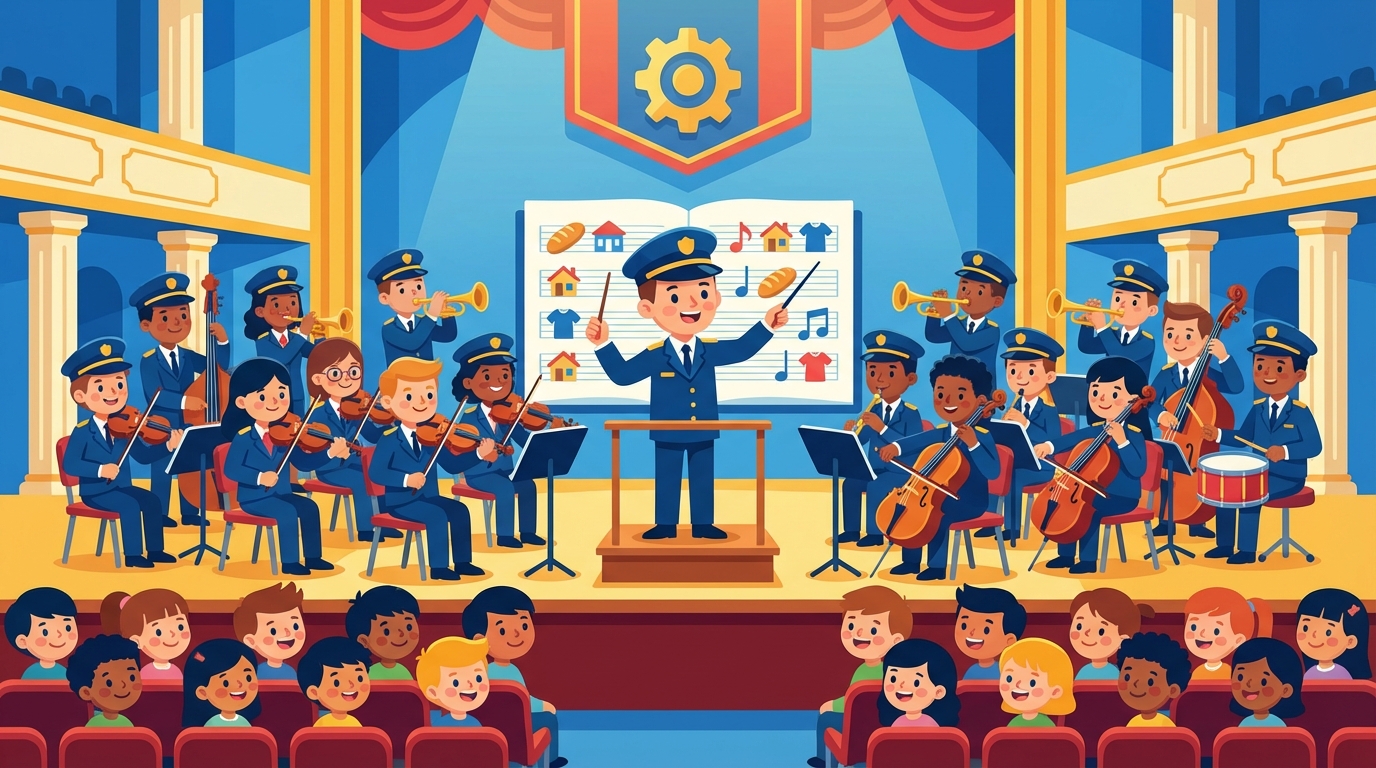
Imagine a giant orchestra 🎻. In a Command Economy (often associated with Socialism), the government is like the conductor. It decides exactly what music is played, who plays which instrument, and how fast they go!
📢 The Central Planner
In this system, the government answers the three big economic questions:
- 🏭 What to produce? The government decides (e.g., 'We need 5,000 tractors this year').
- 🛠️ How to produce? The government owns the factories and resources.
- 📦 For whom? The government tries to share goods equally among citizens.
🤝 The Goal: Equality
The main idea behind socialism is equity. The goal is to ensure that no one is too poor and that everyone has access to basic needs like 🏥 healthcare, 🎓 education, and 🏠 housing, regardless of how much money they have.
🤔 Real Life Example: The School Cafeteria
Think of a school lunch program where everyone gets the same healthy meal for free or a low price. You don't get to choose between pizza or sushi (like in a market economy), but the school ensures that every single student gets fed, and no one goes hungry.
Key Facts
6 How Socialism Works: Cooperation and Public Ownership
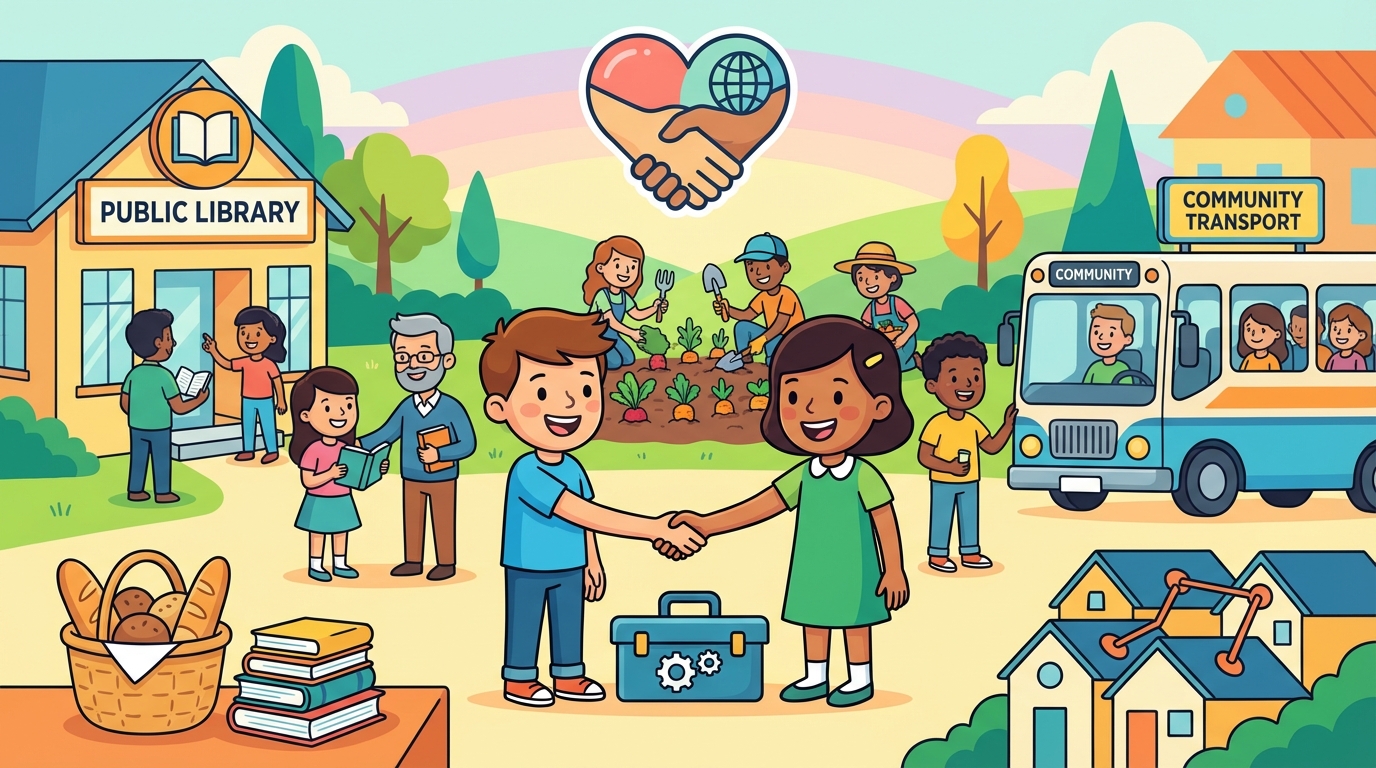
In Socialism, the main idea is that the community comes before the individual. Instead of everyone competing to be the richest, the goal is cooperation so that everyone has what they need.
In a purely capitalist system, businesses compete to make money. In socialism, the focus is on working together. The belief is that if we help each other, the whole society improves.
This means the government (representing the people) owns major resources like electricity, water, and transportation. The profits are used to pay for things everyone needs, like schools and hospitals.
🥕 The Community Garden Analogy
Imagine a Community Garden. In this garden:
- Everyone works together to plant and water the seeds.
- Nobody owns a specific patch of dirt; the whole garden belongs to everyone.
- When the vegetables grow, they are shared based on who needs them, not just who did the most work.
This is how socialism tries to manage an economy!
Key Facts
7 Comparing the Systems: Freedom vs. Security
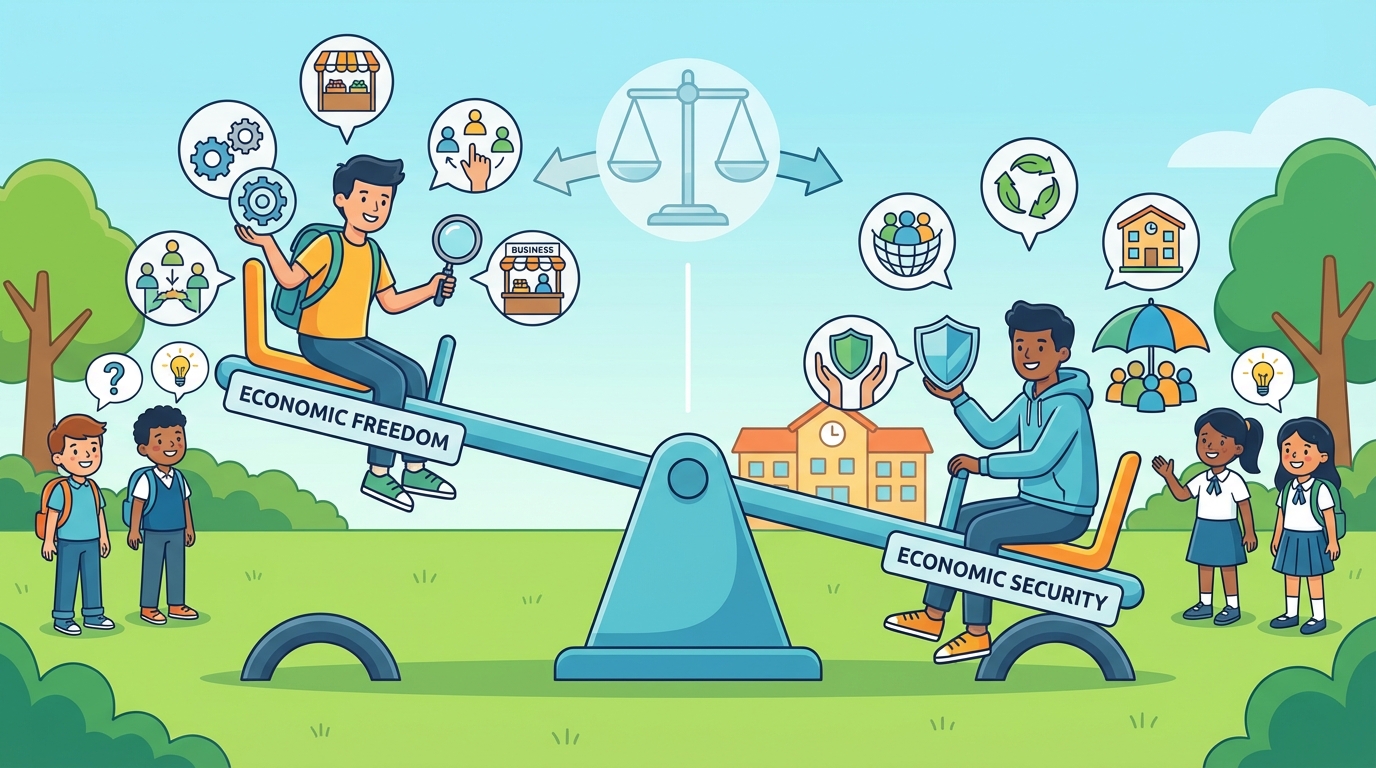
Imagine a giant seesaw in a playground ⚖️. On one side sits Economic Freedom, and on the other sits Economic Security. It is very hard to have both sides high up in the air at the same time!
🦅 Team Freedom (Capitalism)
In a system focused on Freedom, individuals make the rules.
- Pro: You can invent a new video game, start a lemonade stand, and keep the profits! 💰
- Con: If your business fails, you lose your money. There is less of a safety net.
- Motto: 'High Risk, High Reward.'
🛡️ Team Security (Socialism)
In a system focused on Security, the government ensures everyone is safe.
- Pro: Everyone gets healthcare, education, and a place to live, even if they have no money. 🏥
- Con: Taxes are very high to pay for this. You have fewer choices in what to buy.
- Motto: 'Safety and Equality for All.'
The Great Trade-Off 🔄
| Feature | Freedom Focus (Market) | Security Focus (Command) |
|---|---|---|
| Who decides what to make? | Business Owners & Customers 🛍️ | The Government 🏛️ |
| Taxes | Lower 📉 | Higher 📈 |
| If you lose your job... | You must find a new one quickly. | The government helps support you. |
Key Facts
8 Mixed Economies: Finding a Balance
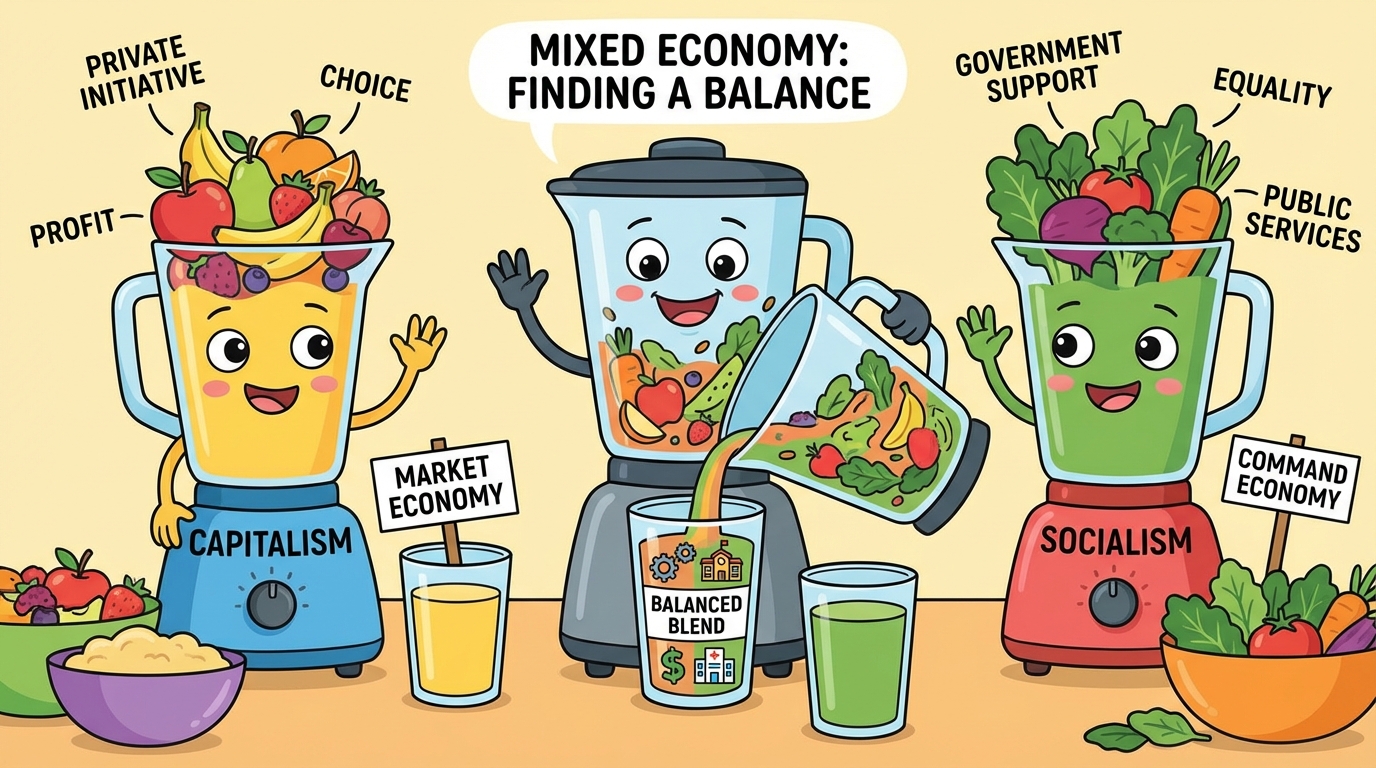
Imagine making the perfect smoothie 🥤. If you only use kale, it might be too healthy but not tasty. If you only use sugar, it's tasty but bad for you. A Mixed Economy is like blending ingredients to get the best of both worlds!
In a mixed economy, individuals and businesses still have a lot of freedom:
- ✅ You can own private property.
- ✅ Businesses compete for your money.
- ✅ You choose what job you want.
The government steps in to protect people and provide things businesses won't:
- ✅ They build roads, schools, and parks.
- ✅ They make laws to keep food and workers safe.
- ✅ They help people who are sick or elderly.
Who Does What?
| Activity | Who handles it? |
|---|---|
| Buying a Video Game 🎮 | Private Businesses (Market) |
| Delivering Mail 📬 | Government (Public Service) |
| Designing a new Sneaker 👟 | Private Businesses (Market) |
| Building an Interstate Highway 🛣️ | Government (Public Service) |
*Note: Even in the USA, which loves the free market, the government still plays a big role in keeping things fair!
Key Facts
9 Key Vocabulary
Master these important terms for your exam:
| Term | Definition |
|---|---|
|
Economic System
Sistema económico |
The method a country uses to answer questions about what to produce, how to produce it, and who gets it.
El método que usa un país para decidir qué producir, cómo producirlo y quién lo obtiene. |
|
Capitalism
Capitalismo |
An economic system where individuals and private businesses own property and make economic decisions.
Un sistema económico donde los individuos y las empresas privadas poseen la propiedad y toman las decisiones económicas. |
|
Socialism
Socialismo |
An economic system where the government owns and controls major industries and resources to share wealth.
Un sistema económico donde el gobierno posee y controla las industrias y recursos principales para compartir la riqueza. |
|
Market Economy
Economía de mercado |
An economy where decisions are made by individuals buying and selling goods based on supply and demand.
Una economía donde las decisiones las toman los individuos comprando y vendiendo bienes basados en la oferta y la demanda. |
|
Command Economy
Economía planificada |
An economy where the government makes all the decisions about what to produce and how much to charge.
Una economía donde el gobierno toma todas las decisiones sobre qué producir y cuánto cobrar. |
|
Mixed Economy
Economía mixta |
An economy that combines elements of both market and command systems; most countries have this type.
Una economía que combina elementos de los sistemas de mercado y planificado; la mayoría de los países tienen este tipo. |
|
Private Property
Propiedad privada |
Land, homes, and businesses owned by people, not the government.
Tierras, hogares y negocios que pertenecen a las personas, no al gobierno. |
|
Profit
Ganancia |
The money a business earns after paying for all its costs and expenses.
El dinero que gana un negocio después de pagar todos sus costos y gastos. |
|
Competition
Competencia |
The struggle between businesses to get the best customers by offering lower prices or better quality.
La lucha entre negocios para conseguir los mejores clientes ofreciendo precios más bajos o mejor calidad. |
|
Supply
Oferta |
The amount of a good or service that producers are willing to sell.
La cantidad de un bien o servicio que los productores están dispuestos a vender. |
|
Demand
Demanda |
The amount of a good or service that consumers are willing to buy.
La cantidad de un bien o servicio que los consumidores están dispuestos a comprar. |
|
Scarcity
Escasez |
The problem that happens because people have unlimited wants but resources are limited.
El problema que ocurre porque las personas tienen deseos ilimitados pero los recursos son limitados. |
|
Consumer
Consumidor |
A person who buys goods or uses services.
Una persona que compra bienes o utiliza servicios. |
|
Producer
Productor |
A person or company that makes goods or provides services.
Una persona o compañía que fabrica bienes o proporciona servicios. |
|
Free Enterprise
Libre empresa |
The freedom for individuals to start businesses and make money with little government control.
La libertad de los individuos para iniciar negocios y ganar dinero con poco control del gobierno. |
|
Regulation
Regulación |
Rules or laws made by the government to control or manage economic activity.
Reglas o leyes creadas por el gobierno para controlar o administrar la actividad económica. |
Time to Practice!
There are 7 questions waiting for you. Questions are shuffled each attempt.
Take the Quiz