Income (salary, money)
Learn how individuals earn money through wages, salaries, and other sources, and understand the difference between gross and net pay.
1 What is Income?

💰 Money In!
Income is money that you receive. Think of it as money flowing into your pocket, piggy bank, or bank account. Without income, we cannot buy the things we need or want!
This is money you get in exchange for work or labor.
- Walking the neighbor's dog 🐕
- Doing extra chores at home 🧹
- A job salary (for adults) 👔
This is money you receive without doing a specific job right now.
- Weekly allowance 💵
- Birthday gift money 🎂
- Interest from a savings account 📈
Most adults earn income through a salary (a set amount per year) or wages (paid by the hour). It is important to know how much income you have so you can plan your budget!
Key Facts
2 Sources of Income: Where Does Money Come From?
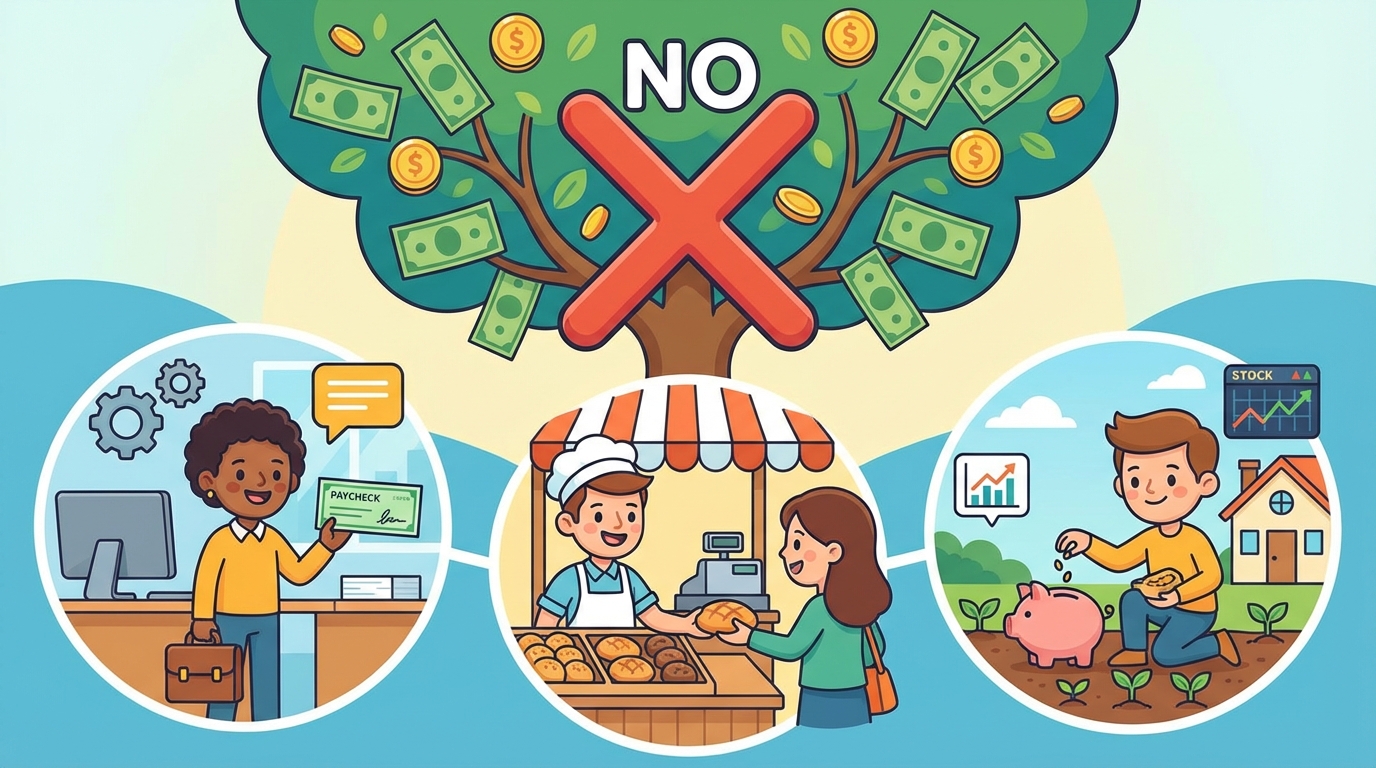
💸 Money Doesn't Grow on Trees!
We use money to buy things we need and want, but how do people get money in the first place? Income is money that an individual or business receives in exchange for providing labor, producing a good or service, or through investing capital.
This is money you get for working. It is the most common source of income for adults.
- Wages: Being paid by the hour (e.g., a cashier).
- Salary: A set amount paid every year, regardless of hours (e.g., a teacher).
- Tips/Commission: Extra money for good service or selling items.
If you start your own business, you don't get a salary. You get profit!
Example: If you sell lemonade for $1.00, but the lemons and sugar cost you $0.40, your profit (income) is $0.60 per cup.
Sometimes money comes from places other than a job.
- Gifts/Allowance: Money given to you by family.
- Interest: Money the bank pays you just for keeping your savings in their account!
- Investments: Money made from buying things that gain value over time.
Wages vs. Salary: What's the difference?
| Type | How it works | Example |
|---|---|---|
| Hourly Wage | You are paid for every specific hour you work. | Babysitting for 3 hours at $10/hour = $30. |
| Salary | You agree on a total amount for the whole year. | A graphic designer agrees to $50,000 a year. |
Key Facts
3 Earned Income: Wages (Hourly Pay)

Have you ever heard the phrase 'Time is Money'? 🕰️💰 When we talk about Wages or Hourly Pay, that phrase is literally true! This is the most common way for teenagers and young adults to earn their first income.
An hourly wage is a specific amount of money paid to a worker for one hour of work. Unlike a fixed salary (where you get paid the same no matter how long you take), with hourly wages, your paycheck depends on the clock.
- 🟢 Pro: If you work more hours, you earn more money!
- 🔴 Con: If you get sick and can't work, you usually don't get paid for that time.
🧮 The Math Formula
Calculating your pay is simple multiplication:
Hours Worked × Hourly Rate = Gross Pay
(Gross Pay is your money before taxes are taken out!)
💡 Real Life Example: Maya's Summer Job
Maya got a summer job helping at the local library. Her wage is $12.00 per hour. Let's see how much she earned in one week.
| Day | Hours Worked | Calculation | Daily Earnings |
|---|---|---|---|
| Monday | 3 hours | 3 × $12 | $36.00 |
| Wednesday | 2 hours | 2 × $12 | $24.00 |
| Saturday | 5 hours | 5 × $12 | $60.00 |
| TOTAL | 10 Hours | 10 × $12 | $120.00 |
Key Facts
4 Earned Income: Salary (Fixed Pay)

Imagine getting a set allowance every single month, regardless of exactly how many minutes you spent on chores. That is how a Salary works!
📅 What is a Salary?
A salary is a fixed amount of money an employer agrees to pay an employee, usually calculated by the year (Annual Salary). It doesn't matter if you work 38 hours one week and 42 hours the next; the pay check remains the same.
Agreement
Regular Pay
Fixed Amount
🧮 Let's do the Math: The Paycheck
Salaries are usually discussed as a yearly number, but paid monthly or bi-weekly.
Annual Salary:
$48,000
Monthly Paycheck:
$48,000 ÷ 12 months = $4,000 / month
Who earns a salary? Common examples include teachers 👩🏫, software engineers 💻, and office managers 💼. They are paid to get the job done, not just for the hours they sit at a desk.
Key Facts
5 Gross Income vs. Net Income
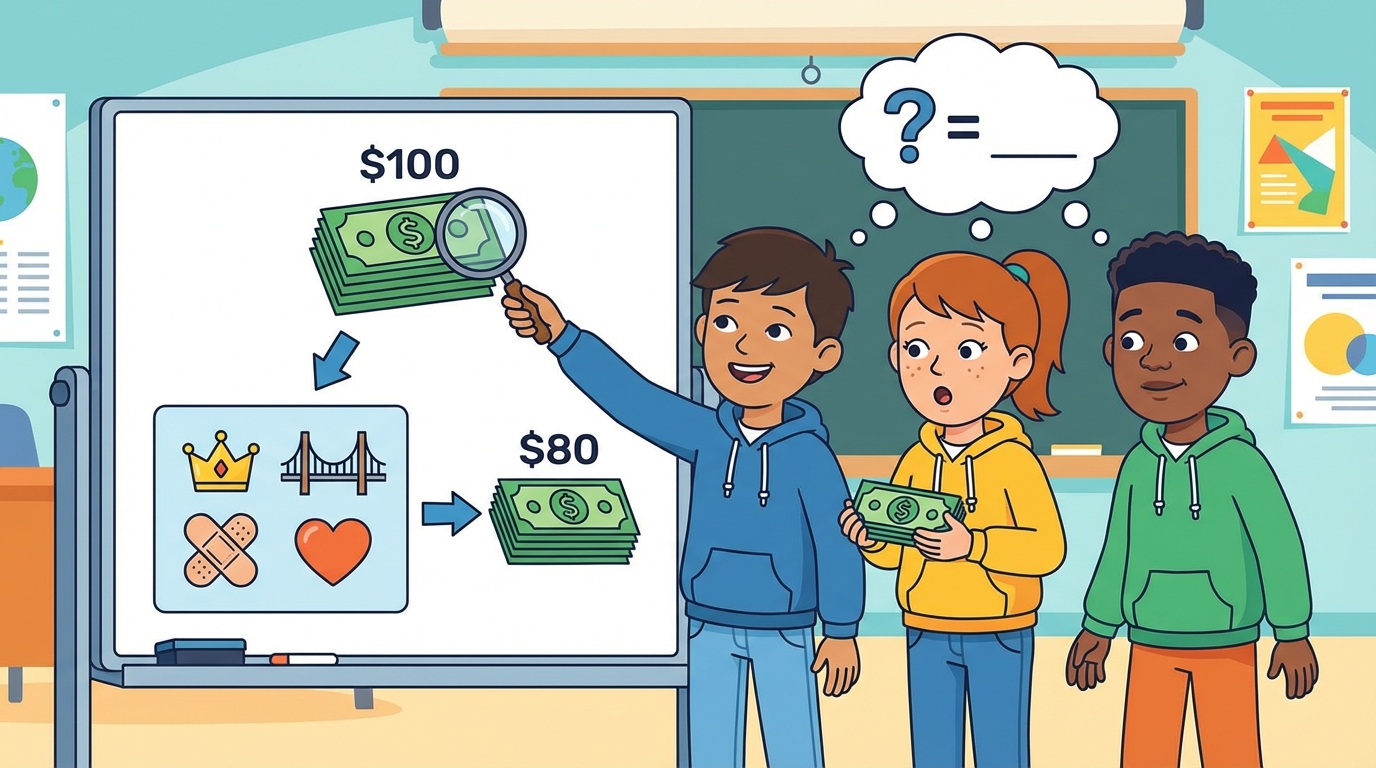
💰 The Mystery of the Missing Money
Imagine you get a job that pays $100. When you get your check, it only says $80! Did the money vanish? 😲 No! This is the difference between Gross and Net income.
🦁 Gross Income
(The Big Number)This is the total amount of money you earn before anyone takes anything out.
- ✅ Your hourly wage x hours worked.
- ✅ Your total salary.
- ✅ The price you charge for a service.
Gross Income = $150
🦋 Net Income
(Take-Home Pay)This is what lands in your pocket after deductions (taxes and benefits) are taken out.
- ✅ Also called 'Take-home pay'.
- ✅ The money you can actually spend.
- ✅ Always smaller than Gross Income.
Net Income = $120
👀 Where did the money go? (Deductions)
| Item | Amount | Type |
|---|---|---|
| Gross Income | $500.00 | Starting Point 🏁 |
| Federal Tax | - $50.00 | Deduction 📉 |
| Social Security | - $31.00 | Deduction 📉 |
| Medicare | - $7.25 | Deduction 📉 |
| Net Income | $411.75 | Your Money! 💵 |
Key Facts
6 Understanding Deductions and Taxes

Have you ever heard adults complain that their paycheck is smaller than they expected? 😲 That is because of deductions! When you earn money, you don't always get to keep every single penny. Let's find out where that money goes.
This is the total amount of money you earn before any money is taken out. If a job pays $100 a week, your Gross Income is $100.
This is what you actually take home (into your pocket or bank account) after taxes and deductions. This is often called Take-Home Pay.
Where does the money go? 📉
The money subtracted from your Gross Income is called a deduction. The most common deduction is Taxes. We pay taxes to the government to fund public services that everyone uses.
- 🏫 Public Schools and Libraries
- 🛣️ Roads, Bridges, and Parks
- 🚒 Firefighters and Police Officers
- 🛡️ Military and Safety
Example: The Lemonade Stand 🍋
| Item | Amount | Notes |
|---|---|---|
| Gross Pay | $50.00 | Total sales from lemonade |
| Taxes (20%) | - $10.00 | Goes to the 'Town Fund' |
| Supplies | - $5.00 | Cost of lemons and sugar |
| Net Pay | $35.00 | Money you keep! |
Key Facts
7 Human Capital: Education and Earnings

🎓 Investing in Yourself
Have you ever thought about yourself as a treasure chest? Human Capital is the value of all the skills, knowledge, and experience you have inside your brain!
The Education Connection 📈
Generally, people with more education and specialized skills tend to earn higher incomes. This is because they can solve harder problems that fewer people know how to fix.
| Level of Education/Training | Typical Job Examples | Potential Earnings |
|---|---|---|
| High School Diploma 🎒 | Retail, Driver, Assistant | Base Level 💵 |
| Technical/Trade School 🛠️ | Electrician, Plumber, Web Dev | Medium to High 💵💵 |
| University Degree 🎓 | Teacher, Engineer, Accountant | High 💵💵💵 |
| Advanced Degree 🔬 | Doctor, Scientist, Professor | Very High 💵💵💵💵 |
But it's not just about school! Soft skills like teamwork 🤝, creativity 🎨, and being reliable are also part of your human capital that employers pay for.
Key Facts
8 Unearned Income: Gifts, Interest, and Allowance
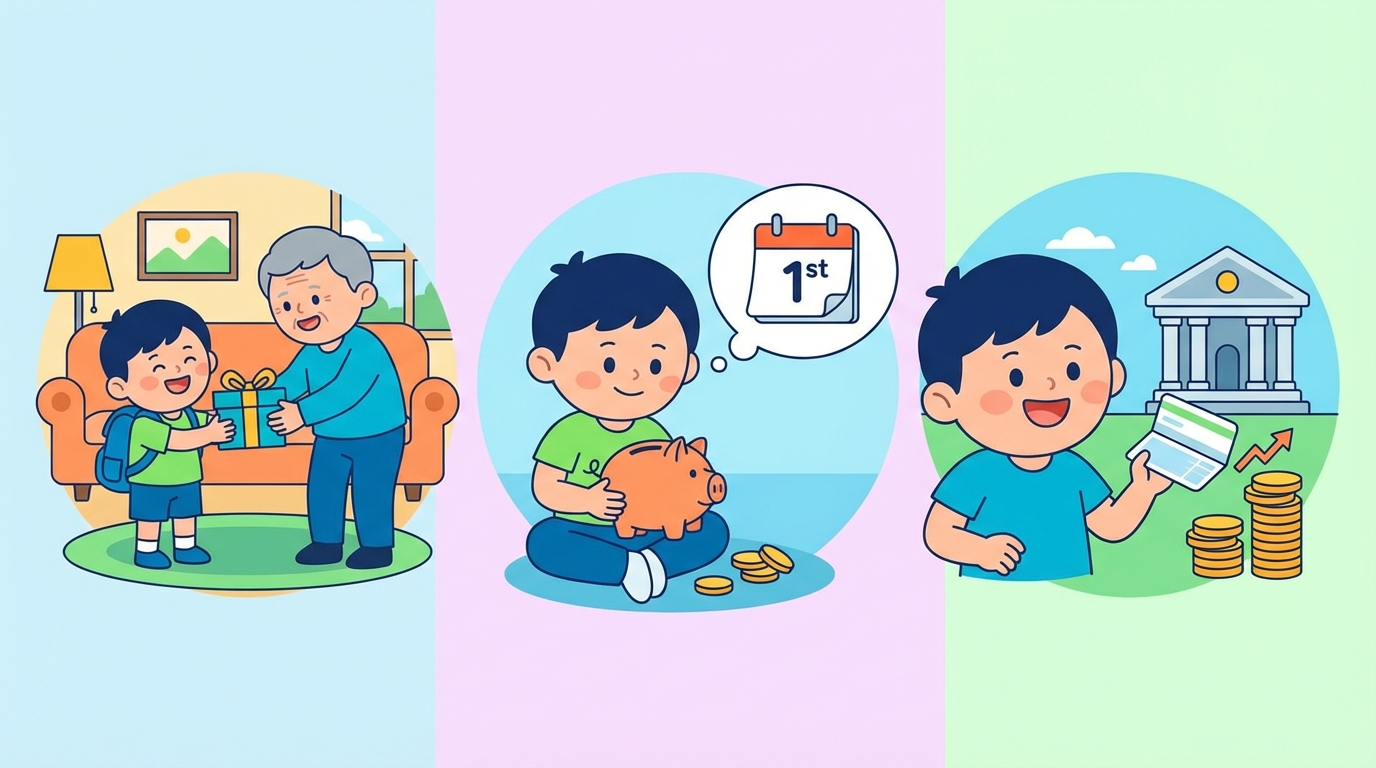
Not All Money Comes from a Job!
Unearned income is money you receive without doing a specific job or providing a service at that moment. It is different from a salary or wage.
For most 6th graders, this is the most common form of income!
- Gifts: Money inside a birthday card or holiday gift. This is irregular income—you can't always predict when you get it.
- Allowance: A set amount of money parents might give you weekly or monthly. While some parents require chores (making it earned), a pure allowance is given to help you learn how to manage money.
Did you know your money can have a job too? When you put money in a Savings Account at a bank, the bank pays you a small fee to keep it there.
💰 ➡️ 🏦 ➡️ 💵
This payment is called Interest. It is the ultimate unearned income because you are sleeping while your money grows!
Earned vs. Unearned Income
| Type | Source | Effort Required |
|---|---|---|
| Earned | Jobs, Chores, Lemonade Stand | High (Active work) 😓 |
| Unearned | Birthday cash, Interest, Allowance | Low (Passive/Gift) 😎 |
Key Facts
9 Key Vocabulary
Master these important terms for your exam:
| Term | Definition |
|---|---|
|
Income
Ingreso |
Money received, especially on a regular basis, for work or through investments.
Dinero recibido, especialmente de forma regular, por trabajo o inversiones. |
|
Salary
Sueldo |
A fixed regular payment, typically paid on a monthly or biweekly basis, often expressed as an annual sum.
Un pago fijo regular, generalmente pagado mensual o quincenalmente, a menudo expresado como una suma anual. |
|
Wage
Salario |
Payment for labor or services usually according to a contract and on an hourly, daily, or piecework basis.
Pago por trabajo o servicios, generalmente según un contrato y basado en horas, días o trabajo por pieza. |
|
Gross Income
Ingreso bruto |
The total amount of income earned before any taxes or deductions are taken out.
La cantidad total de ingresos ganados antes de que se descuenten impuestos o deducciones. |
|
Net Income
Ingreso neto |
The amount of income left after taxes and other deductions have been subtracted; also called 'take-home pay'.
La cantidad de ingresos que queda después de restar impuestos y otras deducciones; también llamado 'salario neto'. |
|
Human Capital
Capital humano |
The skills, knowledge, and experience possessed by an individual that make them valuable to an employer.
Las habilidades, conocimientos y experiencia que posee un individuo y que lo hacen valioso para un empleador. |
|
Taxes
Impuestos |
Mandatory contributions levied on individuals or corporations by a government entity to finance government activities.
Contribuciones obligatorias impuestas a individuos o corporaciones por una entidad gubernamental para financiar actividades del gobierno. |
|
Deductions
Deducciones |
Amounts that are subtracted from your gross pay, such as taxes, insurance, and retirement contributions.
Cantidades que se restan de tu pago bruto, como impuestos, seguros y contribuciones para la jubilación. |
|
Disposable Income
Ingreso disponible |
Income remaining after deduction of taxes and other mandatory charges, available to be spent or saved.
Ingreso restante después de la deducción de impuestos y otros cargos obligatorios, disponible para gastar o ahorrar. |
|
Minimum Wage
Salario mínimo |
The lowest wage permitted by law or by a special agreement (such as one with a labor union).
El salario más bajo permitido por la ley o por un acuerdo especial (como uno con un sindicato). |
|
Commission
Comisión |
An amount of money, typically a set percentage of the value involved, paid to an agent in a commercial transaction.
Una cantidad de dinero, generalmente un porcentaje fijo del valor involucrado, pagado a un agente en una transacción comercial. |
|
Occupation
Ocupación |
A job or profession.
Un trabajo o profesión. |
|
Paycheck
Cheque de pago |
A check for salary or wages made out to an employee.
Un cheque por sueldo o salario emitido a nombre de un empleado. |
|
Savings
Ahorros |
The money one has saved, especially through a bank or official scheme.
El dinero que uno ha guardado, especialmente a través de un banco o plan oficial. |
|
Budget
Presupuesto |
An estimate of income and expenditure for a set period of time.
Una estimación de ingresos y gastos para un período de tiempo determinado. |
Time to Practice!
There are 7 questions waiting for you. Questions are shuffled each attempt.
Take the Quiz