Meritocracy (Effort)
Understanding how effort, talent, and hard work influence success and how economic systems reward achievement.
1 What is Meritocracy?
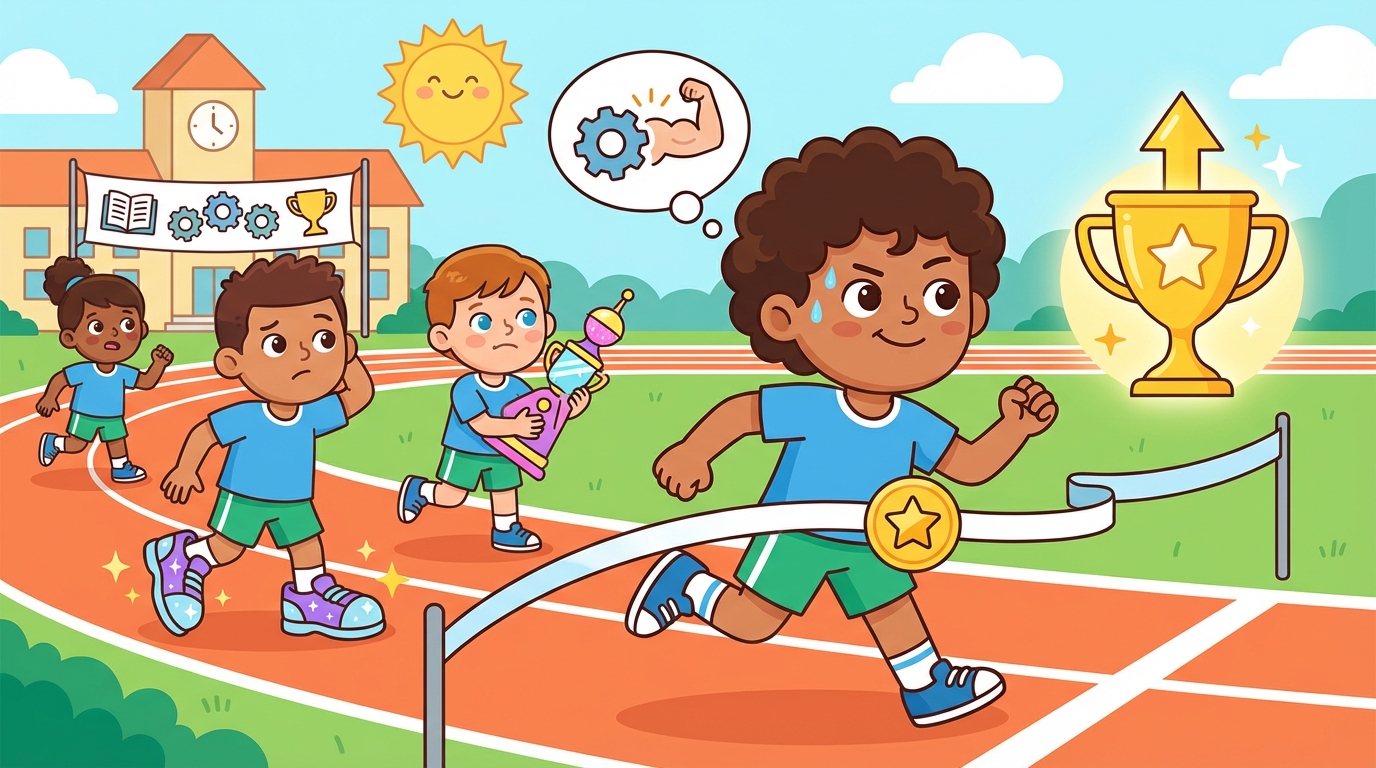
🏆 The Big Idea
Imagine a race. Who should win? The person with the most expensive shoes, or the person who trained the hardest and runs the fastest? Meritocracy is the belief that the hard worker should win!
Breaking Down the Word 🧩
The word Meritocracy is like a puzzle made of two pieces:
- Merit: Being worthy, having talent, or working hard.
- -cracy: A system of rule or power (like in 'Democracy').
So, a meritocracy is a system where people get ahead based on their ability and effort, not because of who their parents are or how much money they have.
Meritocracy vs. Favoritism ⚖️
| Meritocracy (Effort) 🚀 | Favoritism (Connections) 🤝 |
|---|---|
| You get an 'A' on the test because you studied all weekend. | You get an 'A' on the test because the teacher is your neighbor. |
| The fastest runner becomes the team captain. | The coach's son becomes the team captain (even if he is slow). |
| You get a job because you have the best skills. | You get a job because your dad owns the company. |
💡 Think about it: In a perfect meritocracy, we believe that if you work hard and learn new skills, you can climb the 'ladder of success' regardless of where you started.
Key Facts
2 The Components of Merit: Talent and Effort

Have you ever wondered why some people are really good at video games, sports, or math? usually, it is a mix of two special ingredients: Talent and Effort. Together, these create Merit!
The Secret Formula: 🧪
Talent + Effort = Merit
Talent is what you are naturally good at without trying too hard. It is like a head start in a race.
- Being tall (good for basketball 🏀).
- Having a good ear for music 🎵.
- Learning math quickly 🧮.
Note: You usually can't control your natural talent!
Effort is how hard you work to improve. It is the grit and practice you put in every day.
- Practicing free throws for an hour.
- Studying flashcards for a test 📝.
- Not giving up when things get hard.
Note: You have 100% control over your effort!
Talent vs. Effort: What's the Difference?
| Feature | Talent 🌟 | Effort 🔋 |
|---|---|---|
| Where it comes from | Nature / DNA | Your Willpower |
| Can you change it? | Not really | Yes! Anytime. |
| Analogy | The seed of a plant 🌱 | Watering the plant 🚿 |
Key Facts
3 Merit vs. Privilege: Defining Fairness
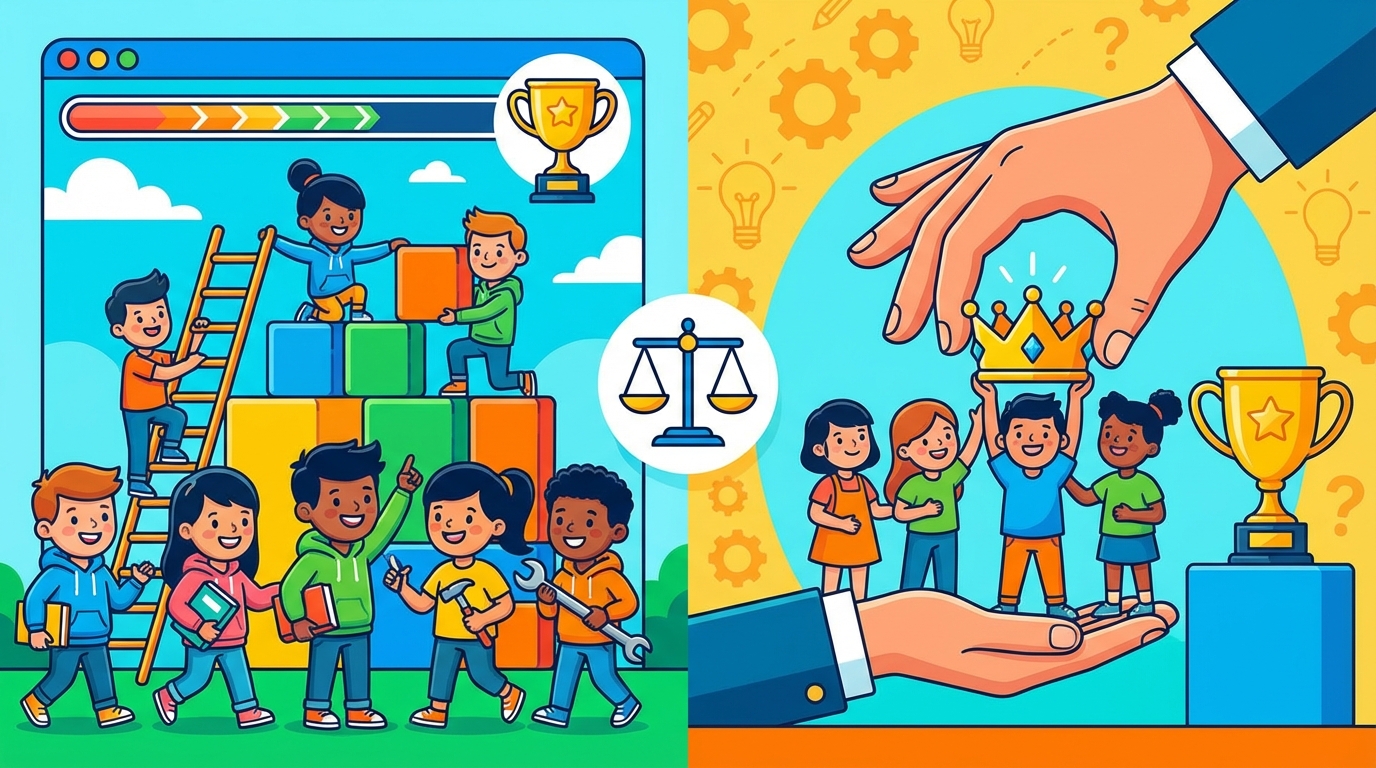
Imagine a video game where the player with the highest score wins simply because they played the best. That is Meritocracy. It is the economic idea that power, money, and success should go to people based on their ability and talent, not because of who their parents are or how much money they started with.
🌟 The Role of Merit
Merit is all about your personal input. It includes:
- Hard Work: Studying late for a math test.
- Talent: Being naturally fast at running.
- Effort: Practicing piano every single day.
🚀 The Role of Privilege
Privilege is like getting a head start in a race. It includes:
- Resources: Having a private tutor or fast computer.
- Connections: Knowing someone who can give you a job.
- Luck: Being born in a safe neighborhood with good schools.
🤔 The Fairness Puzzle
Is it a fair race if everyone runs the same distance, but one person has brand new running shoes and the other is barefoot? Fairness in economics is tricky! True fairness tries to balance rewarding hard work (Merit) while acknowledging that not everyone starts at the same place (Privilege).
Key Facts
4 Incentives: The Rewards for Working Hard

Why do people wake up early to go to work? Why do athletes practice for hours? The answer is incentives! 🚀
An incentive is something that motivates you to do something. It is the 'prize' waiting at the finish line. In a meritocracy, incentives are designed to encourage people to work hard, learn new skills, and solve problems.
How Incentives Work in Real Life
In economics, we believe that people respond to rewards. If the reward (incentive) is good, people will put in more effort.
| The Effort (Work) 😓 | The Incentive (Reward) 🎁 |
|---|---|
| Studying extra hours for math | Getting an 'A' on the report card 📝 |
| Mowing the neighbor's lawn | Earning $20 spending money 💵 |
| Practicing basketball daily | Becoming the team captain 🏀 |
| Inventing a new gadget | Making profit from sales 💰 |
Key Facts
5 Equality of Opportunity vs. Equality of Outcome
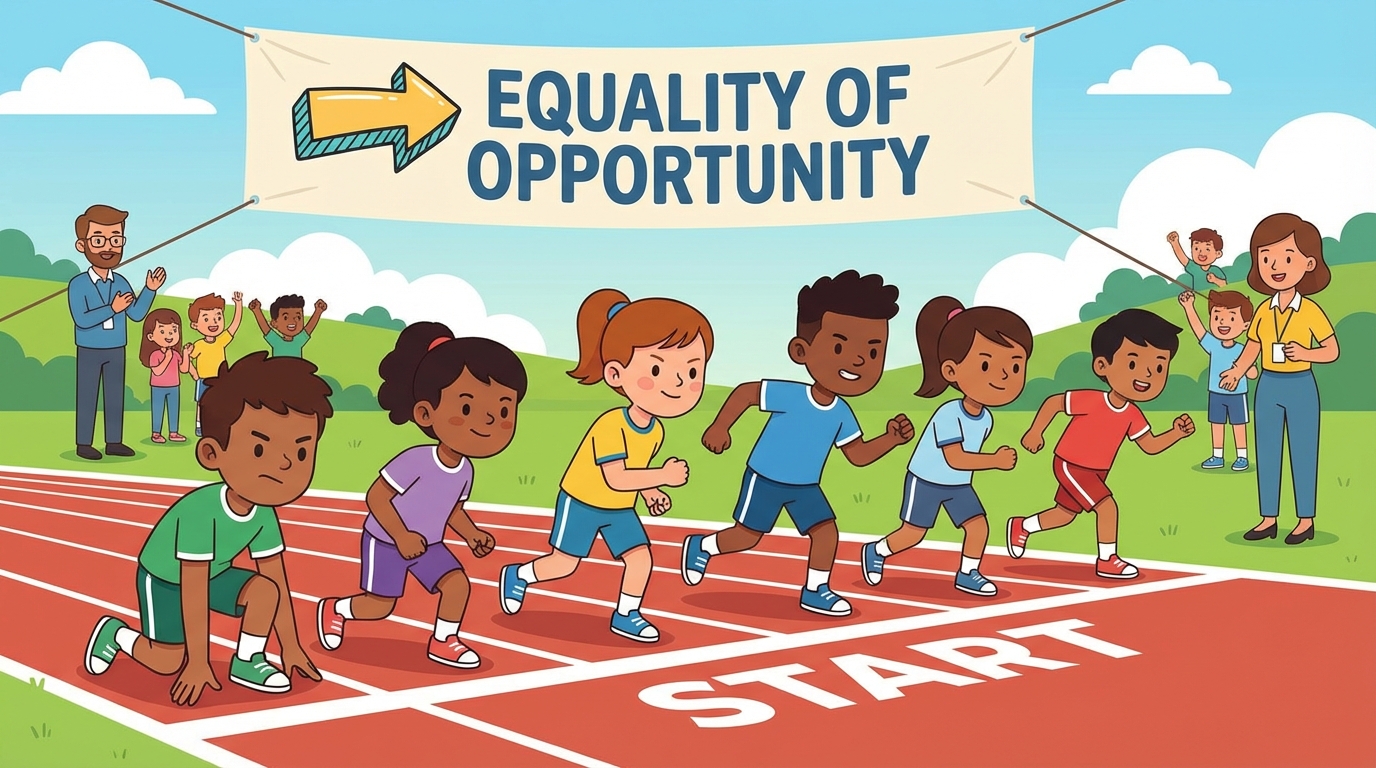
Imagine a race at your school's field day. 🏃💨 How do we make it fair?
🏁 Equality of Opportunity
This focuses on the Starting Line.
It means everyone gets to participate, everyone has running shoes, and the rules are the same for everyone. However, the person who trains the hardest and runs the fastest wins.
- ✅ Encourages Effort
- ✅ Supports Meritocracy
🥇 Equality of Outcome
This focuses on the Finish Line.
It means we want everyone to finish at the same time or get the same trophy, regardless of how fast they ran. It tries to make sure no one feels left behind.
- ✅ Ensures Sameness
- ❌ Can reduce motivation to try hard
Comparison Table ⚖️
| Scenario | Equality of Opportunity | Equality of Outcome |
|---|---|---|
| School Grades 📚 | Everyone has books and a teacher. You get an 'A' if you study hard. | Everyone gets a 'B' automatically so no one fails. |
| Jobs 💼 | The most qualified person gets the job. | Jobs are distributed so every group has the exact same number. |
Key Facts
6 Meritocracy in Daily Life: Sports and Grades
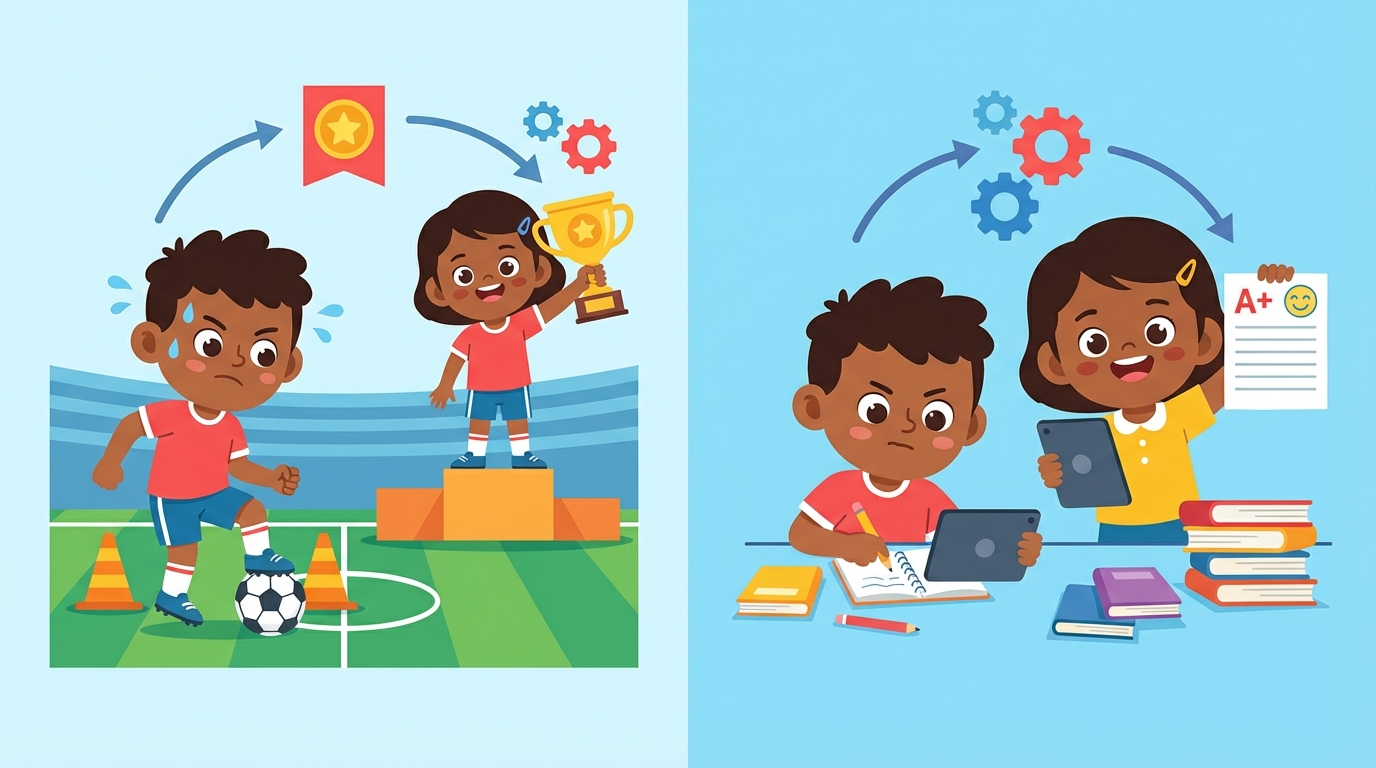
You might not realize it, but you participate in meritocratic systems every single day! Two of the best examples are when you are playing sports or working in the classroom. In both places, the formula is usually: Effort + Skill = Success.
⚽ On the Field
Sports are a classic example of meritocracy. The scoreboard doesn't care who your parents are or where you live. It only cares about how you play!
- The Merit: Speed, strength, and hours of practice.
- The Reward: Winning the game, making the team, or getting a trophy. 🏆
📚 In the Classroom
School is designed to reward you for what you learn. An 'A' grade is a symbol that you mastered the material through hard work.
- The Merit: Studying, doing homework, and listening.
- The Reward: Good grades, Honor Roll, and knowledge. 🌟
🤔 Is it always perfect?
Sometimes a referee makes a bad call, or a test question is confusing. However, in a true meritocracy, we try to make the rules fair for everyone so that the person who tries the hardest and does the best gets the reward.
Key Facts
7 How Competition Drives Innovation
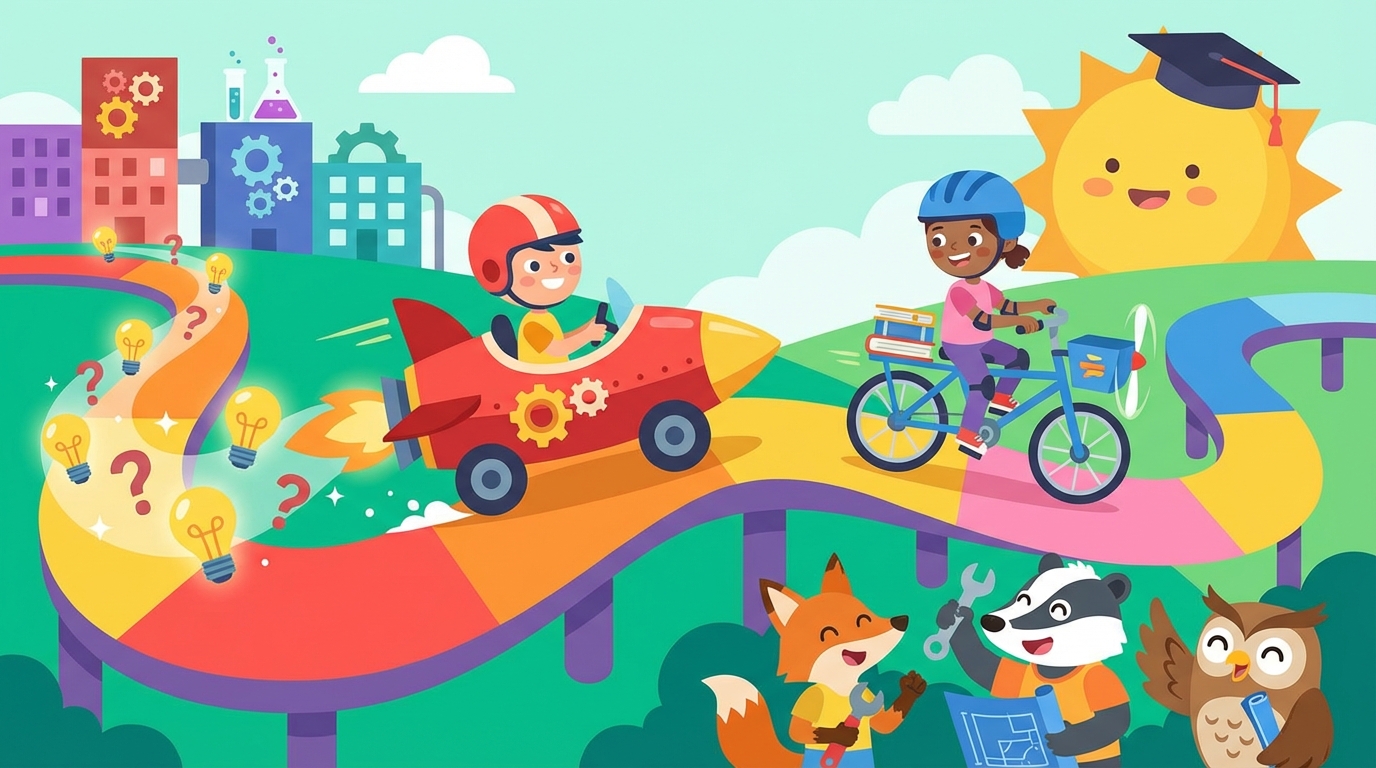
🚀 The Race to Be the Best!
In a meritocracy, rewards go to those who put in the effort to create something great. In economics, this is called competition. Just like in sports, when companies compete against each other, they try harder to win. This effort leads to innovation—new and better inventions!
Imagine if only one company made sneakers. They wouldn't need to try hard because you have no other choice.
- ❌ Boring designs
- ❌ High prices
- ❌ No improvements
When many companies sell sneakers, they fight for your attention! They must use merit and effort to stand out.
- ✅ Cooler styles & colors
- ✅ More comfortable materials
- ✅ Better prices (Sales!)
💡 Real Life Example: Video Games
Remember 8-bit graphics? 👾 Because companies like Nintendo, Sony, and Microsoft compete to have the best console, they invest millions in research. The result? Today we have 4K graphics and Virtual Reality! That is innovation driven by the desire to win.
Key Facts
8 Challenges: The 'Starting Line' Problem
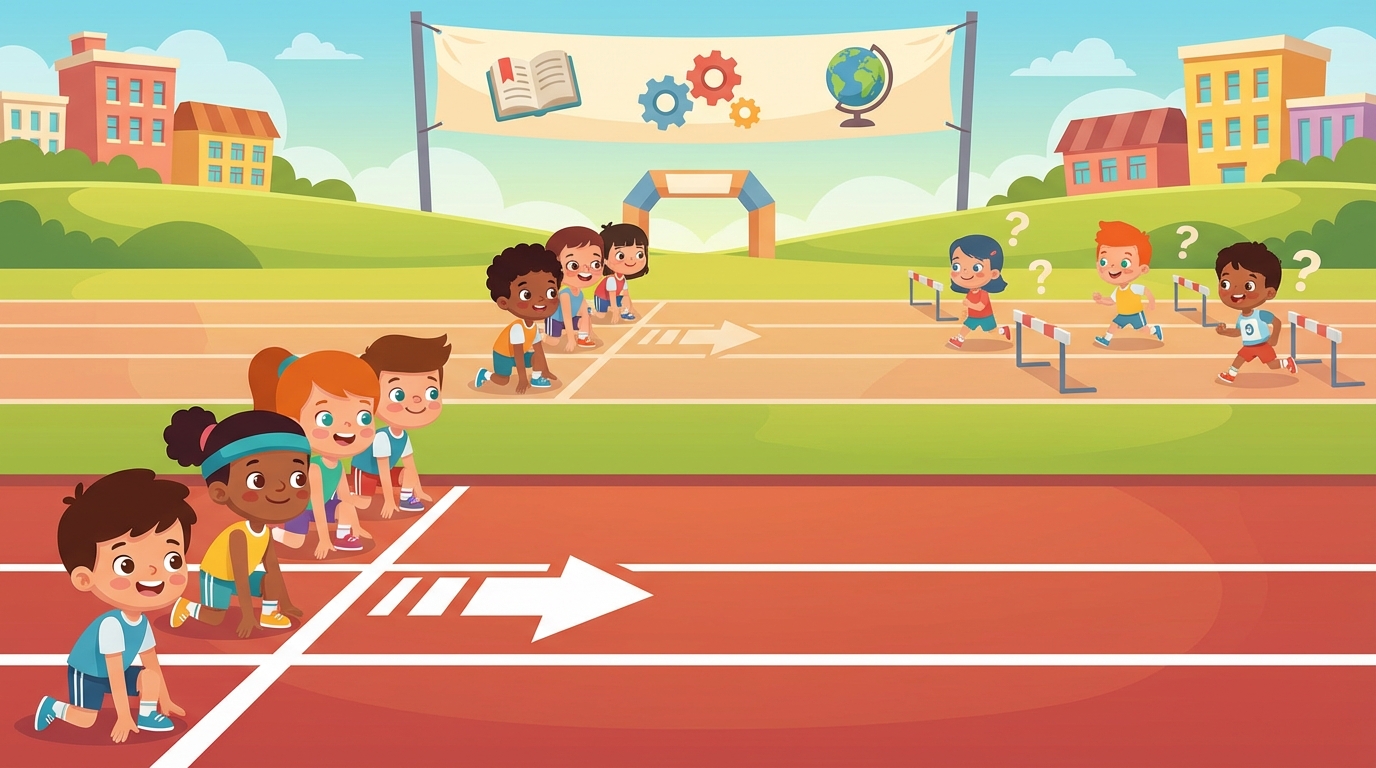
🏃 The Race of Life Metaphor
Imagine a 100-meter dash. Usually, everyone starts at the exact same line, right? That is fair.
But in economics and real life, not everyone begins at the same 'starting line.' Meritocracy assumes that if you run fast (work hard), you will win. However, what if some runners start 20 meters ahead, and others have to start 20 meters behind with hurdles in their way?
🔍 Spot the Difference: Two Students
🌟 Student A (The Head Start)
- Has a fast laptop and high-speed internet.
- Parents pay for a private math tutor.
- Has a quiet room to study in every night.
🧗 Student B (The Hurdles)
- Shares one slow computer with 3 siblings.
- Has to help with chores or work after school.
- Studies in a noisy kitchen.
If both students get a 'B' on their math test, who actually put in more effort? Economics teaches us that to have a true meritocracy, we need to think about Equity (giving everyone a fair chance) rather than just assuming everyone has the same tools.
Key Facts
9 Key Vocabulary
Master these important terms for your exam:
| Term | Definition |
|---|---|
|
Meritocracy
Meritocracia |
A system where people are rewarded and advance based on their ability and hard work rather than their wealth or social class.
Un sistema donde las personas son recompensadas y avanzan basándose en su habilidad y trabajo duro en lugar de su riqueza o clase social. |
|
Effort
Esfuerzo |
The physical or mental energy applied to complete a task or achieve a goal.
La energía física o mental aplicada para completar una tarea o lograr una meta. |
|
Human Capital
Capital Humano |
The skills, knowledge, and experience possessed by an individual that make them valuable to an economy.
Las habilidades, conocimientos y experiencia que posee un individuo y que lo hacen valioso para una economía. |
|
Incentive
Incentivo |
Something, like money or a reward, that motivates a person to do something or work harder.
Algo, como dinero o una recompensa, que motiva a una persona a hacer algo o trabajar más duro. |
|
Social Mobility
Movilidad Social |
The ability of individuals or families to move up or down the economic ladder (income or social status).
La capacidad de los individuos o familias para subir o bajar en la escala económica (ingresos o estatus social). |
|
Wages
Salario |
Money earned for work, usually calculated by the hour or by the amount of work done.
Dinero ganado por trabajar, generalmente calculado por hora o por la cantidad de trabajo realizado. |
|
Productivity
Productividad |
A measure of how efficiently goods and services are produced; getting more done in less time.
Una medida de cuán eficientemente se producen bienes y servicios; hacer más en menos tiempo. |
|
Equal Opportunity
Igualdad de Oportunidades |
The idea that everyone should have the same chance to succeed, regardless of their background.
La idea de que todos deberían tener la misma oportunidad de tener éxito, independientemente de su origen. |
|
Skill
Habilidad |
The ability to do something well, usually gained through training or experience.
La capacidad de hacer algo bien, generalmente adquirida a través de entrenamiento o experiencia. |
|
Qualification
Cualificación / Título |
An official record showing that you have finished a training course or have the necessary skills (like a diploma).
Un registro oficial que muestra que has terminado un curso de formación o tienes las habilidades necesarias (como un diploma). |
|
Competition
Competencia |
A situation where people or businesses try to be more successful than others.
Una situación donde las personas o empresas intentan ser más exitosas que otras. |
|
Achievement
Logro |
Something important that you succeed in doing by your own efforts.
Algo importante que logras hacer mediante tus propios esfuerzos. |
|
Talent
Talento |
A natural ability to be good at something, especially without being taught.
Una capacidad natural para ser bueno en algo, especialmente sin haber sido enseñado. |
|
Standard of Living
Nivel de Vida |
The level of wealth, comfort, and goods available to a certain socioeconomic class or geographic area.
El nivel de riqueza, comodidad y bienes disponibles para una cierta clase socioeconómica o área geográfica. |
|
Labor Market
Mercado Laboral |
The supply of people available to work and the demand for those workers by employers.
La oferta de personas disponibles para trabajar y la demanda de esos trabajadores por parte de los empleadores. |
Time to Practice!
There are 7 questions waiting for you. Questions are shuffled each attempt.
Take the Quiz