Socioeconomic classes (low, middle, high)
An introduction to how societies are structured based on income, education, and occupation, and how this impacts daily life.
1 What is Socioeconomic Status?
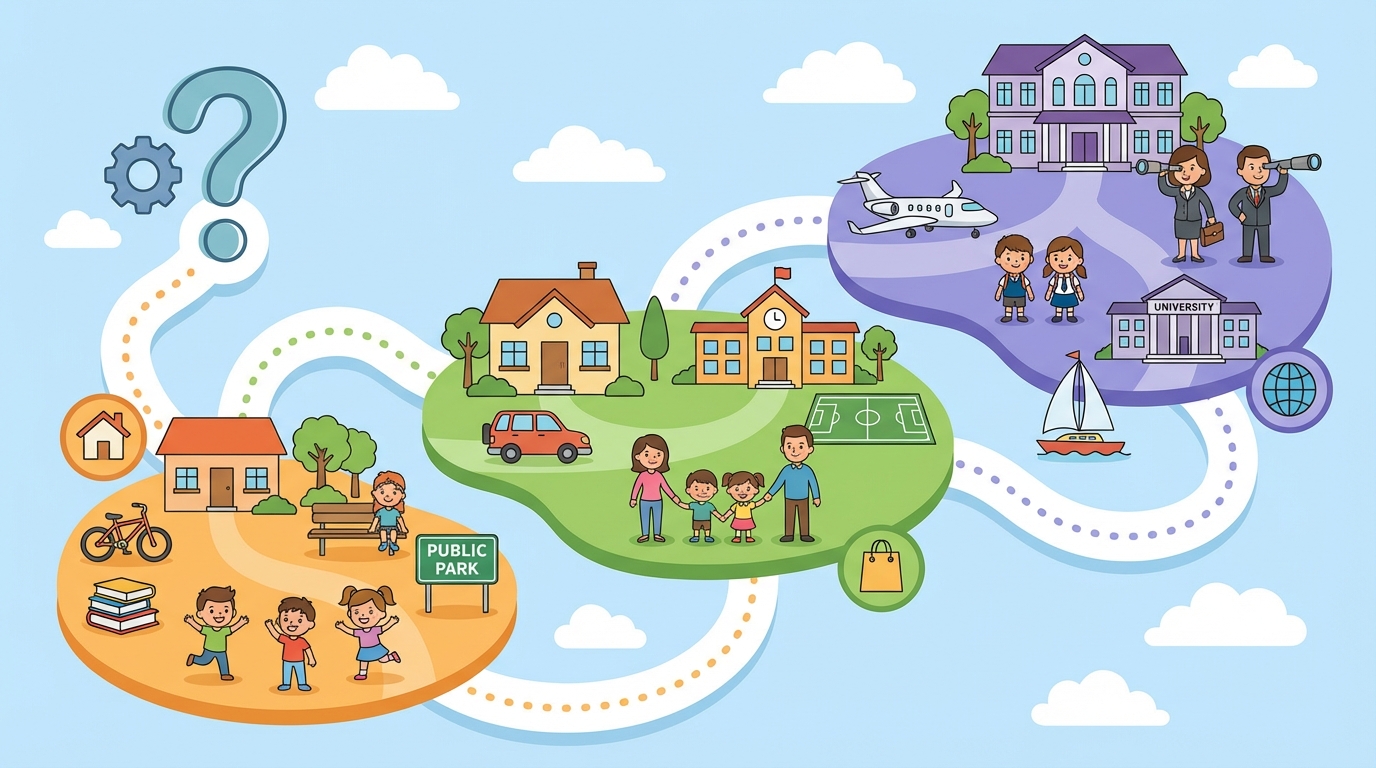
Have you ever wondered how economists group people to understand how they live? 🤔
Socioeconomic Status (often called SES) is like a social coordinate. It tells us about a person's position in society based on more than just the money in their piggy bank. It is a combination of three distinct factors:
💸
Income
How much money a family earns from work or investments.
🎓
Education
The level of schooling achieved (High School, College, PhD).
💼
Occupation
The type of job held and its prestige in society.
The Three Main Classes
Based on these factors, society is often divided into three broad groups. Think of it like a layer cake! 🍰
| Class | Life Experience | Common Examples |
|---|---|---|
| High Class 💎 | Have great wealth and influence. Money is rarely a worry. | CEOs, celebrities, specialized surgeons. |
| Middle Class 🏠 | Can pay bills comfortably and save money for vacations or college. | Teachers, nurses, managers, skilled tradespeople. |
| Low Class 📉 | Often struggle to pay for basics like food and rent. | Part-time workers, service jobs with low wages. |
Key Facts
2 The Three Pillars: Income, Education, and Occupation
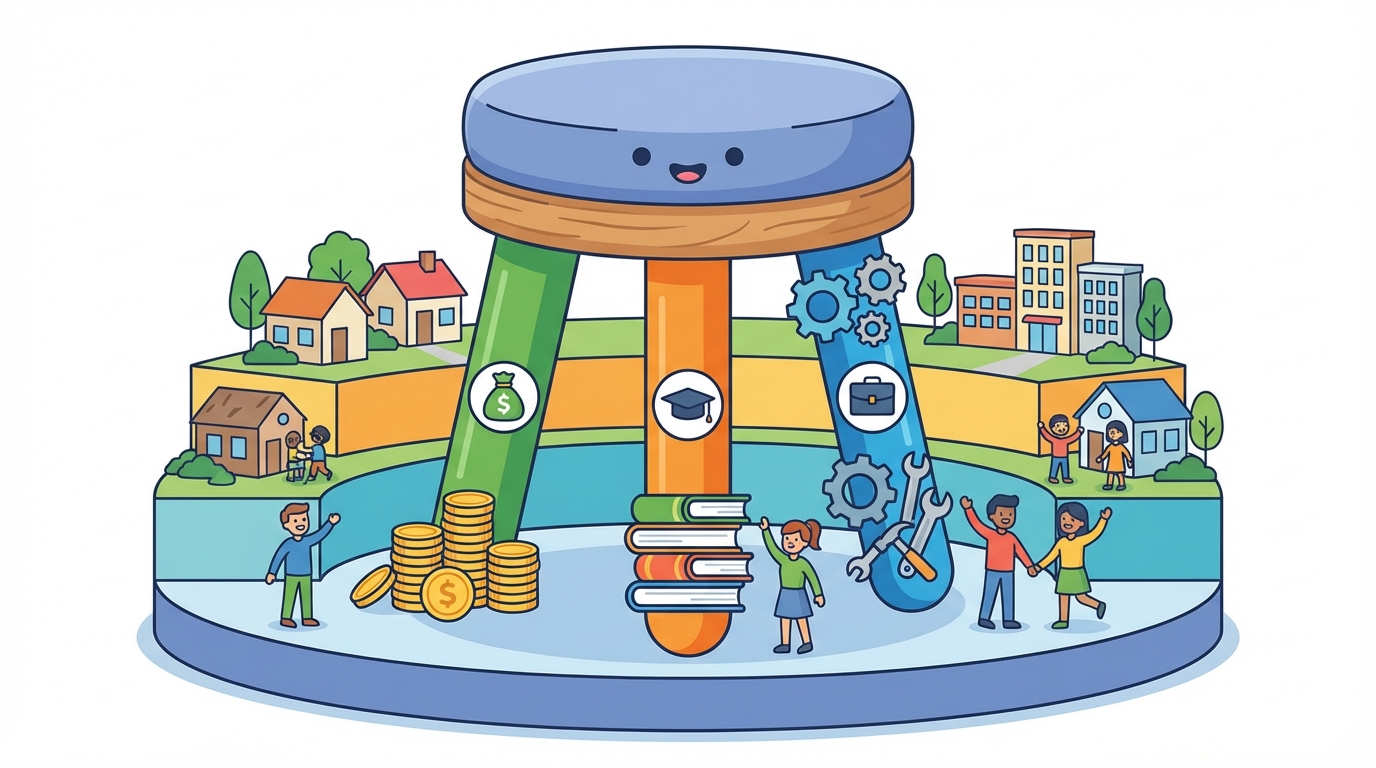
Imagine a stool with three legs. 🪑 To understand Socioeconomic Status (SES), economists look at three main things. These are the three legs that support the structure of society's groups.
This is the amount of money a person or family earns from work, businesses, or investments. It determines what you can buy (like a house, food, or vacations).
This is the highest level of school completed. Did someone finish high school? Did they go to college? Usually, more education leads to more job skills.
This is the job a person does. Some jobs require years of training (like a doctor), while others are learned quickly. Jobs often define your role in the community.
How do they connect? 🔗
Usually, these three pillars are linked together in a chain reaction. Look at the table below to see the general patterns:
| Education Level | Typical Occupation Type | Likely Income Level |
|---|---|---|
| High School or less | Service jobs, Manual labor | Low to Moderate |
| College Degree | Teachers, Managers, Nurses | Middle to High |
| Advanced Degree (Masters/PhD) | Doctors, Lawyers, Scientists | High |
Key Facts
3 The Economic Pyramid: How Society is Structured
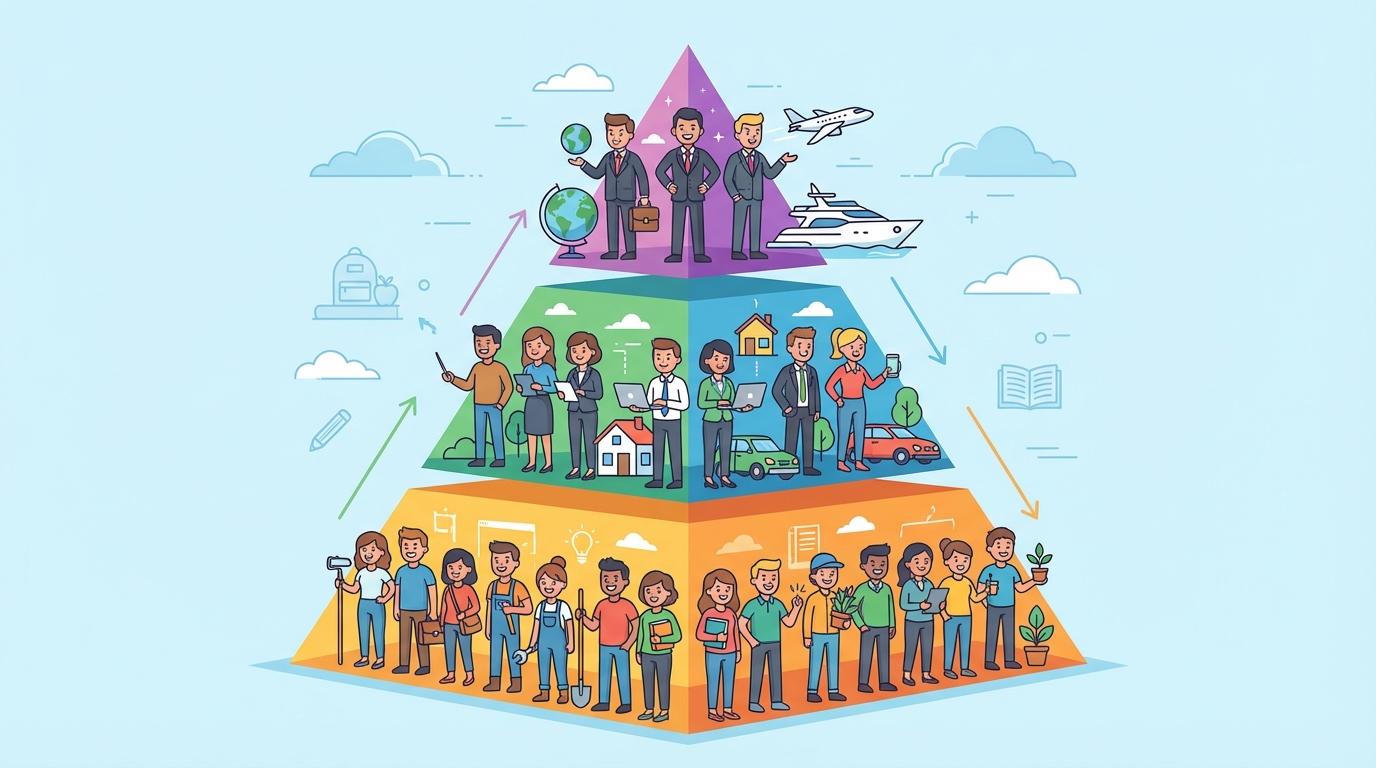
🔺 Why a Pyramid?
Economists use a pyramid shape to describe society because of the numbers: there are many more people at the base (lower income) than there are at the very top (high income).
The smallest group at the top. They have enough money for all needs, all wants, and luxury investments.
The bridge group. They can pay for needs (food, rent) and some wants (vacations, electronics), but usually need to budget carefully.
The largest group in many places. Most money goes toward basic survival needs like food and shelter. Saving is very difficult.
📊 Comparison: Needs vs. Wants
| Class | Housing | Transport | Extras |
|---|---|---|---|
| High | Mansions or Penthouses | Luxury cars, Private jets | Anything they want! |
| Middle | Apartments or Houses | Family car or Public transit | Occasional treats & trips |
| Low | Shared housing or Renting | Walking, Bus, or Bike | Very few extras |
Key Facts
4 The Working Class and Low Income
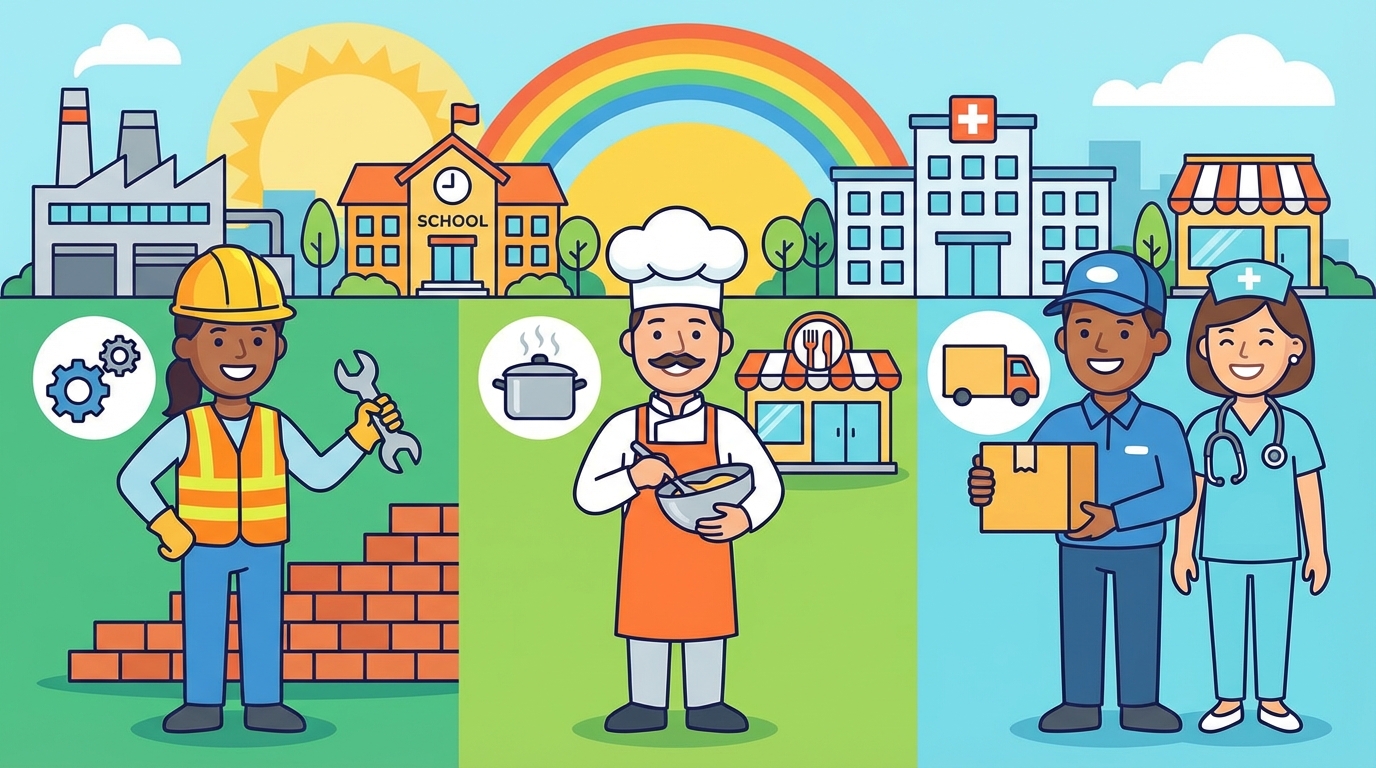
The Working Class refers to a large group of people who are the backbone of our economy! 🏗️ These individuals usually perform manual labor or work in service jobs.
People in the working class often work for hourly wages rather than a yearly salary. Their jobs are essential for our communities to run smoothly. Common examples include:
- 🛒 Cashiers and Retail Workers
- 🍽️ Waiters and Cooks
- 🔧 Mechanics and Factory Workers
- 🚛 Drivers and Delivery Staff
Families with low income have to be math experts! 🧮 Because money is tight, they must focus on needs before wants. Saving money for vacations or big purchases is often very difficult because most of their income goes to basic survival.
📊 Where does the money go?
For the working class, a large percentage of income is spent immediately on necessities.
| Category | Priority Level | Example |
|---|---|---|
| 🏠 Housing | Critical | Rent and electricity bills |
| 🍎 Food | Critical | Groceries for the week |
| 🎮 Entertainment | Low | Video games or movies (often skipped) |
Key Facts
5 The Middle Class: Stability and Lifestyle
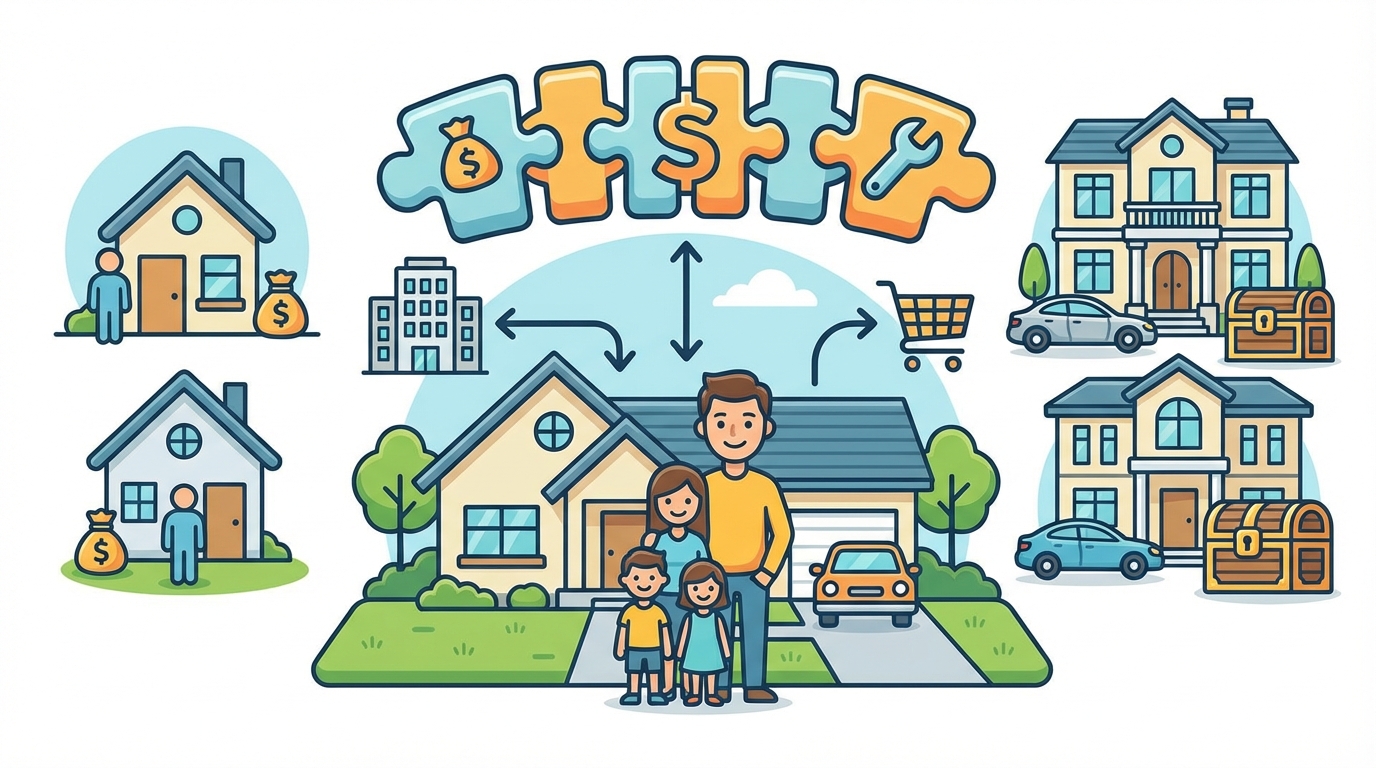
The Middle Class is often called the backbone of the economy! 🦴💰 It sits right between the low and high income groups.
- ✅ Stability: Steady jobs with regular paychecks.
- ✅ Education: Often have college degrees or skilled trade training.
- ✅ Assets: Usually own a home and a car.
- ✅ Health: Access to doctors and insurance.
💸 Disposable Income
This is a magic term! It means money left over after paying all the bills. The middle class usually has some disposable income to spend on wants like:
Family Vacations 🏖️Video Games 🎮Sports/Hobbies ⚽While the middle class lives comfortably, they still need to budget carefully. They save money for big goals, like sending kids to college or retiring comfortably later in life. 📉➡️📈
Key Facts
6 The Upper Class: High Income and Assets
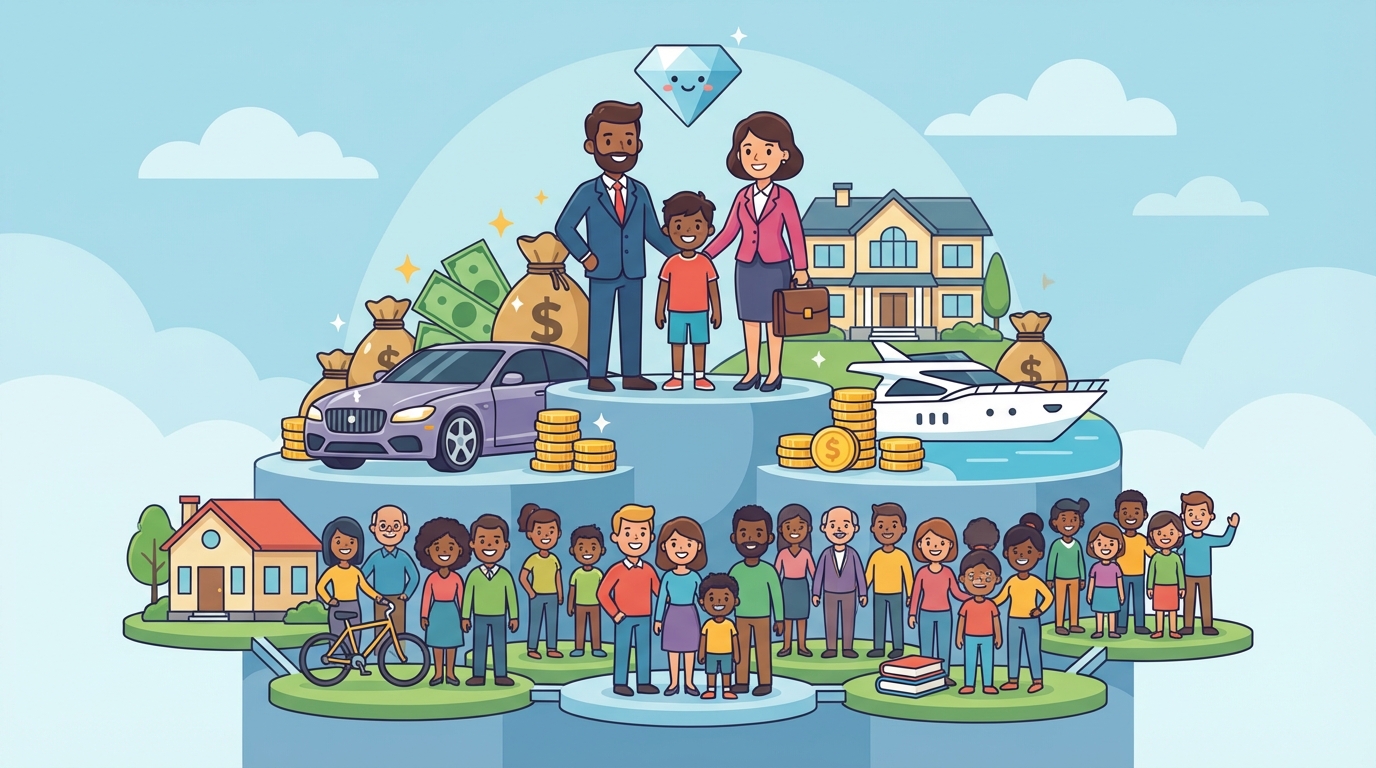
💎 What is the Upper Class?
The Upper Class represents the smallest group of people in society, but they hold the largest amount of wealth. This group includes successful business owners (entrepreneurs), CEOs of major companies, famous athletes, and investors.
People in the upper class usually earn very high salaries. While the middle class works to pay bills, the upper class earns enough to buy luxury items and save massive amounts.
- ✈️ Private travel & vacations
- 🎓 Elite private education
- 🏎️ Luxury vehicles
The biggest difference is Assets. This is money that works for them! They own things that generate more money over time.
- 🏢 Owning companies/factories
- 🏠 Multiple real estate properties
- 📊 Stocks and bonds
🤝 The Role of Philanthropy
Many people in the upper class practice philanthropy. This means they donate large amounts of money to build hospitals, libraries, or fund schools. Because they have excess wealth, they have a unique opportunity to help society in big ways.
Key Facts
7 Income vs. Wealth: Knowing the Difference
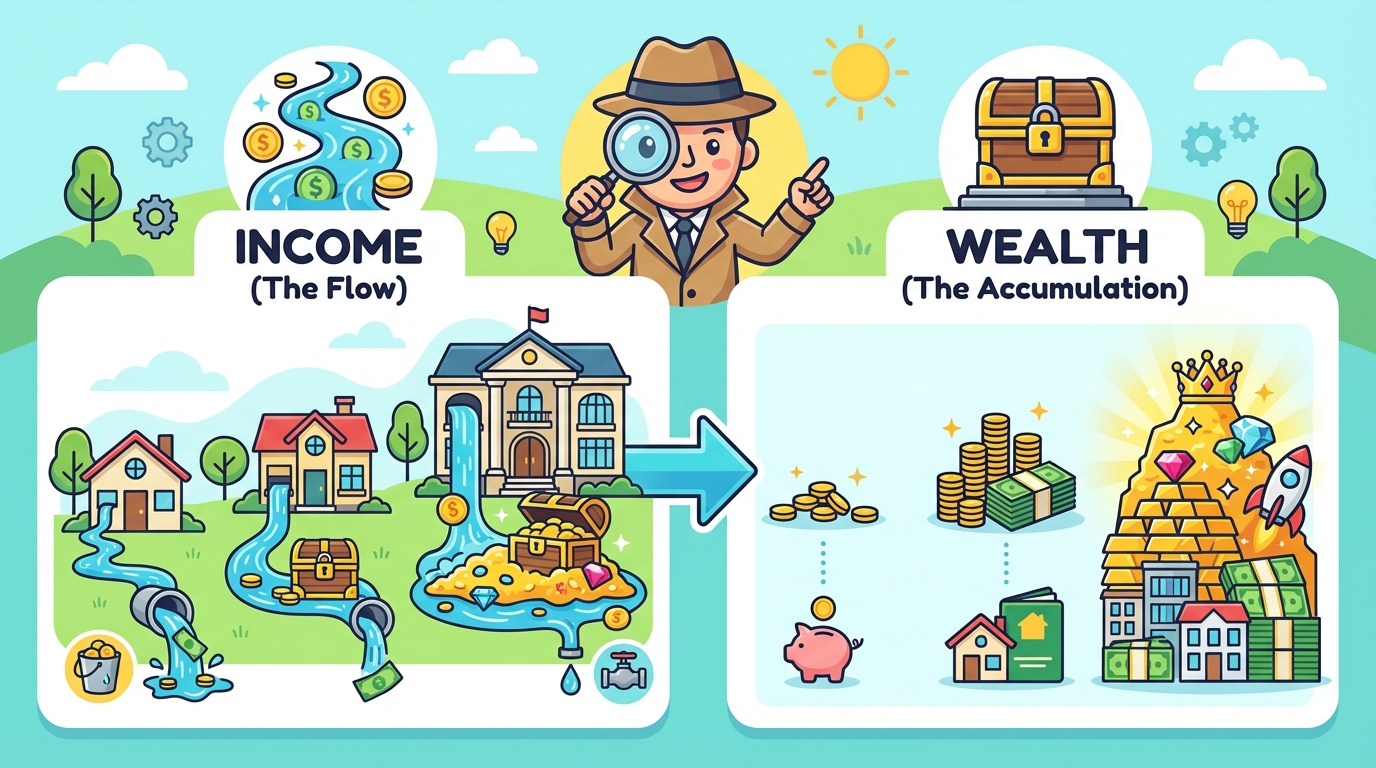
Many people think earning a lot of money means you are wealthy, but that isn't always true! Let's become money detectives to find the difference. 🕵️♂️💰
Income is the money you earn over a period of time. Think of it like water flowing out of a faucet.
- Your allowance 💵
- Money from mowing lawns 🌱
- A paycheck from a job 👷♀️
Wealth is the value of what you own minus what you owe. Think of it like the water sitting in the bathtub.
- Money in your piggy bank 🐷
- Your bicycle or video game console 🎮
- Investments and houses 🏠
🛁 The Bathtub Analogy
Imagine a bathtub. The water flowing from the tap is your Income. The water draining out represents your Expenses (spending). The water that stays in the tub? That is your Wealth! If the drain is open too wide (too much spending), you can't build wealth, no matter how fast the water flows in.
🤔 Who is Wealthier?
Person A earns $1,000 a week but spends $1,000 on shoes and snacks.
Person B earns $500 a week but saves $200 in the bank.
Result: Person A has higher Income, but Person B is building more Wealth!
Key Facts
8 Standard of Living and Purchasing Power
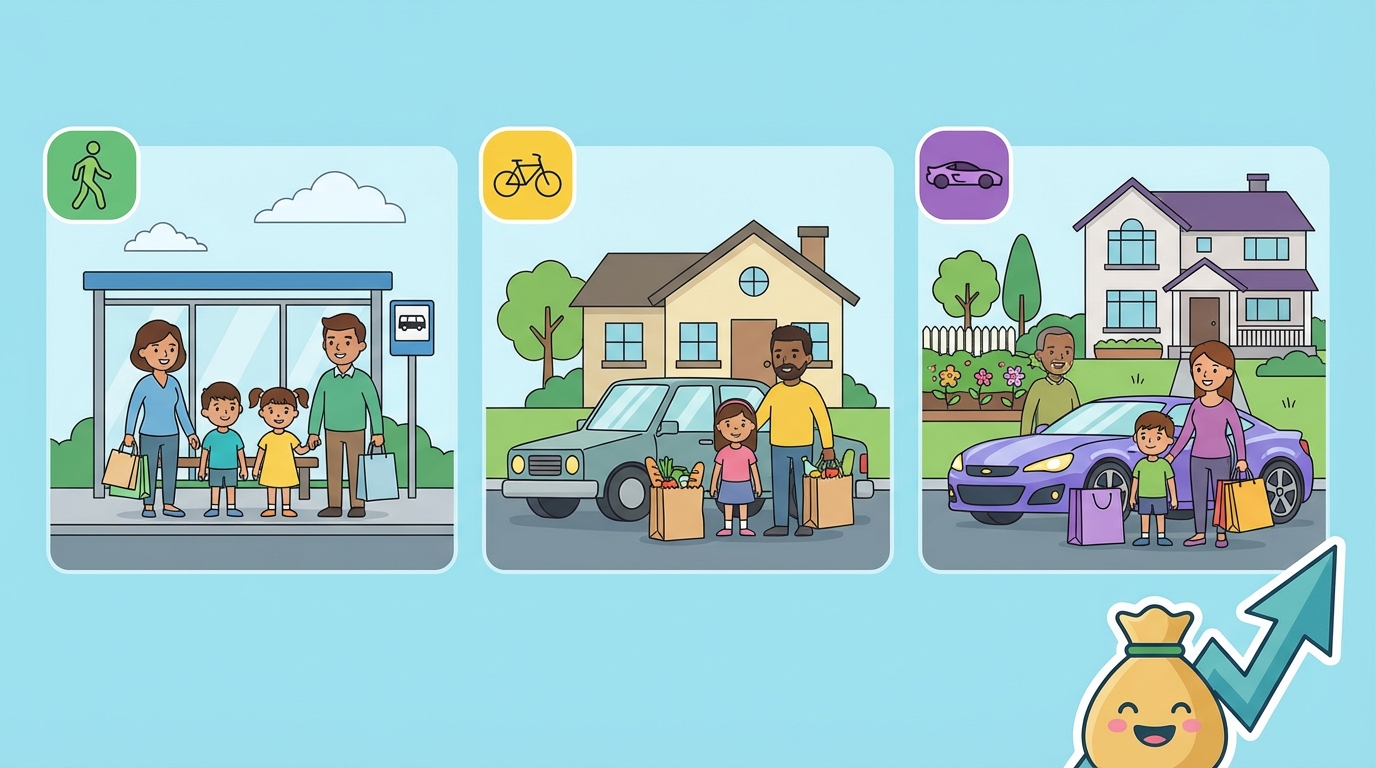
Have you ever wondered why some families can buy a new car every few years while others take the bus? This is all about Standard of Living and Purchasing Power! 💰
This measures the quality of life of a person or a group. It is not just about money! It includes:
- 🏠 Quality of housing
- 🏥 Access to doctors and healthcare
- 🎓 Education quality
- 🛡️ Safety in the neighborhood
This is the amount of goods and services you can buy with a specific amount of money.
Socioeconomic Classes
Economists group people into classes based on how much purchasing power they have. This determines their standard of living.
| Class | Purchasing Power | Typical Lifestyle |
|---|---|---|
| High Income 💎 | Very High | Can afford all needs and many luxuries (expensive cars, big houses, frequent travel) without worrying about bills. |
| Middle Income 🏠 | Moderate | Can afford all needs (food, rent) and some wants (a family vacation, a computer), but must budget carefully. |
| Low Income 🪙 | Low | Money is tight. Most income goes to basic survival needs like food and rent. Very little is left for extras. |
Key Facts
9 Social Mobility: Moving Up the Ladder
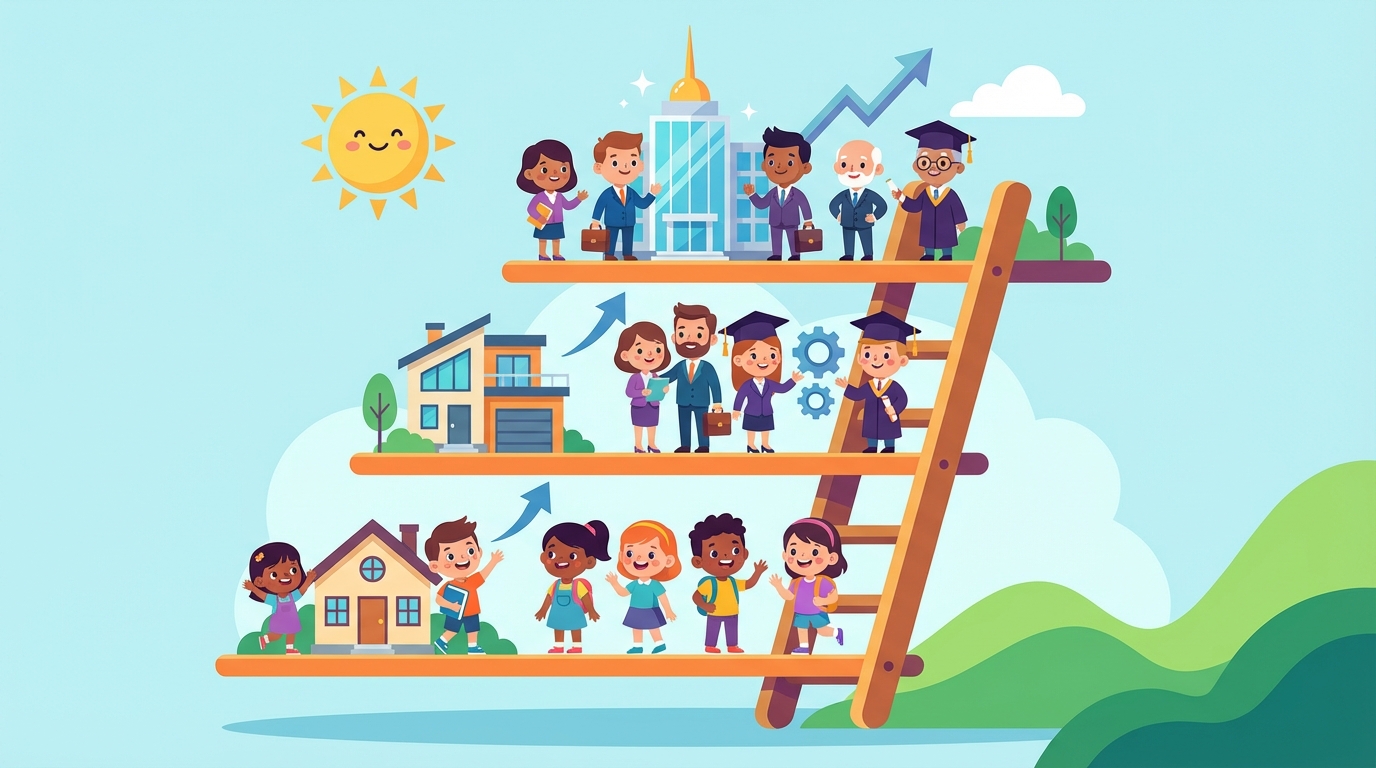
Imagine society is like a giant ladder. Social Mobility is the ability to move up (or down) that ladder! It means changing your socioeconomic position based on your education, job, and earnings.
The Three Main Rungs of the Ladder 📊
| Class | Description | Life Example |
|---|---|---|
| Working Class 🧱 | Focus is on meeting basic needs like food, rent, and electricity. | Paying bills is the main priority; buying extra toys or trips is hard. |
| Middle Class 🏠 | Can pay for needs comfortably and has some money left for wants/savings. | Owning a home, taking a summer vacation, saving for college. |
| Upper Class 💎 | Has more money than needed for basics and wants. Money makes more money! | Owning multiple businesses, investing, luxury travel. |
🚀 How do you climb the ladder?
The most powerful tool for social mobility is Education! 🎓 Learning new skills, starting a business, or saving money can help a person move from the working class to the middle or upper class.
Example: Sarah's grandmother worked in a factory (Working Class). Sarah's mom became a teacher (Middle Class). Sarah wants to become a doctor (Upper Middle/Upper Class)!
Key Facts
10 Key Vocabulary
Master these important terms for your exam:
| Term | Definition |
|---|---|
|
Socioeconomic Status
Estatus socioeconómico |
A measure of a person's social and economic position based on income, education, and occupation.
Una medida de la posición social y económica de una persona basada en sus ingresos, educación y ocupación. |
|
Income
Ingresos |
Money received, especially on a regular basis, for work or through investments.
Dinero recibido, especialmente de forma regular, por trabajo o inversiones. |
|
Wealth
Riqueza |
The total value of money and property owned by a person or family.
El valor total del dinero y las propiedades que posee una persona o familia. |
|
Upper Class
Clase alta |
The social group with the highest status, usually having a lot of wealth and political power.
El grupo social con el estatus más alto, que generalmente tiene mucha riqueza y poder político. |
|
Middle Class
Clase media |
The social group between the upper and lower classes, often including professionals and business owners.
El grupo social entre la clase alta y la baja, que a menudo incluye profesionales y dueños de negocios. |
|
Lower Class
Clase baja |
The social group with the lowest status, often characterized by low income and lack of education.
El grupo social con el estatus más bajo, a menudo caracterizado por bajos ingresos y falta de educación. |
|
Poverty
Pobreza |
The state of not having enough money to meet basic needs like food, clothing, and shelter.
El estado de no tener suficiente dinero para cubrir necesidades básicas como comida, ropa y vivienda. |
|
Standard of Living
Nivel de vida |
The level of wealth, comfort, material goods, and necessities available to a certain socioeconomic class.
El nivel de riqueza, comodidad, bienes materiales y necesidades disponibles para una determinada clase socioeconómica. |
|
Social Mobility
Movilidad social |
The ability of individuals or families to move up or down the social ladder.
La capacidad de las personas o familias para subir o bajar en la escala social. |
|
Basic Needs
Necesidades básicas |
Essential things required for survival, such as food, water, shelter, and safety.
Cosas esenciales requeridas para sobrevivir, como comida, agua, refugio y seguridad. |
|
Occupation
Ocupación |
A person's job or profession, which influences their socioeconomic class.
El trabajo o profesión de una persona, lo cual influye en su clase socioeconómica. |
|
Education
Educación |
The process of learning in school or college, often a key factor in determining future income.
El proceso de aprendizaje en la escuela o universidad, a menudo un factor clave para determinar los ingresos futuros. |
|
Inequality
Desigualdad |
The unfair situation where wealth and opportunities are not shared equally among people.
La situación injusta donde la riqueza y las oportunidades no se comparten por igual entre las personas. |
|
Disposable Income
Ingreso disponible |
Money left over to spend or save after taxes and essential bills have been paid.
Dinero que sobra para gastar o ahorrar después de pagar impuestos y facturas esenciales. |
|
Budget
Presupuesto |
A plan for how to spend and save money over a period of time.
Un plan sobre cómo gastar y ahorrar dinero durante un período de tiempo. |
|
Resources
Recursos |
The money, materials, and assets available to a person or community to help them function.
El dinero, materiales y bienes disponibles para una persona o comunidad para ayudarles a funcionar. |
Time to Practice!
There are 7 questions waiting for you. Questions are shuffled each attempt.
Take the Quiz