The Regulation
Learn the purpose, structure, and language features of regulations to understand how they help organize society and school life.
1 What is a Regulation?
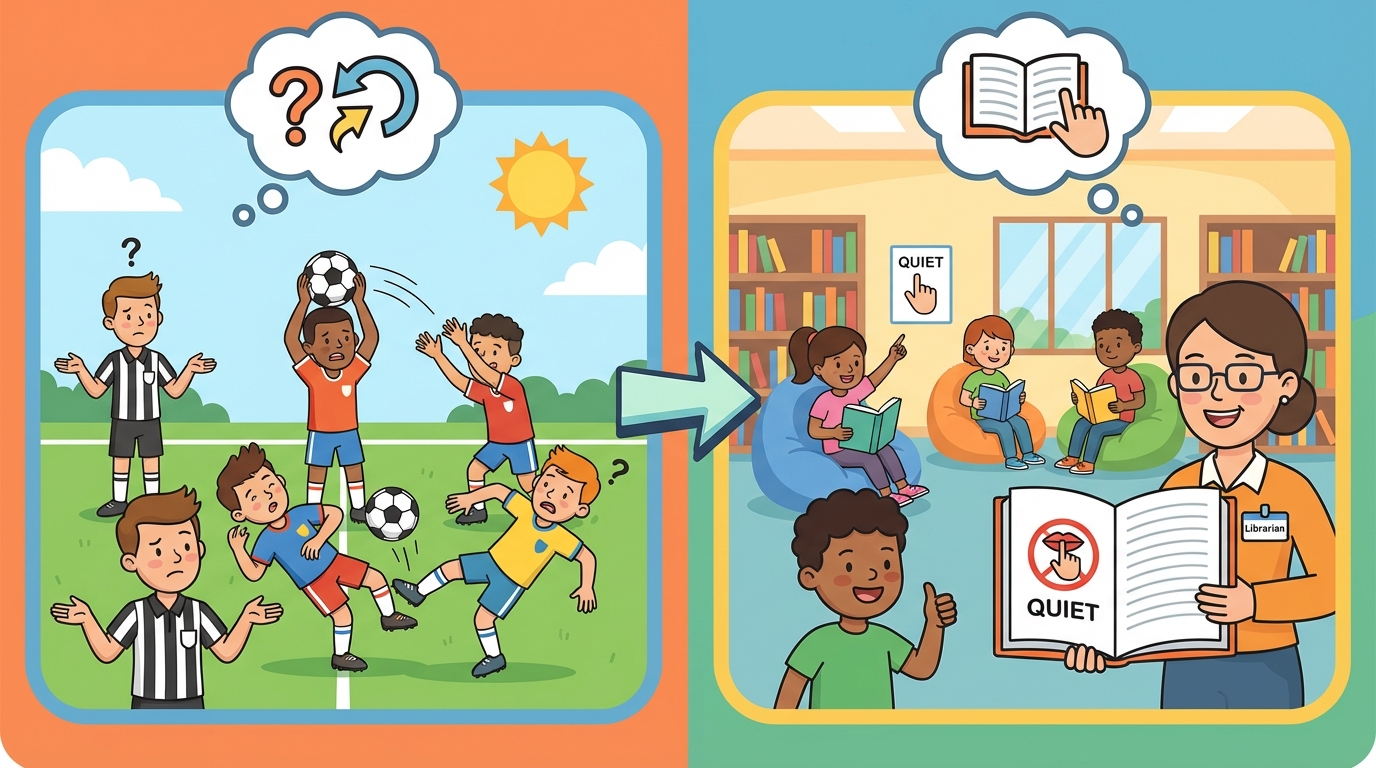
Imagine playing a soccer game ⚽ where anyone could pick up the ball with their hands, or a library 📚 where everyone is shouting. It would be total chaos! 🤯
A regulation is a document that contains a set of ordered rules or norms. These rules are established by an authority to organize how people behave in a specific place or activity.
Why are they important?
Regulations help us live together in harmony. They tell us what is allowed (rights) and what is prohibited (restrictions).
| Place / Context 📍 | Example of a Regulation 📝 |
|---|---|
| The Library | 'Keep silence to allow others to read.' 🤫 |
| Swimming Pool | 'Do not run near the edge of the pool.' 🚫🏃 |
| Classroom | 'Raise your hand before speaking.' 🙋♀️ |
Did you know? 💡
Regulations imply both obligations (what you must do) and rights (what you are entitled to). It is a two-way street!
Key Facts
2 The Purpose: Living in Harmony
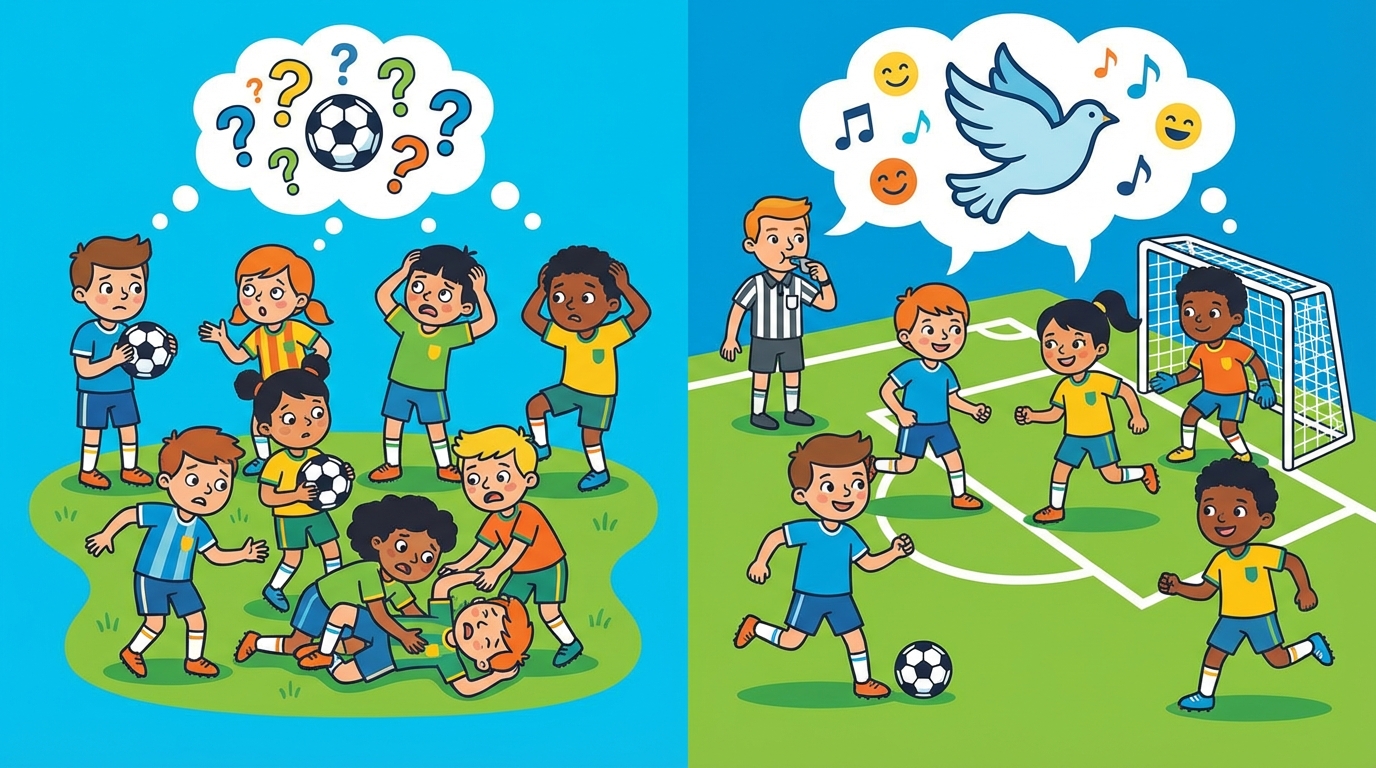
Imagine playing a soccer game ⚽ without a referee, without lines on the field, and without knowing what a 'goal' is. It would be total chaos! 🤯
🕊️ What is the goal of rules?
Regulations are not just lists of things we cannot do. Their main purpose is to organize how we interact so we can live in harmony. They act like a shield that protects our rights and safety.
- Everyone knows what to expect.
- Conflicts are solved peacefully. 🤝
- We feel safe and respected. 🛡️
- Activities are fair for everyone. ⚖️
- Confusion and misunderstandings. ❓
- Arguments turn into fights. 😠
- People might get hurt or bullied. 🤕
- It is survival of the strongest. 🦍
Real Life Example: Think about a traffic light 🚦. Without rules about red and green lights, cars would crash constantly. By following the regulation, everyone gets to their destination safely. That is harmony!
Key Facts
3 Rights and Obligations
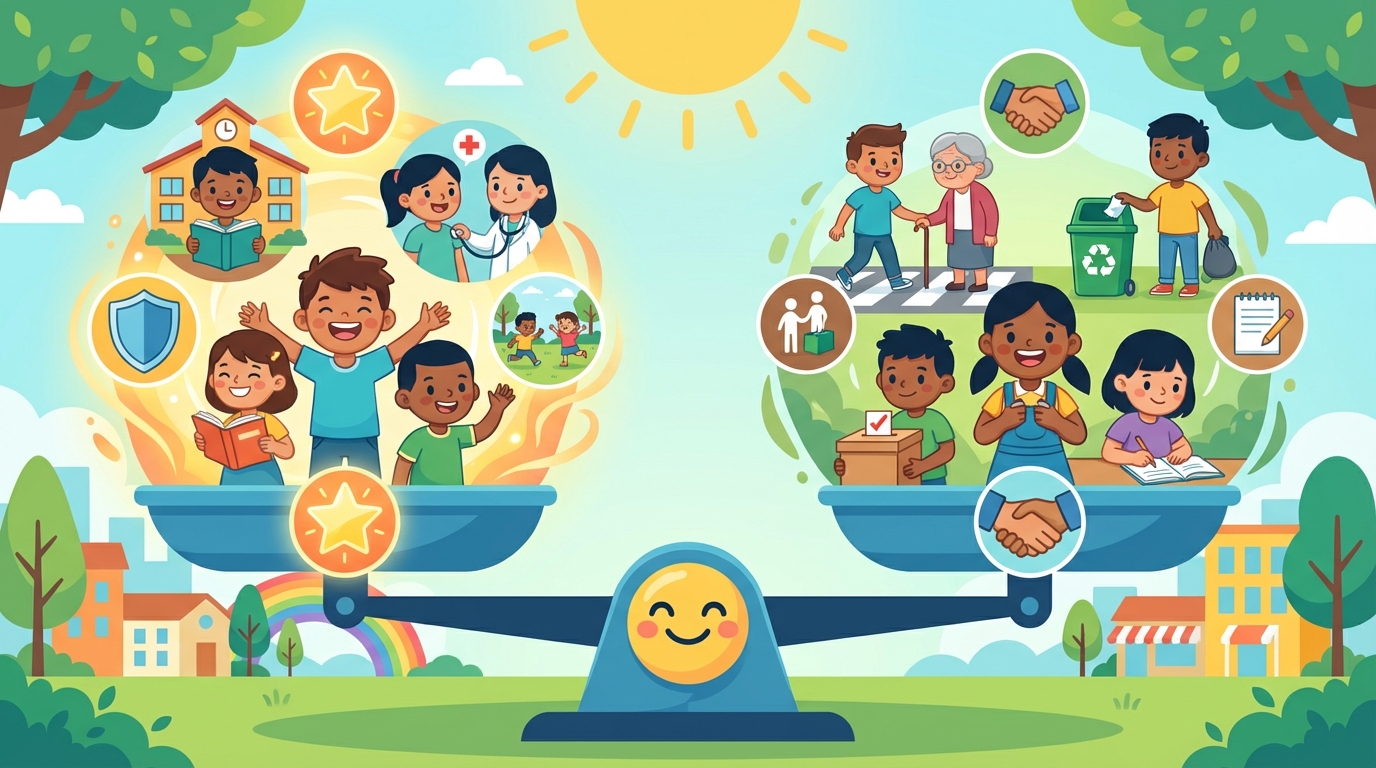
Every regulation is like a balance scale ⚖️. To keep things fair, we need two things: Rights and Obligations.
These are the benefits, privileges, or protections that the rules guarantee you. It is what you are allowed to do or receive.
- Being treated with respect.
- Using common areas.
- Expressing your opinion.
These are the responsibilities or duties you must fulfill. It is what you must do to keep the community running smoothly.
- Respecting others.
- Taking care of equipment.
- Listening when others speak.
Reciprocity: The Two-Way Street 🛣️
In a regulation, for every right, there is usually a matching obligation. Let's look at a school library example:
| Your Right 🟢 | Your Obligation 🟠 |
|---|---|
| To borrow books to read at home. | To return the books on time and in good condition. |
| To study in a quiet environment. | To keep your voice down so you don't disturb others. |
| To ask the librarian for help. | To say 'please' and 'thank you'. |
Key Facts
4 Structure of a Regulation
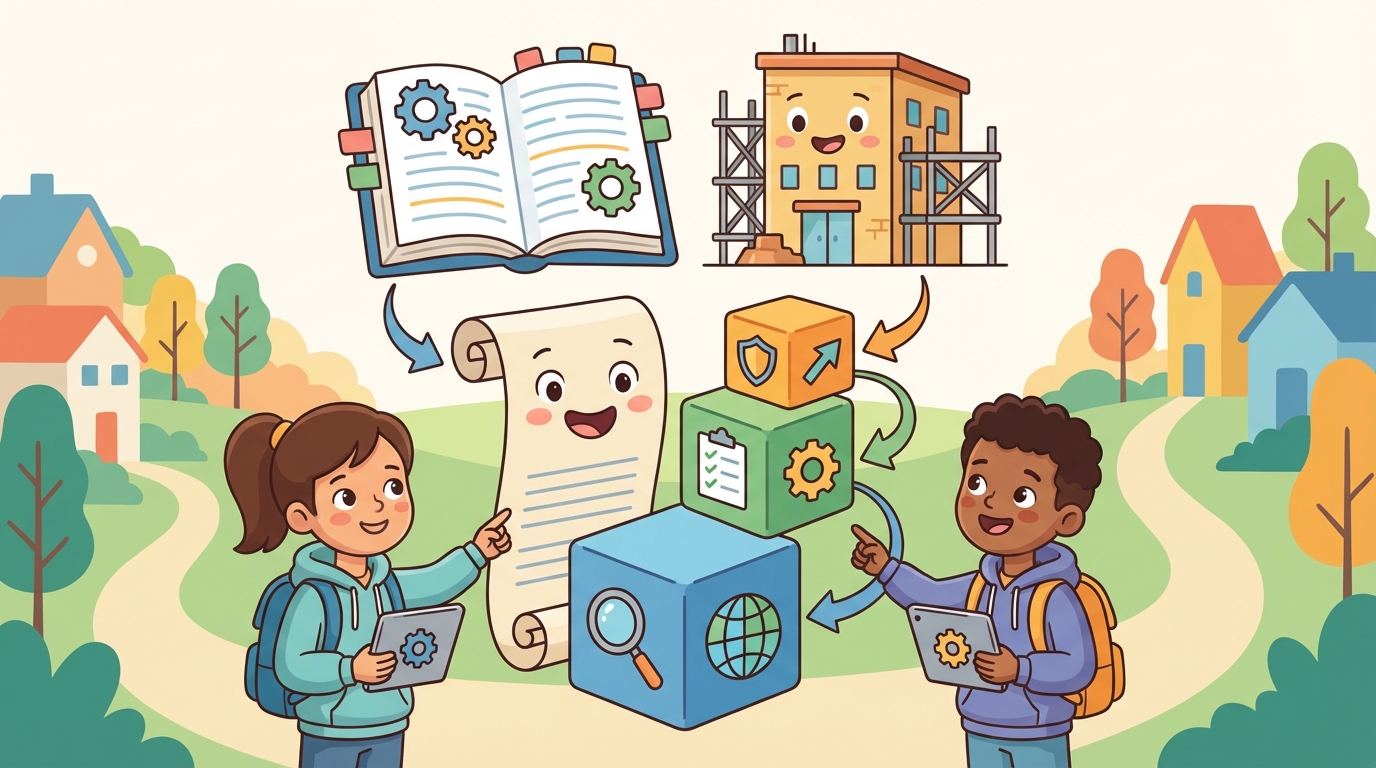
Just like a textbook has chapters and pages to keep things organized, a regulation needs a structure so we can find rules quickly! 📚
🏗️ The Building Blocks
Regulations go from general topics to specific details. Here is the standard order:
This tells us exactly what the document is about and who it is for.
Example: 'School Library Regulation'
These are big sections that group related topics together. They often use Roman numerals (I, II, III).
Example: 'Chapter I: Borrowing Books'
These are the actual rules. They are numbered (1, 2, 3) and describe specific behaviors.
Example: 'Article 5: Students may borrow up to 3 books.'
Sometimes an article needs more detail. These are usually labeled with letters (a, b, c).
Example: 'a) Books must be returned within 2 weeks.'
💡 Why does order matter?
Imagine if a dictionary wasn't in alphabetical order! 😱 The structure of a regulation helps us locate the specific rule we need without reading the whole document.
Key Facts
5 Graphic Resources: Typography and Layout
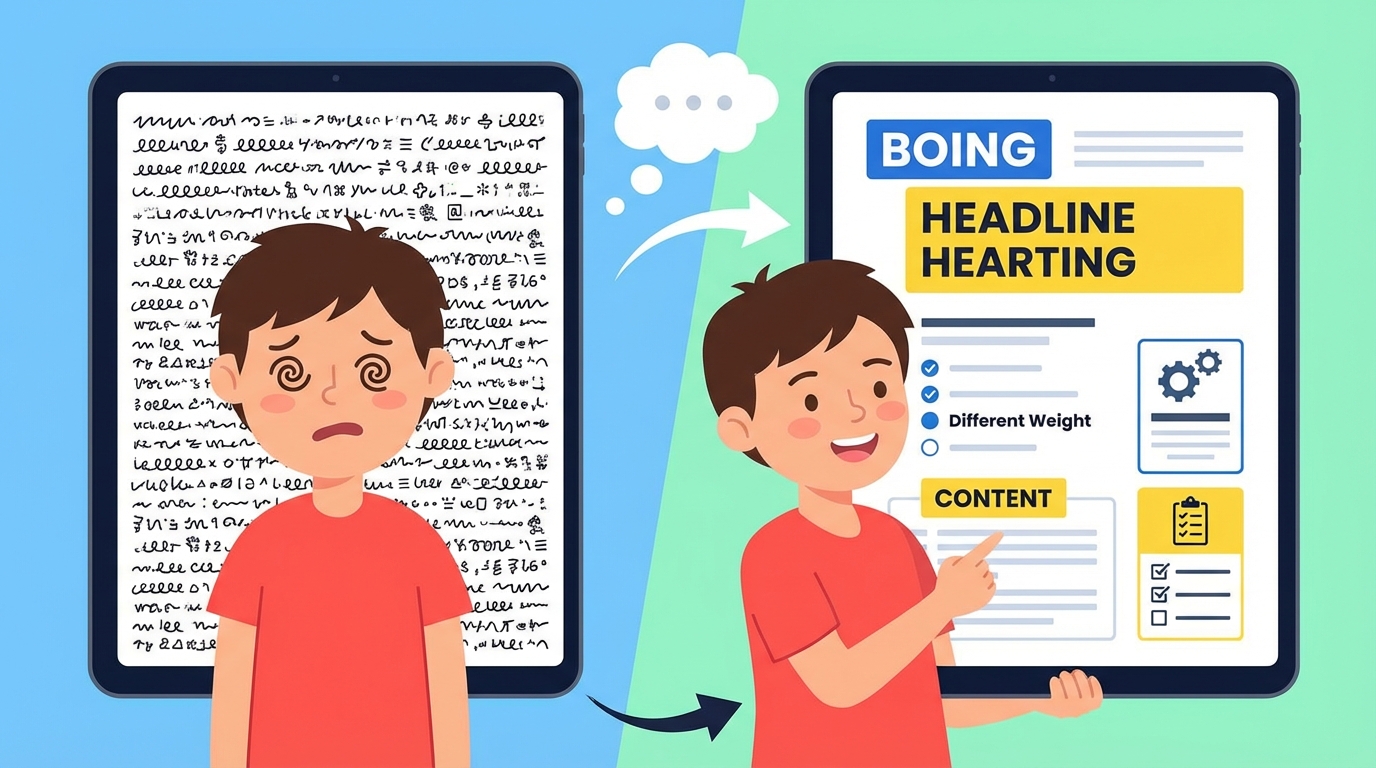
Have you ever tried to read a page that was just one giant block of text? 😵💫 It's very difficult! Regulations use graphic resources to make rules easy to find and understand.
This refers to the style and appearance of the text. Authors use different styles to highlight importance:
- Bold (Negritas): Used for keywords or concepts (e.g., Article 5).
- Italics (Cursivas): Used for foreign words or book titles.
- Uppercase (Mayúsculas): Used for TITLES or CHAPTER names.
This is how the text is organized on the page to show hierarchy and order:
- 🔢 Numerals: Roman (I, II) for Chapters, Arabic (1, 2) for Articles.
- 🔹 Bullet Points: For lists of items that don't need a specific order.
- ↔️ Indentation: Blank space at the start of a line to show a subsection.
👀 Real Life Example: The Library
Notice how graphic resources make this rule easier to read:
Chapter I: General Conduct
Article 1. All students must preserve silence.
a) Whispering is allowed only for group work.
b) Shouting is strictly FORBIDDEN.
Key Facts
6 Verbs in Regulations: The Infinitive
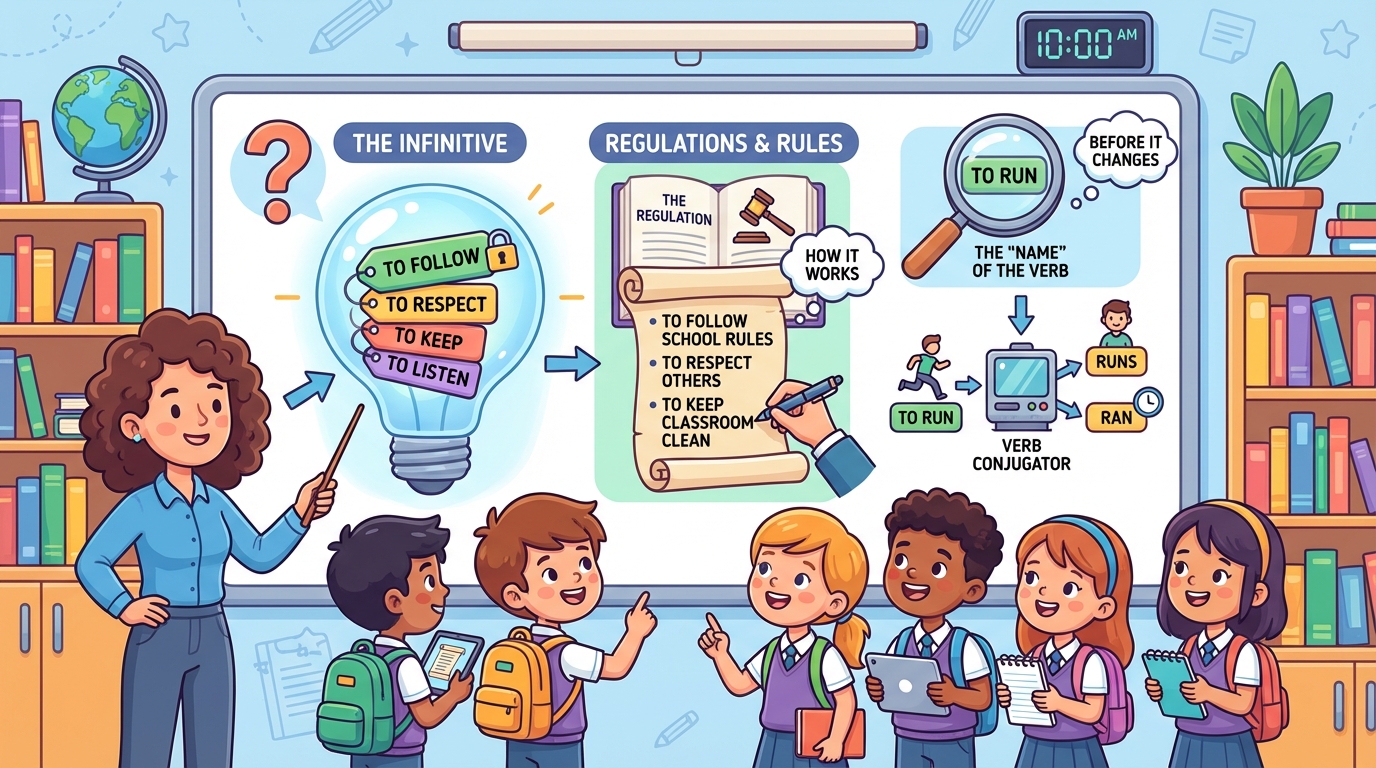
What is the Infinitive? 🤔
When writing rules and regulations, we often use the infinitive form of verbs. Think of the infinitive as the 'name' of the verb before it gets changed to fit a person or time. It is the most basic form!
The Three Endings in Spanish
To walk
Caminar
To run
Correr
To write
Escribir
| Direct Command (Imperative) | Regulation Rule (Infinitive) |
|---|---|
| Don't run in the hallway! 🚫 | No correr en los pasillos. |
| Keep the area clean! 🧹 | Mantener el área limpia. |
| Raise your hand. 🙋 | Levantar la mano para hablar. |
Key Facts
7 Verbs in Regulations: The Imperative
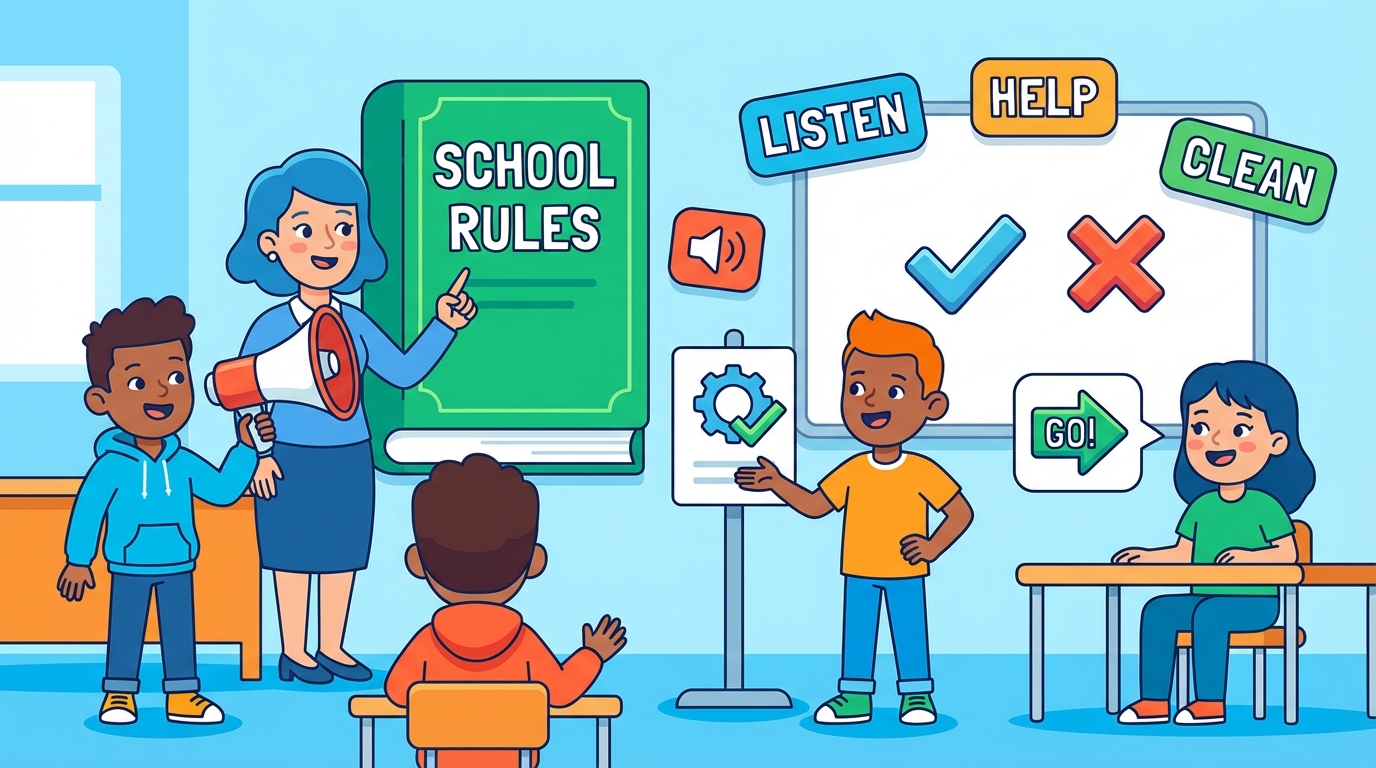
📢 Being Bossy (Politely)!
When writing regulations, we want people to know exactly what to do. To do this, we use the Imperative Mood. This is a fancy way of saying we use verbs to give direct orders, instructions, or warnings.
These commands tell someone to do something. The subject 'You' is hidden.
- 🏃 Run to the finish line.
- 🧼 Wash your hands.
- 👂 Listen to the teacher.
These commands tell someone not to do something. We usually add 'Do not' or 'Don't'.
- 🛑 Do not run in the hall.
- 🗑️ Don't litter in the park.
- 🗣️ Do not shout inside.
🏊♂️ Pool Rules Example
| Regular Sentence (Too long) | Imperative Rule (Perfect!) |
|---|---|
| You should take a shower first. | Shower before entering. |
| It is not good to bring glass bottles. | Do not bring glass bottles. |
| I would like you to walk slowly. | Walk carefully on the deck. |
Key Facts
8 Other Verb Forms: Future and Impersonal Mode

Did you know that not all rules start with a direct command? 😲 Sometimes, to make a regulation sound more formal or to show that a rule always applies, we use special verb forms.
🔮 The Future Tense
We use the Future Tense to express a mandate that must happen. It sounds very confident and authoritative!
- Instead of: 'Clean your desk.'
- Future: 'The student will keep their desk clean.'
It implies: 'This is what is going to happen because it is the rule.'
👥 The Impersonal Mode
The Impersonal Mode focuses on the action, not the person doing it. It applies to everyone generally.
- Instead of: 'You cannot run.'
- Impersonal: 'Running is prohibited.'
Common words: It is allowed, It is forbidden, It is required.
⚽ Sports Rules Example
| Verb Mode | Example Rule |
|---|---|
| Imperative (Command) | Pass the ball quickly. |
| Future Tense | Players will pass the ball quickly. |
| Impersonal | Quick passing is required. |
Key Facts
9 Sanctions and Consequences
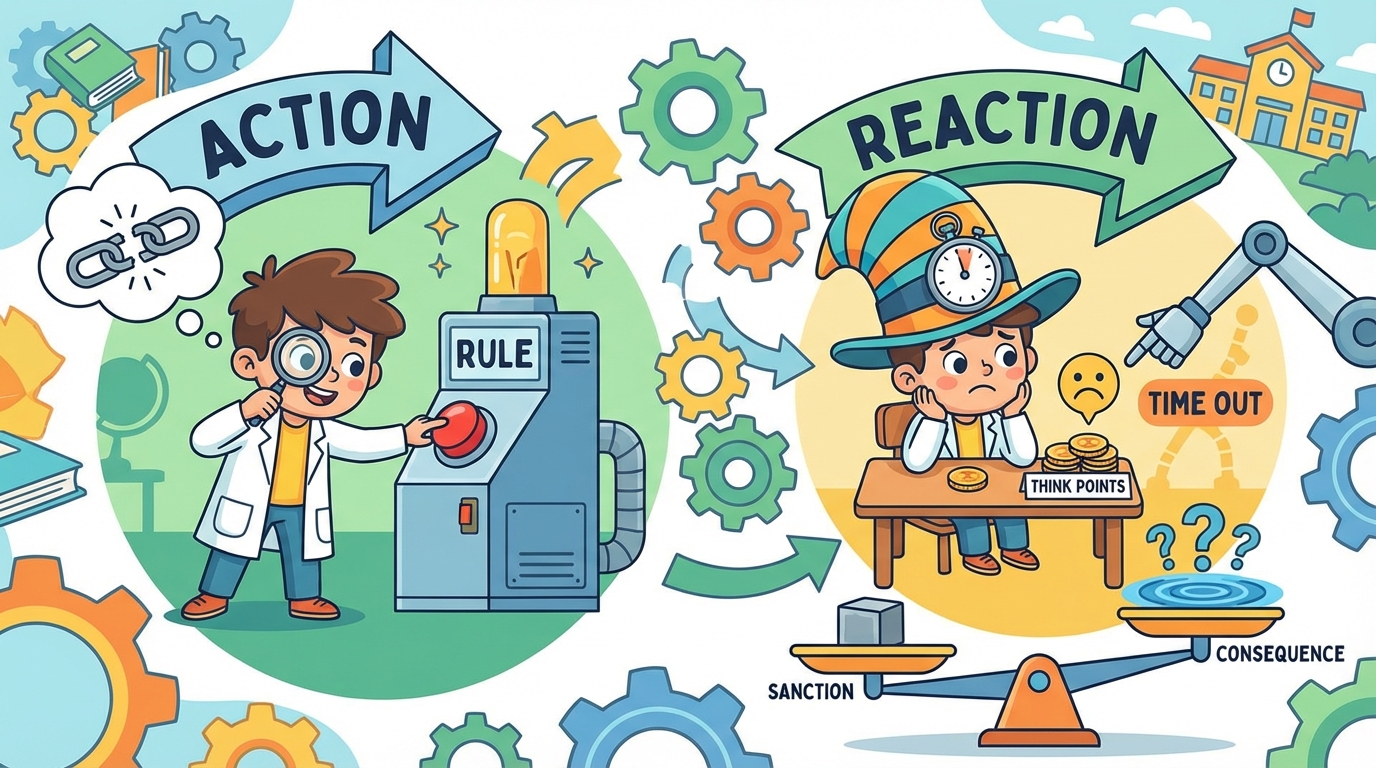
Just like in science, every action has a reaction! In a regulation, sanctions are the specific penalties written down for breaking a rule, while consequences are the results of our actions.
Sanctions aren't just about punishment; they are designed to maintain order, ensure fairness, and help people learn from mistakes. ⚖️
- Verbal Warning: A friendly reminder to get back on track. 🗣️
- Loss of Privilege: Losing recess or screen time temporarily. 🎮
- Restitution: Fixing what was broken (e.g., cleaning a desk you wrote on). 🧽
- Suspension: Being removed from an activity for a serious violation. 🛑
For a sanction to be effective, it must be proportional to the fault.
| Infraction | Fair Sanction 👍 |
|---|---|
| Late library book | Small fine or temporary block on borrowing 📚 |
| Running in the hall | Walking back and doing it again slowly 🚶 |
| Foul in Soccer | Yellow card or free kick ⚽ |
Key Facts
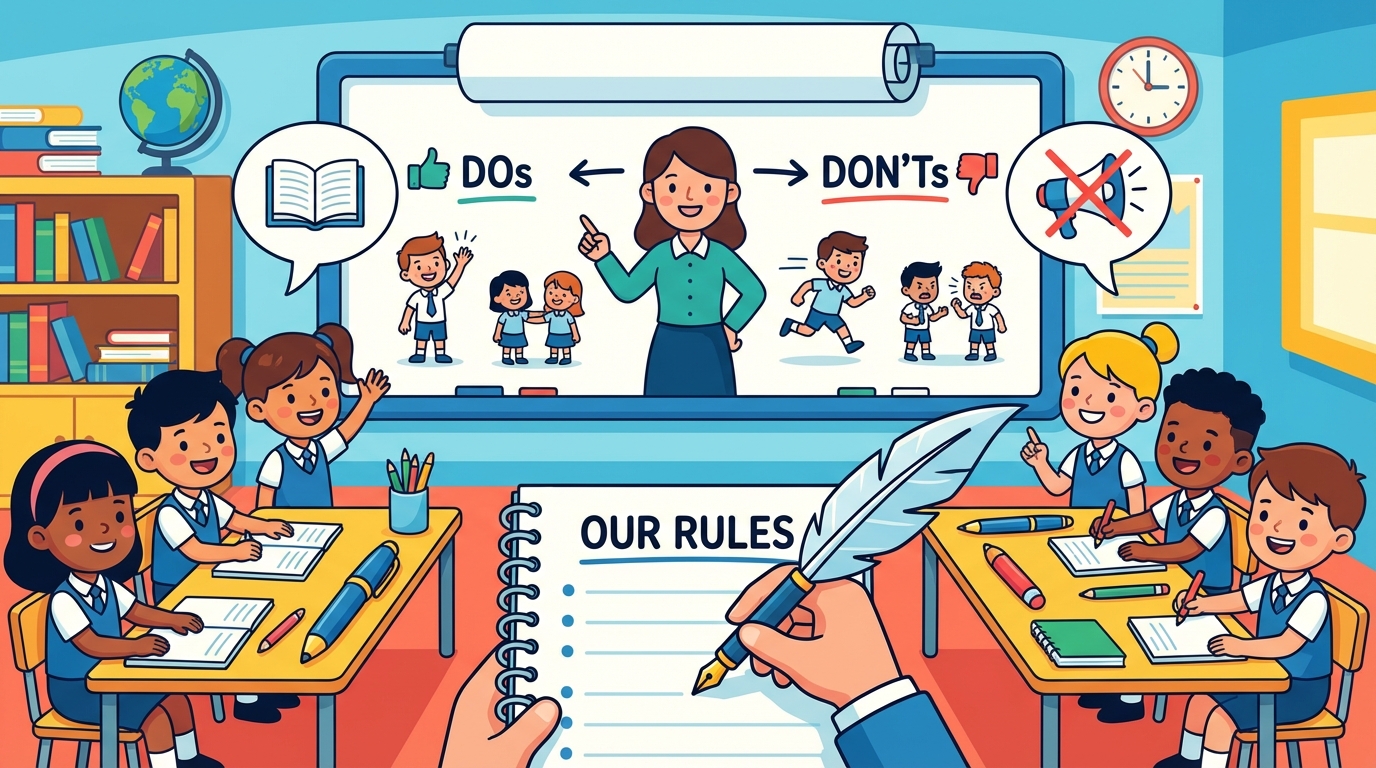
10 Drafting Our Classroom Rules
✍️ Time to Write!
Now that we know what a regulation is, we need to learn how to write it. The way we write the rules changes how people follow them!
In 6th grade, we focus on two main verb forms to write rules: Infinitives and Imperatives.
1. The Infinitive Mode
To Do
Verbs that end in -ar, -er, -ir in Spanish. They sound neutral and formal.
Example: To maintain order.2. The Imperative Mode
Do It!
Verbs used to give direct commands or instructions. They sound direct.
Example: Maintain order.🌟 The Power of Positive Language
Instead of saying what not to do, try saying what we should do. It creates a happier classroom!
| ❌ Negative (Don't) | ✅ Positive (Do) |
|---|---|
| Don't run in the hallway. | Walk calmly in the hallway. |
| Don't shout. | Raise your hand to speak. |
| Don't make a mess. | Keep your workspace clean. |
Key Facts
11 Key Vocabulary
Master these important terms for your exam:
| Term | Definition |
|---|---|
|
Regulation
Reglamento |
A set of official rules that control how something is done.
Un conjunto de reglas oficiales que controlan cómo se hace algo. |
|
Norm
Norma |
A standard or rule of behavior that is expected in a group.
Un estándar o regla de comportamiento que se espera en un grupo. |
|
Right
Derecho |
Something that a person is allowed to have, get, or do.
Algo que a una persona se le permite tener, obtener o hacer. |
|
Obligation
Obligación |
Something you must do because of a rule or law.
Algo que debes hacer debido a una regla o ley. |
|
Sanction
Sanción |
A penalty or punishment for disobeying a rule.
Una pena o castigo por desobedecer una regla. |
|
Article
Artículo |
A specific section or paragraph within a written legal document.
Una sección o párrafo específico dentro de un documento legal escrito. |
|
Chapter
Capítulo |
A main division of a document that groups related articles together.
Una división principal de un documento que agrupa artículos relacionados. |
|
Authority
Autoridad |
The power or right to give orders and enforce rules.
El poder o derecho de dar órdenes y hacer cumplir las reglas. |
|
Coexistence
Convivencia |
The state of living together in peace and harmony.
El estado de vivir juntos en paz y armonía. |
|
Infraction
Infracción |
An act that breaks a rule or law.
Un acto que rompe una regla o ley. |
|
Prohibition
Prohibición |
The action of forbidding something.
La acción de prohibir o impedir algo. |
|
Responsibility
Responsabilidad |
The state of having a duty to deal with something or someone.
El estado de tener el deber de ocuparse de algo o alguien. |
|
Compliance
Cumplimiento |
The action of obeying a rule or command.
La acción de obedecer una regla o mandato. |
|
Consequence
Consecuencia |
A result or effect of an action or condition.
Un resultado o efecto de una acción o condición. |
|
Verb
Verbo |
A word used to describe an action; in regulations, often used in the imperative or infinitive form.
Palabra usada para describir una acción; en reglamentos, se usa a menudo en modo imperativo o infinitivo. |
Time to Practice!
There are 7 questions waiting for you. Questions are shuffled each attempt.
Take the Quiz